
Understanding the Intersection of Tax Law and Family Welfare
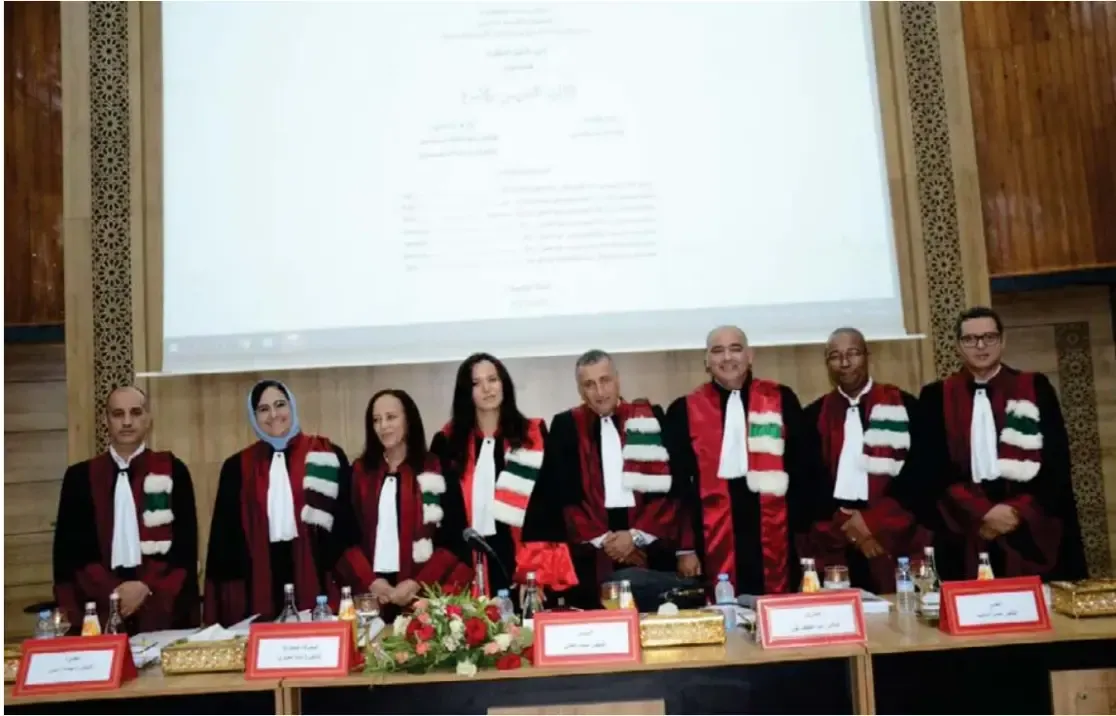
Last weekend, at the Faculty of Legal, Social, and Economic Sciences of Cadi Ayyad University in Marrakech, a doctoral thesis was presented by the researcher Iman Soufi, focusing on the critical relationship between tax law and family institutions. This thesis, developed under the Doctoral Studies Center of Rights, Economics, and Management, was supervised by Dr. Abdellatif Bakour, a prominent professor at the Multidisciplinary Faculty in Safi, and Dr. Najat El Amari, a distinguished faculty member at the Faculty of Law in Casablanca. The thesis highlights the significant implications of the subject, particularly within the legal domain, as it addresses a topic that remains relatively underexplored in specialized legal studies regarding the integration of family considerations into the tax system. The research emphasizes how the existing tax framework encompasses family-related mechanisms and guarantees established by tax legislation.
Moreover, the importance of this topic extends into the social realm, where it relates directly to the protection of families and the support of their economic and social stability. The thesis reveals various tax mechanisms that have been instituted for the benefit of families, illustrating their pivotal role within the taxation structure. The researcher initiated her analysis from the standpoint of social and tax protection for families, recognizing this as one of the foremost challenges facing diverse legislations, especially in states pursuing a welfare model or aiming to achieve fiscal justice. In this context, the Moroccan legislator has endeavored, similar to other comparative legislations, to incorporate family dimensions into tax policies, whether through tax reductions, specific exemptions, or by providing facilitation in payment and collection processes. This comprehensive research not only sheds light on the existing legislative frameworks but also proposes enhancements that could further integrate family welfare into tax legislation, ultimately fostering a more just and supportive economic environment for families.
As reported by pressreader.com.