Invasive Pest Threatens Agriculture in El Rahamna Region
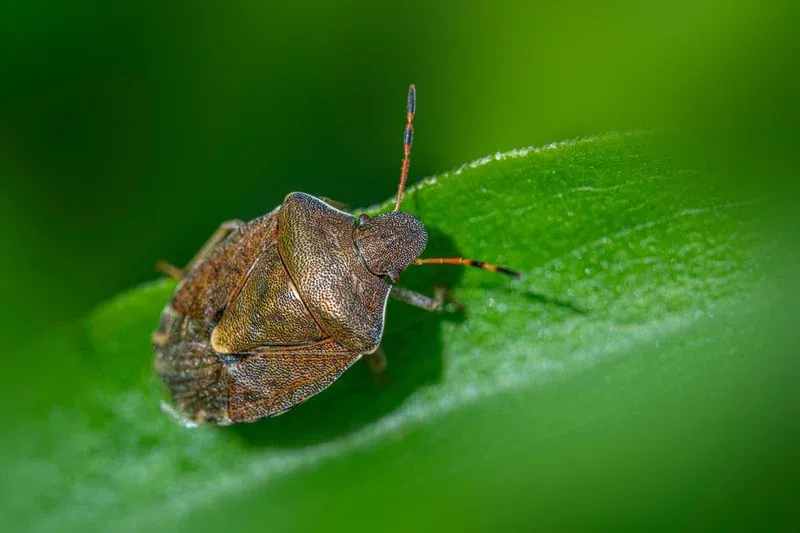
The spread of a harmful pest known as "La punaise" has raised significant concern among farmers in the El Rahamna region, who had initially anticipated a fruitful agricultural season this year. Farmers and their representatives have expressed fears regarding the impact of this pest on crops and fruit trees, particularly given the unprecedented increase in its population over recent weeks.
Reports indicate that swarms of this pest have begun to cover extensive areas of farmland, with farmers particularly worried about its detrimental effects on olive trees. In light of this alarming situation, many farmers have called upon the authorities, specifically the Ministry of Agriculture and the National Office for Food Safety, to intervene and assess the situation while implementing appropriate measures to curb the pest's spread.
Younes Lounani, a member of the Agricultural Chamber in the Marrakech-Safi region, stated that there has been communication with the relevant authorities to address the pest issue in various agricultural areas. He noted that discussions have taken place with officials from the Ministry of Agriculture at both the regional level and with ONSSA, emphasizing the need for pesticide spraying to eliminate this pest, which has already devastated numerous crops.
Abdelilah Zatouti, the Vice President of the Agricultural Chamber in Marrakech-Safi, confirmed that the authorities have been alerted to take action to prevent further losses. He indicated that the responsible entities need to carry out operations on farms during this critical period to mitigate the risks posed by the pest. He underscored that if the situation remains unchanged, it could lead to significant damage to various crops, echoing the distressing scenario faced by cactus plants when the cochineal pest emerged.
Abdelaziz Malouki, the regional director of the Ministry of Agriculture and Fisheries in El Rahamna, acknowledged that the heavy rainfall in the area has contributed to the proliferation of weeds, which in turn has allowed the pest to flourish. He pointed out that the lack of weed management on farms has led to a surge in the pest's population and its spread across different plants and trees.
The regional director also noted that specialized services are conducting awareness campaigns for farmers to educate them on how to effectively deal with this pest, including the application of pesticides to control its population. Additionally, the National Office for Food Safety has urged the adoption of proper agricultural practices, particularly the plowing of fields and the removal of dry weeds.
Furthermore, the use of pesticides targeted at other pests affecting olive trees, such as the olive moth, olive woolly bug, and olive fly, could also help reduce the damage caused by "La punaise." The situation remains critical as farmers eagerly await effective interventions to safeguard their crops.
As reported by hespress.com.