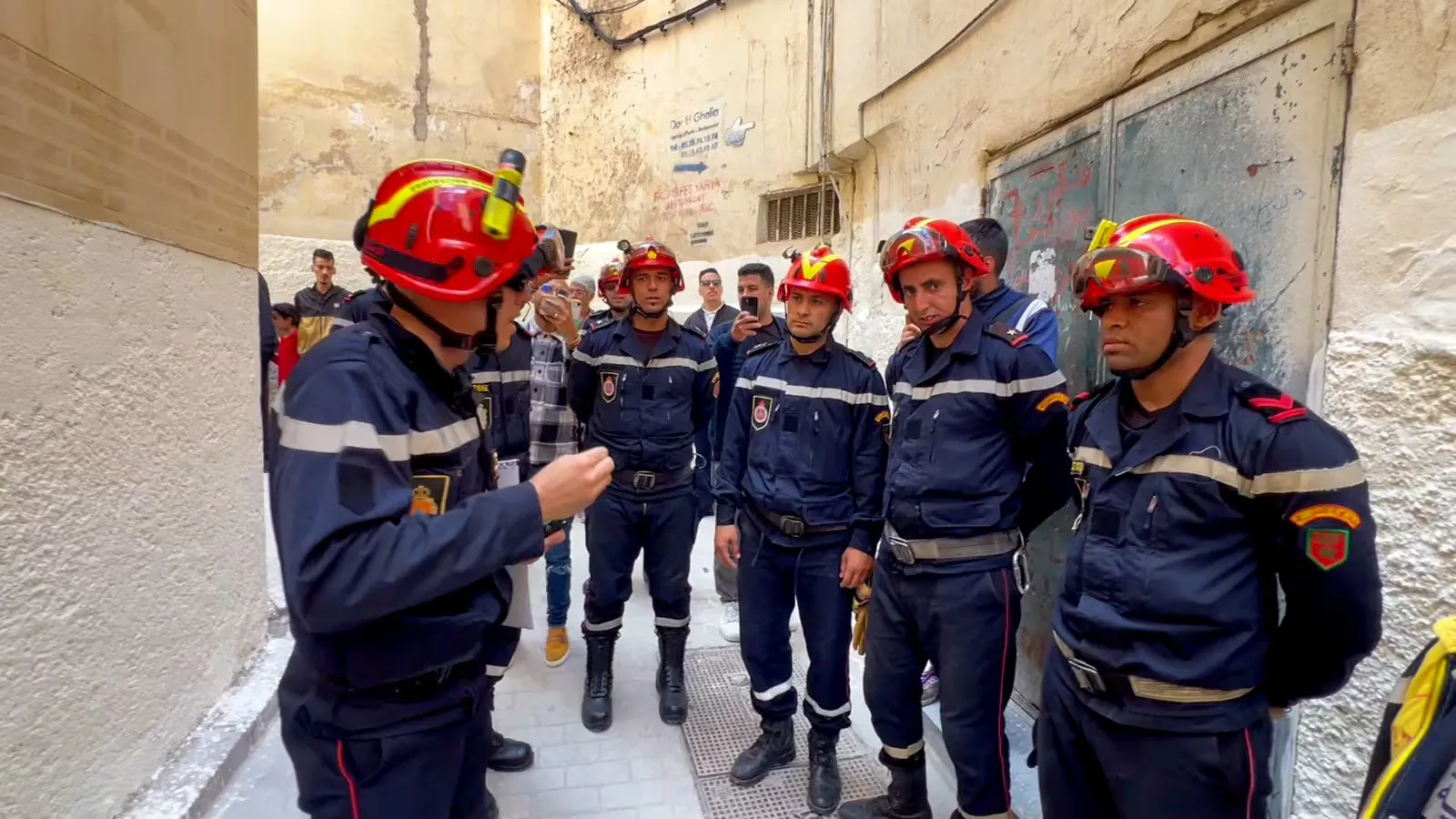

Fes Conducts Comprehensive Emergency Simulation Exercise
On May 4, 2026, the historic city of Fes undertook a significant emergency simulation exercise aimed at assessing the preparedness of its rescue and rapid intervention teams. This extensive drill was orchestrated by the regional command of civil protection in collaboration with local authorities and the Agency for the Development and Rehabilitation of the City of Fes (ADER), alongside various health services, including the university hospital and the regional health directorate. The exercise took place within the narrow streets of the old city, specifically in the Ziyat neighborhood, where potential emergency scenarios, such as building collapses, fires, or urgent incidents, were simulated to reflect the unique challenges posed by the urban fabric of this historical area.
The simulation focused on managing rescue operations and evacuating injured individuals from confined spaces, which required a comprehensive mobilization of civil protection resources, health services, and local authorities. This practical test aimed to evaluate how well these various entities could coordinate their efforts and integrate their responses, while also assessing the readiness of communication tools and logistical equipment utilized in emergencies. The regional commander of civil protection for the Fes-Meknes region, Abdelaziz Makmakh, emphasized that this initiative is part of a broader strategy to enhance preparedness levels and improve the efficiency of coordination among civil protection, local authorities, security forces, and health services. It also served to test rescue protocols and debris removal using advanced equipment and specialized units, including trained dog teams for search and rescue, surveillance cameras, and other sophisticated tools, particularly in urban areas with specific architectural characteristics like Fes.
Such exercises are vital for evaluating real-world intervention capabilities, identifying strengths and weaknesses, and facilitating the updating of intervention plans to enhance field responsiveness. The insights gained from this simulation are expected to contribute significantly to strengthening the rapid intervention system, aligning it with the safety requirements of densely populated urban regions characterized by complex designs, thus ensuring better protection for lives and property in emergency situations.
As reported by ar.le360.ma.