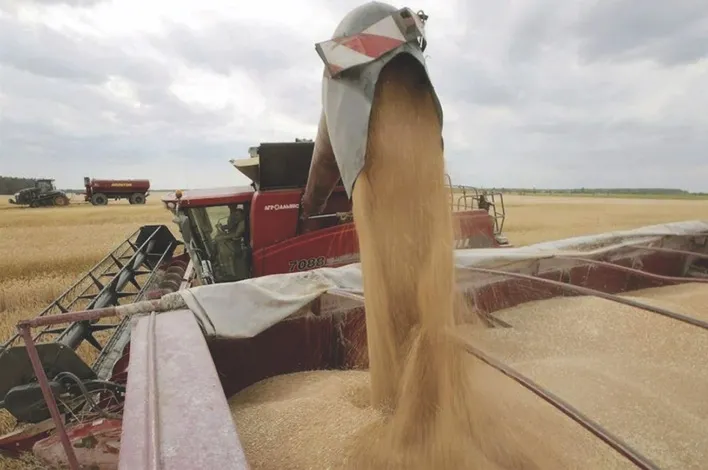

The ongoing war in Ukraine, coupled with the crisis in the Strait of Hormuz, has highlighted Africa's vulnerabilities regarding food sovereignty. This pressing issue was one of the key themes discussed at the Africa CEO Forum, held on May 14 and 15 in Kigali, Rwanda. For Morocco, food sovereignty presents a significant dilemma, as it faces the challenge of balancing an intensive agricultural model geared towards exports—which consumes a staggering 85% of the country's water resources—with the necessity of preserving its hydrological resources to ensure self-sufficiency in staple goods.
The Imperative of Food Sovereignty in Africa
With a population of 1.4 billion, food security remains a major concern across Africa. Agriculture supports the livelihoods of over 50% of the population, and food insecurity affects one in two individuals to varying degrees. Addressing food insecurity fundamentally requires the establishment of food sovereignty; however, Africa struggles to ensure this due to a myriad of obstacles. Among these challenges are recurrent climatic fluctuations, inadequate storage infrastructure, weak irrigation systems, and notably, insufficient investment in innovation. Olivier Buyoya, Regional Director of the International Finance Corporation (IFC) of the World Bank Group, emphasized this reality during the forum, stating, "Today, if you go to Chad, Niamey, or any other part of Africa, climate change is not a theory; it is an everyday reality marked by extreme heat and diminishing water resources. This is not a slogan or ambition; it is a reality we must confront."
As climate change continues to shrink arable land, investing in research and development (R&D) emerges as a crucial pathway to fostering sustainable agriculture. The Mohammed VI Polytechnic University (UM6P), present at the Africa CEO Forum alongside the OCP Group, has initiated a comprehensive program aimed at mapping soil characteristics across various African countries to provide necessary nutrients tailored to their specific needs. In an interview with TV5 Monde during the forum, Khalid Baddou, Director of Institutional Affairs at UM6P, stated, "Effective agricultural performance begins with a solid understanding of the soil. Today in Africa, arid and semi-arid zones possess soils that vary significantly from one country to another. To deliver innovative solutions and enrich the soil with inputs that enhance productivity while maintaining quality soil health, we must prioritize R&D." This has been the focus of the OCP Group in collaboration with UM6P for years.
According to a study published in the scientific journal Nature Food, Morocco ranks among the top eight African countries listed in the global top 50 for food self-sufficiency. The country boasts a self-sufficiency rate of 161% for fruits and 22% for starchy foods, demonstrating a strong capacity in certain crops, particularly tree fruits. However, Morocco remains significantly dependent on imports for dairy products, with a self-sufficiency rate assessed at only 65%, falling short of national needs.
Agricultural Strategies and Their Implications
The agricultural strategies implemented in Morocco, such as the Green Morocco Plan (2010-2020) and the Green Generation Plan (2020-2030), have prioritized fruit and vegetable exports. These strategies have favored export-oriented crops at the expense of food crops intended to meet domestic needs, such as cereals, sugar, and oilseeds. Consequently, Morocco imports 100% of its maize needs, 98% of its oilseed requirements, and over half of its wheat and sugar needs, creating a reliance on the international market that is increasingly disrupted by the current geopolitical landscape.
The Ministry of Agriculture justified the lack of prioritization of cereal self-sufficiency based on profitability, stating, "To achieve this goal, we would need to reallocate two-thirds of the irrigated area to cereal production, knowing that it does not generate high revenues. At best, cereal cultivation can yield an annual profit of 3,500 dirhams per hectare, compared to other crops that can yield between 6,000 and 10,000 dirhams per hectare." Despite a tripling of the areas cultivated under localized irrigation (drip irrigation), which is designed to conserve water, this technology has paradoxically led to an increase in total water consumption by the agricultural sector. Many farmers have shifted to this method, encouraged by subsidies and the opening to international markets, to cultivate arid lands and develop off-season fruit and vegetable productions for export, which, while profitable, are extremely water-intensive. As a result, Morocco is exporting significant amounts of "virtual water" through its agricultural products, notably tomatoes and citrus fruits, accounting for approximately 4% to 5.2% of its total agricultural water usage. This phenomenon, where water used for production is effectively "exported" through the finished product, is particularly pronounced in the Souss-Massa regions.
By exporting tomatoes, watermelons, strawberries, or oranges, Morocco is effectively selling the water it critically lacks. The country faces severe drought conditions, prompting warnings about the repercussions of water-intensive agriculture that is largely export-focused rather than geared towards self-sufficiency. Calls have been made for a realignment of agricultural policy towards a strategy that ensures food sovereignty. The current agricultural strategy has intensified the shift from traditional rain-fed agriculture (grains, legumes, etc.) to a productive model reliant on the intensification of irrigation for export-oriented fruits and citrus. This has led the government to cut subsidies for crops such as citrus fruits, watermelons, and avocados, which have been criticized for their role in drying up certain regions.
As reported by challenge.ma.