Positive Outlook on the Banking Sector
The annual banking supervision report for 2025 presents an overall positive image of the banking sector in Morocco, particularly highlighting the growth of credit, increased profitability, and robust prudential standards. A significant focus of the report was the section dedicated to monitoring tasks and disciplinary penalties, which garnered considerable attention at the press conference held to unveil the findings. This reflects the heightened vigilance of Bank Al-Maghrib regarding the compliance of financial institutions. The report indicates that private capital continues to dominate the local banking landscape, accounting for nearly 73% of market shares among traditional banks, significantly surpassing public capital banks (22%) and foreign capital banks (less than 5%). Currently, the sector comprises 95 institutions, an increase from 92 the previous year, with outstanding loans to clients exceeding 1,238 billion dirhams, marking a growth of over 6.5%, primarily driven by equipment loans. Additionally, total deposits rose by nearly 8%, largely supported by current account balances.

Increased Vigilance and Disciplinary Measures
The report highlighted the outcomes of supervisory activities, with Bank Al-Maghrib announcing the issuance of 15 penalties during the 2025 fiscal year, which comprised 7 disciplinary sanctions and 8 financial penalties. These supervisory tasks encompassed a wide range of banking risk management areas, particularly focusing on governance, cybersecurity risk management, asset quality assessment, and the banking-client relationship, including a 'mystery shopping' initiative. Furthermore, the report addressed measures against money laundering and terrorist financing, as well as guidelines for loan issuance and the management of financing through factoring, alongside accounting systems and adherence to prudential regulations. The institutions scrutinized included six banks, one financing company, one payment institution, and one micro-lending entity, all of which were required to develop corrective action plans in addition to facing penalties, thus extending the Bank's role from merely sanctioning to actively supporting institutions on their path to compliance.
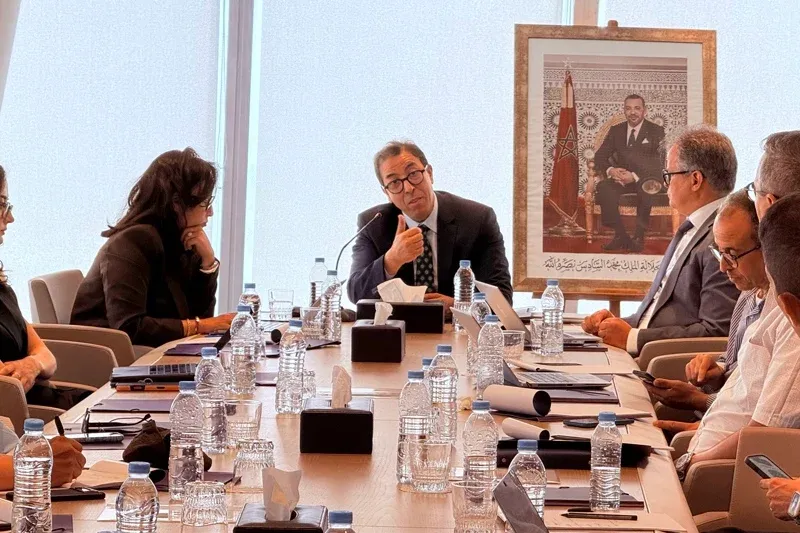
Nabil Badar, Director of Banking Supervision at Bank Al-Maghrib, confirmed during the press conference that revoking a license is the most severe disciplinary action that can be taken against credit institutions or micro-financing entities. He clarified that such a decision is only made after a legal process that ensures the rights of defense and respects the principle of confrontation. The disciplinary committee, chaired by the Governor of Bank Al-Maghrib, includes representatives from the Ministry of Economy and Finance and the central bank, along with two judges, who review cases and recommend sanctions before submitting them to the Governor for final approval. Revoking a license automatically initiates a liquidation process, appointing a liquidator to oversee the cessation of the involved institution's operations. The speaker emphasized that the disciplinary framework is not limited to license revocation but also includes warnings, compliance orders, reprimands, and financial penalties, noting that eight financial penalties were pronounced in the latest disciplinary decisions, with amounts directed to the state treasury as public debts.
According to the report from the Banking Supervision Directorate, this penalty framework is part of a broader initiative to enhance compliance requirements, focusing on risk-based monitoring in combating money laundering and terrorist financing, especially with the upcoming mutual evaluation by the Middle East and North Africa Financial Action Task Force (GAFIMOAN), which officially commenced on November 27, 2025. Additionally, the report stressed the importance of strengthening the sector’s cybersecurity resilience by implementing a cybersecurity dashboard across all banks and finalizing a best practices guide to counter ransomware attacks.
The 2025 annual banking supervision report also addressed numerous structural regulatory reforms undertaken in 2025-2026 that will enhance supervisory flexibility. Notably, the reform of debt classification and provisioning introduced a new category labeled 'sensitive debts,' which aims to identify credit risks before they result in actual defaults. The document deemed the completion of the banking law reform concerning the settlement system as another critical project, with final approval from the House of Councillors on June 30, 2026. This legislation grants the bank authority over settlements and establishes a settlement council, led by the Governor, responsible for reviewing preventive settlement plans for institutions and deciding whether to initiate settlement processes.
The report also documented a significant rise in customer complaints handled by Bank Al-Maghrib, with the number increasing from 1,459 in 2023 to 3,591 in 2025, reflecting a more than 56% increase within just one year. It noted that the complaints primarily related to account management and payment methods, a trend mirrored at the Moroccan Banking Mediation Center, which reported a 31% rise in processed cases during 2025.
As reported by hespress.com.