In recent years, France has been actively redefining its presence in West Africa, particularly following its gradual military withdrawal from the Sahel region. The transformation from a visible military footprint to a more nuanced approach emphasizes diplomacy, economic cooperation, and educational initiatives. This shift underscores a strategic transition where military presence has been supplanted by institutional visits, commercial partnerships, and the inauguration of projects that align with France's broader strategy of regional repositioning.
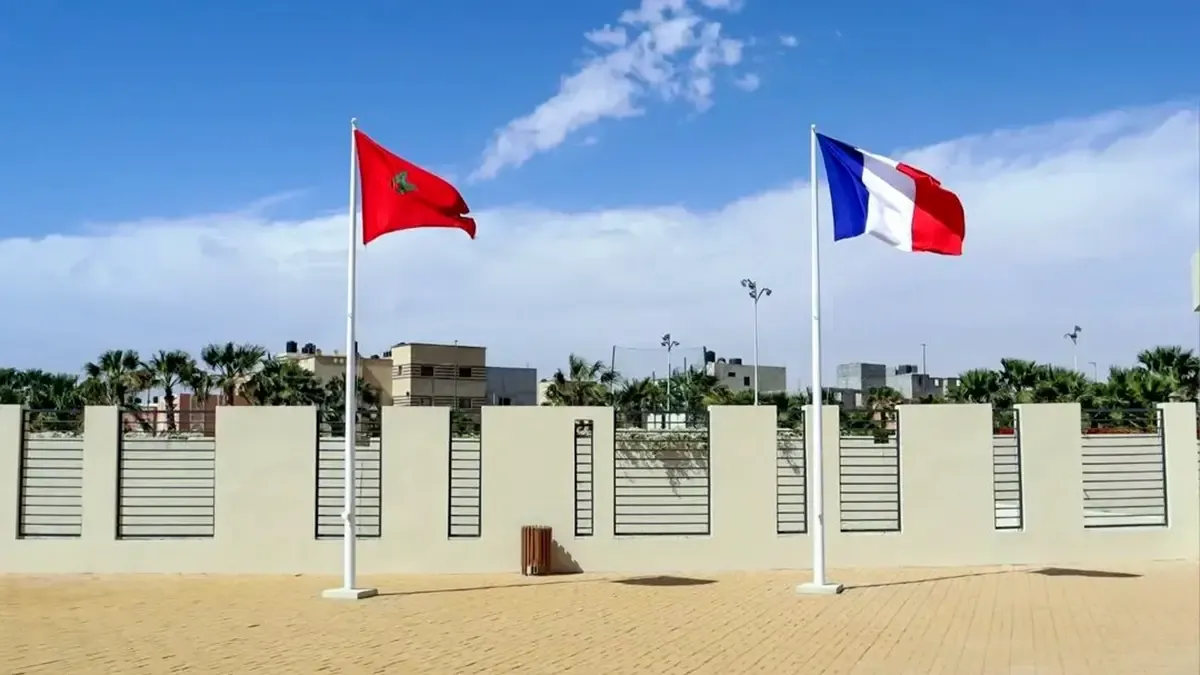
One significant manifestation of this diplomatic pivot can be observed through the recent visit of French Ambassador to Morocco, Christophe Lecourtier, to Laayoune, the capital of Western Sahara, which is under Moroccan administration. During this visit, he inaugurated a new French secondary school, signaling France’s commitment to establishing a permanent educational infrastructure aimed at nurturing local elites within the framework of French cultural and linguistic influence. Lecourtier's rhetoric during the opening ceremony centered on themes of cooperation, education, and a shared future, reinforcing the narrative that France seeks to integrate itself into the operational normality of the region.
Although France has yet to formally recognize Moroccan sovereignty over Western Sahara—unlike the United States—it has demonstrated a notable shift in its stance since 2024, leaning towards explicit support for Morocco's autonomy plan as a credible basis for resolution within the United Nations framework. This strategic positioning allows Paris to maintain a legally cautious approach while incrementally bolstering Morocco’s role in managing the territory. On the same day of Lecourtier's visit, Moroccan and regional media highlighted France's commitment to supporting development projects in the Sahara, reiterating the growing ties between the two nations.
In the energy sector, European firms, including French companies, are closely observing the development of renewable energy projects, such as wind and solar farms along the Atlantic coast, which stretches from Dakhla to Laayoune. Furthermore, the Dakhla Atlantic Port project has emerged as a significant logistics hub for West Africa, illustrating Morocco's expanding infrastructure capabilities. The presence of French companies related to construction, water management, and urban development is becoming increasingly prominent, indicating a robust economic partnership.
Simultaneously, as Lecourtier was engaging in Laayoune, Moroccan Foreign Minister Nasser Bourita was actively communicating with various African officials. These interactions are not coincidental; they are part of a long-term strategy that Morocco has been meticulously developing to gain international support for its stance on Western Sahara by connecting it with specific bilateral agreements. The convergence of support from major global powers for Morocco's Autonomy Plan underscores the growing legitimacy of its position.
This intricate web of diplomatic efforts is not solely governed by the Élysée Palace; it has progressively become part of the strategic initiatives of the French Ministry for Europe and Foreign Affairs. The coherence of the French diplomatic line is evident from official statements in Paris to the actions of the embassy in Rabat. France maintains a formal respect for the United Nations framework while simultaneously ramping up political backing for Morocco's solutions, illustrating a carefully balanced approach.
France’s initiatives on the ground, such as the recent educational openings and participation in development projects, are reflective of a well-thought-out policy rather than isolated incidents. Nations like Gabon, São Tomé and Príncipe, and South Sudan have also expressed diplomatic support for Morocco’s position, with some even establishing consulates in Saharan cities, symbolizing a tangible commitment to this alliance. This support extends beyond mere rhetoric; it is accompanied by collaborative efforts in agriculture, investment, civil service training, and agreements in telecommunications and fisheries, showcasing a multifaceted partnership.
For France, Morocco serves not only as a political ally but also as a strategic platform and gateway to Europe from Africa. Morocco's established presence in sub-Saharan Africa, along with its effective financial networks and economic diplomacy, positions it as a vital partner for Paris, especially as the latter navigates a shrinking operational space in Sahelian countries following years of military engagement.
Simultaneously, France is also looking toward Mauritania, which is over three thousand kilometers away. The recent state visit of Mauritanian President Mohamed Ould Ghazouani to Paris highlights France's efforts to maintain security partnerships in a region characterized by instability and anti-Western sentiment. Macron’s acknowledgment of Mauritania’s “responsible” role in the Sahel is indicative of France’s search for reliable partners amidst a landscape marked by coups and political upheaval.
During Ghazouani's visit, discussions centered on critical issues such as border control, intelligence-sharing regarding jihadist threats, and cooperation on maritime surveillance and energy projects, particularly in relation to the development of offshore gas fields alongside Senegal. These discussions illuminate France’s strategy of encircling the Sahel’s challenges through robust partnerships rather than direct military engagement.
By strategically positioning itself in this manner, France aims to influence developments in the Sahel while relying on regional partners like Morocco and Mauritania. This approach marks a departure from past military interventions, favoring trade routes, investments, and selective alliances as tools for shaping the geopolitical landscape. The Sahara transforms from a mere conflict zone into a pivotal area for economic development, with Morocco proposing access to the Atlantic for landlocked nations like Mali and Niger, thereby redefining economic dependencies in the region.
Moreover, the ambitious Nigeria-Morocco gas pipeline project, although still in the planning stages, represents a vital link between West Africa and Europe, particularly significant for the European Union amid its energy diversification efforts post-Russia crisis. France, as a key player in this context, remains invested in the stability and viability of these energy routes.
Nonetheless, this evolving dynamic is not without its challenges. Algeria, which has traditionally maintained a delicate balance with France, is increasingly wary of the strengthening ties between Paris and Rabat, perceiving it as a shift in the regional balance of power. The vacuum left by France’s military withdrawal from the Sahel has also allowed other actors like Russia and China to gain footholds, with Russia leveraging informal security structures and China expanding through infrastructure investments.
In this recalibrated landscape, France is opting for a less visible yet potentially sustainable mode of influence, relying on structural alliances and economic networks rather than direct military competition. This shift has been further complicated by historical grievances and political disparities that strain France's relationships in the region. However, the strengthening of Morocco’s role in Sahara with French support introduces additional friction, challenging the status quo.
Moreover, the French endeavors in elite training through institutions such as the newly opened secondary school in Laayoune serve as a long-term strategy for influence. These schools are not merely educational facilities; they cultivate enduring connections through language, curricula, and professional networks, fostering an affinity that enhances France's economic and political presence over time.
The pivotal question remains whether this revised model will evade the pitfalls of its predecessor. The previous military presence in the Sahel fostered resentment among local populations, leading to perceptions of interference and neo-colonialism. While France’s withdrawal has curtailed its direct intervention capacity, it has also minimized its exposure to backlash.
By leaning on regional partners like Morocco and Mauritania, France can extend its influence while avoiding the spotlight. However, this delicate balance is susceptible to shifts in perception; if these partners are seen as proxies for external interests, they may also face local opposition. At present, France's strategy appears to be a calculated maneuver; it has not relinquished its interests in West Africa or the Sahel but has adapted to a changing context, emphasizing agreements over military presence. Morocco, with its strategic Atlantic positioning and diplomatic engagement, has become a central component of this new approach, complemented by Mauritania's relative stability amid regional turbulence.
As reported by atalayar.com.