After several days of coordinated efforts in the Strait of Gibraltar, two French sailors who had gone missing off the coast of Tangier were finally found alive. Their rescue marks the conclusion of a large-scale operation that mobilized extensive resources from Moroccan, French, and Spanish authorities.
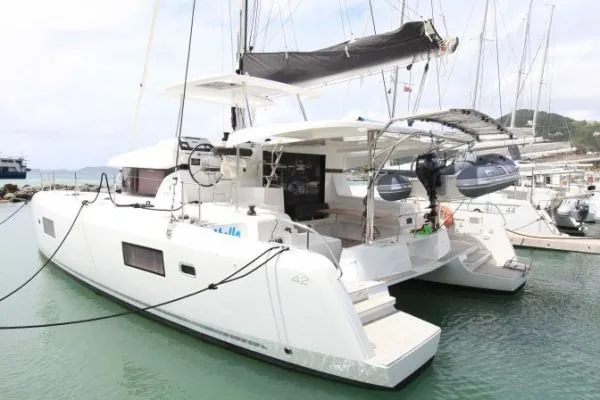
The Moroccan National Center for Coordination and Maritime Rescue was alerted on the night of May 24 to 25, 2026, following a report concerning the catamaran Stella. This sailing vessel was on a delivery voyage between Martinique and a European port when the crew reported a water ingress issue. According to relatives of the sailors, the initial communication indicated a breach of water, while a second message stated that the ship had been abandoned and that the crew had taken to the life raft.
The Stella was quickly located, drifting near the Moroccan coast but with no occupants onboard. Once the catamaran was found, search operations shifted focus to finding the life raft where the two sailors had taken refuge.
The response was systematic. Moroccan authorities mobilized aircraft, helicopters, multiple naval units, and land rescue teams along the coast. France deployed a maritime surveillance aircraft, and the search was later expanded into Spanish waters. The area of operation presented significant challenges due to complex currents in the Strait of Gibraltar, which, combined with heavy maritime traffic, often make it difficult to locate smaller vessels.
The operation came to a successful conclusion on May 28, 2026, when a commercial ship discovered the life raft near Assilah on the Moroccan Atlantic coast. The identification of the two French sailors was confirmed with the assistance of Moroccan authorities. The survivors were subsequently taken aboard the commercial vessel, which was en route to Cádiz in southern Spain.
While their health status was not detailed, authorities confirmed they were safe and well. A key takeaway from this incident pertains to the safety equipment onboard. Moroccan officials indicated that the sailors did not possess an emergency beacon. For offshore sailors, individual beacons or EPIRBs (Emergency Position Indicating Radio Beacons) are often the quickest means to communicate their precise location to rescue centers when abandoning the ship becomes necessary.
In this instance, the search was initiated swiftly due to the initial alarm, but the absence of the beacon complicated efforts to locate the life raft over several days. This incident also serves as a reminder of a well-known principle of maritime safety: A floating vessel is generally more visible than a life raft.
The exact circumstances that led the crew to abandon the Stella remain unclear. Any investigations conducted on the catamaran, which was towed to the port of Assilah, may provide insights into the nature of the damage reported before they left the ship.
As reported by boote.com.