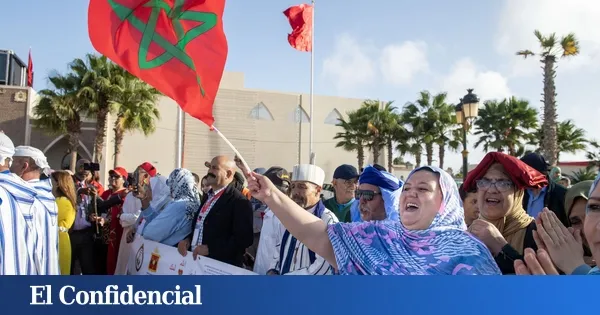
Understanding Morocco's Territorial Aspirations in the Context of US-Spain Relations
The recent geopolitical upheaval affecting the relationship between Washington and Madrid has unexpectedly opened a door for one of the oldest territorial claims in the Arab world. The escalating tensions between the United States and Spain, particularly regarding NATO and Iran, have created an opportunity for Morocco to reiterate its claims over the Spanish enclaves of Ceuta and Melilla. This renewed assertiveness is bolstered by diplomatic support from Israel, as part of the Abraham Accords, which align with US interests in the region.
Among the various analyses published since early March regarding Morocco's maneuvering amidst the current discord between the Spanish government and its American and Israeli counterparts, an article authored by Moroccan writer Amine Ayoub in the Israeli newspaper Yedioth Ahronoth stands out for its explicitness. Ayoub, who previously worked for Israel's liaison office in Rabat, regularly contributes opinion pieces to both Hebrew and international media outlets, including the ultra-conservative pro-Israeli think tank Middle East Forum based in Philadelphia. His insights have sparked significant attention, particularly among Spanish digital media, which have sensationalized the implications of his statements. Headlines such as “Israeli Press Warns Netanyahu and Trump May Support Morocco's Plans for Ceuta and Melilla” have highlighted the article's influence.
Current Diplomatic Dynamics and Morocco's Strategic Priorities
Despite Morocco's diplomatic confidence stemming from its close ties with the White House and recent successes regarding Western Sahara, Ceuta and Melilla do not currently rank as top priorities for the Moroccan government. This is evidenced by the fact that Ayoub's article would not be permitted for publication in Moroccan media, where dissenting voices regarding relations with Spain are notably scarce. The journalist Wissam El Bouzdaini, writing for the Moroccan digital platform Media 24, reflects a more grounded perspective, suggesting that the notion of involving the US in the affairs of Ceuta and Melilla is, at this moment, unfounded.
El Bouzdaini articulates an opinion that appears to align with the Moroccan authorities' unspoken views, emphasizing that the current time marks a historic juncture in Spanish-Moroccan relations. This is largely attributed to Spanish President Pedro Sánchez's support for Morocco's autonomy plan regarding Western Sahara, which effectively endorses Morocco's territorial integrity. It is crucial at this juncture that nothing disrupts this support. Furthermore, Morocco is set to co-host the 2030 FIFA World Cup alongside Spain and Portugal, a significant event that Morocco has pursued vigorously since 1994. The successful bid, aided by Sánchez, underscores the importance of maintaining stability in diplomatic relations to ensure the success of this international endeavor.
While Morocco continues to seek international recognition of its sovereignty over territories it claims, including areas once under Spanish control, it is essential to remember that the country has not relinquished its historical claims to Ceuta and Melilla. Media 24 highlights the ongoing restrictions that prevent Moroccan diplomatic passport holders from entering Spain through these enclaves, symbolizing a refusal to acknowledge Spanish sovereignty. Additionally, the economic restrictions faced by these cities, compounded by the lack of operational customs and stringent border controls, reflect a broader strategy that Morocco employs to assert its claims without overtly escalating tensions.
Moreover, the increasing migratory pressure on Ceuta, akin to the unprecedented influx of irregular migrants in May 2021, adds another layer of complexity to this scenario. As of mid-April, the number of migrants arriving by sea or scaling the border has surged significantly compared to previous years, showcasing the urgent humanitarian challenges that coincide with the geopolitical landscape. Morocco is currently focused on solidifying its gains in Western Sahara, which also indirectly impacts the Canary Islands, as highlighted by a recent article in Atalayar, an unofficial spokesperson for Moroccan authorities in Spain. The aim is to secure advantageous territorial waters and access to submerged resources in the region.
In conclusion, while the issue of Ceuta and Melilla may not be at the forefront of Morocco's diplomatic agenda at this moment, it is evident that Rabat is laying the groundwork for future claims, hoping that circumstances will eventually align to further their objectives. The Spanish government, both current and previous administrations, has done little to counter these long-term trends, leaving the future uncertain.
As reported by elconfidencial.com.