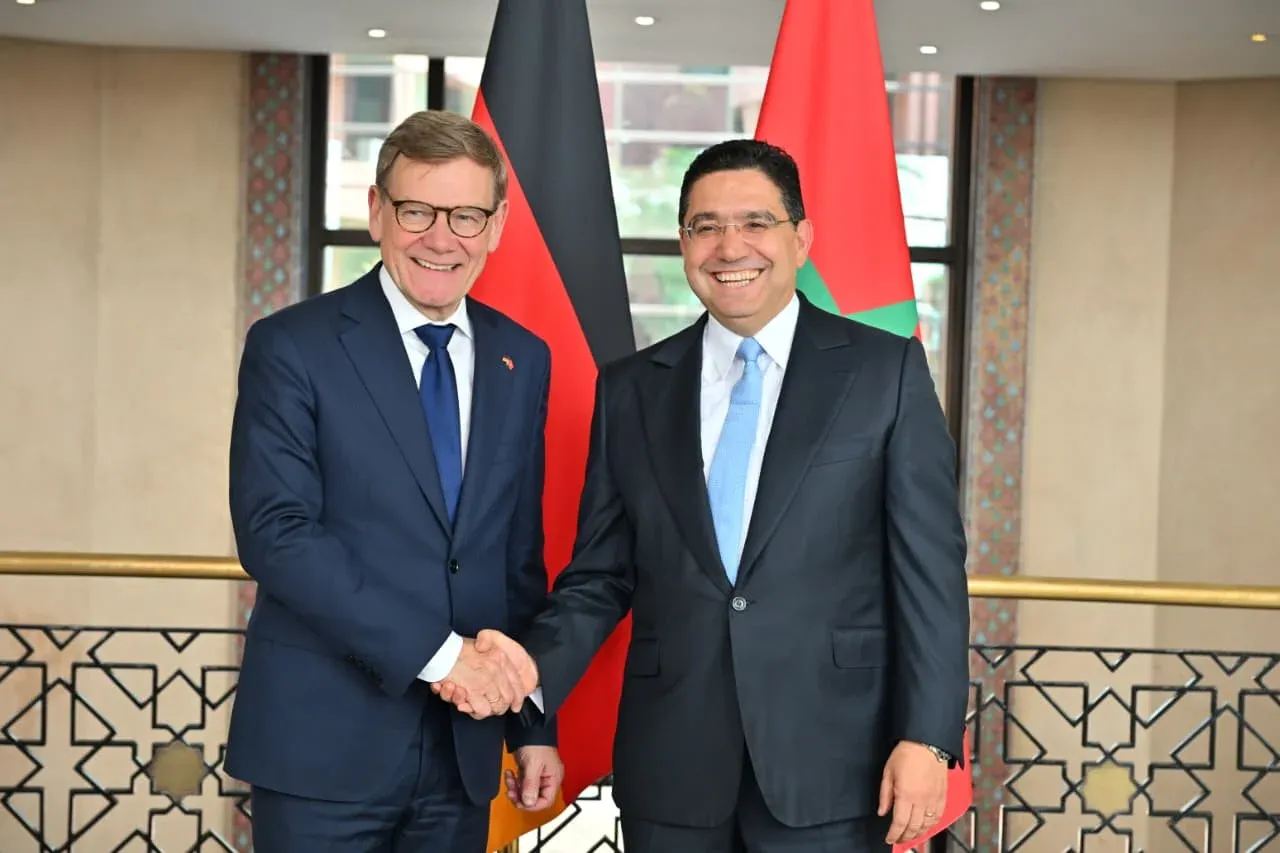

During his recent visit to Morocco, German Foreign Minister Johann Wadephul articulated a clear vision to enhance the collaborative efforts between Germany and Morocco across multiple sectors, including economic development, cultural exchange, and security initiatives. This endeavor underscores the robust strategic dialogue that has been established between the two nations, particularly highlighting Berlin's endorsement of the autonomy proposal concerning the Sahara region.
Wadephul's visit to Morocco, which took place on a significant day marked by the 70th anniversary of diplomatic relations between Germany and Morocco, was met with warm hospitality from Morocco's Foreign Minister, Nasser Bourita. This landmark occasion coincided with the second session of their comprehensive Strategic Dialogue, which Bourita emphasized as being of great importance for various reasons. The historical ties between the two countries date back to the signing of their first bilateral agreement in 1890, and both nations are now eager to transform their cooperation into a robust and forward-looking partnership.
Central to their discussions was Morocco's autonomy initiative for the Sahara, which Wadephul affirmed as a vital and consistent element of Germany's position on the matter. He stated that Germany views this initiative as a "serious and credible basis for negotiations" aimed at reaching a fair, lasting, and mutually agreeable solution. Moreover, Germany expressed its strong support for the endeavors of the United Nations Secretary-General and his personal envoy in this context.
Following Wadephul's meetings with Bourita, a press briefing highlighted the shared perspectives of both parties on regional stability issues, particularly those affecting the Middle East, Mali, and the Sahel region. Wadephul acknowledged the significant consensus achieved on various fronts within the strategic dialogue, particularly on matters related to politics, peace, security, economic growth, and investment—areas that are crucial for the deepening of ties between Rabat and Berlin.
As Wadephul noted, "Morocco is a key country for Germany on the African continent. We share common interests and maintain excellent economic relations… More than 300 German companies invest here and benefit… we want to continue to exploit this potential." This sentiment was echoed by Bourita, who highlighted that the dynamic of cooperation with Germany encompasses a wide array of sectors, with Germany being a major economic player in Morocco.
In recent years, tourism has emerged as a vital component of Morocco's economy, experiencing significant growth, with nearly one million German tourists visiting the country—an increase of 11% in just one year. Discussions also addressed the expansion of cooperation in emerging fields such as renewable energy and digital transition, with a focus on how to promote these opportunities to the private sector for collaborative efforts.
Bourita assured that the existing legal framework supports the strengthening of this cooperative dynamic, which encompasses nearly all sectors for investors in Morocco. Both nations are committed to ensuring that their cooperation is built on principles of mutual respect and responsibility at the regional level, while also fostering a qualitative evolution in their bilateral relations.
As reported by en.yabiladi.com.