
AI Governance Takes Center Stage in Geneva
On July 6, 2026, Geneva became the focal point for discussions surrounding artificial intelligence (AI) and its implications for humanity. The statement that "artificial intelligence reaches, if not surpasses, human capabilities in many areas" echoes a sentiment often found in dystopian narratives by authors like Asimov and Barjavel. However, this assertion comes from Yoshua Bengio, a Turing Award laureate and a founding figure in the AI field. In an interview with UN News, Bengio expressed concerns that science cannot guarantee these systems will not cause "catastrophic damages." This sets the stage for a significant dialogue, where global representatives gathered to finally establish ground rules for AI governance.
The journey to Geneva began on July 1 in New York, where a group of forty independent scientists, mandated by the United Nations General Assembly and co-chaired by Bengio and Nobel Peace Prize laureate Maria Ressa, released a preliminary report with alarming undertones. For the first time, these experts indicated that AI capabilities are evolving faster than our understanding and governmental oversight can keep pace with. The complexity of tasks assigned to machines reportedly doubles every few months, while political timelines extend over years, leading to a concerning disconnect. Additionally, the report highlighted a significant concentration in AI development, with nearly all advanced models emerging from the United States or China, and three-quarters of global computing power dedicated to AI located in the U.S. Ressa warned of an impending "information Armageddon."
Morocco's Commitment to Equitable AI
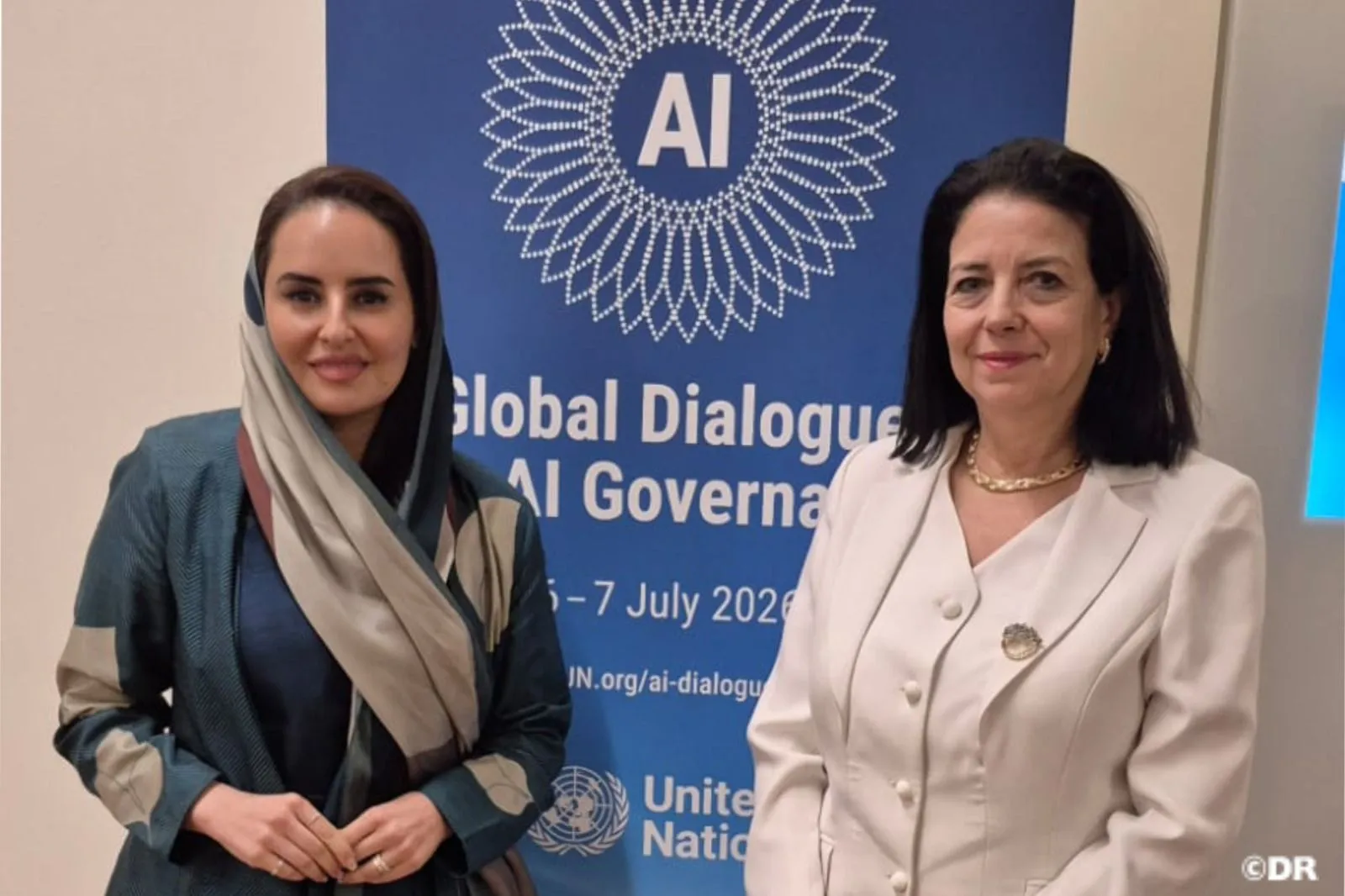
Against this backdrop, the first Global Dialogue on AI Governance was held in Geneva on July 6 and 7, bringing together representatives from over 170 countries. UN Secretary-General António Guterres cautioned that the current generation might be the last capable of regulating this transformative technology, announcing a future global fund aimed at supporting developing countries and emphasizing the need to protect children from conversational systems.
Morocco took this opportunity to advocate for the belief that equitable AI should be constructed before any regulatory framework is established. Led by the Minister Delegate for Digital Transition, Amal El Fallah Seghrouchni, alongside ambassadors Omar Zniber and Omar Hilale, Morocco's delegation emphasized the importance of inclusion grounded in concrete action, focusing on access to energy, computing power, and skills development. Rather than pursuing an illusory self-sufficiency, Morocco promotes a notion of sovereignty that encompasses the ability to choose what to share, acquire, and maintain under national control. The minister highlighted the "Morocco AI 2030" roadmap, which aims to train 100,000 talents annually by the decade's end, and the D4SD hub developed in Rabat in collaboration with the United Nations Development Programme, which Nigeria may join.
In the realm of digital diplomacy, Morocco is on familiar ground. Just last month, while presiding over the Group of Francophone Ambassadors in Geneva, Morocco organized a meeting focused on AI and disarmament. The narrow window for Southern countries to influence common rules is crucial, as they navigate between the alarm of scientists and the ambitions of industrial players.
As reported by maroc-hebdo.com.