
Transforming Maritime Operations in the Western Mediterranean
The Italian shipping company Grandi Navi Veloci (GNV), part of the Mediterranean Shipping Company (MSC) Group, has embarked on one of the most significant fleet expansion and renewal operations in the Western Mediterranean. With an investment exceeding 1.2 billion euros, GNV is redefining its maritime strategy between Europe and North Africa, positioning the Genoa-Barcelona-Tanger Med corridor as a crucial logistics and passenger axis for this decade. The launch of the new ferry GNV Aurora on June 1 marks a pivotal milestone in this strategy, as it will begin operations on the route connecting Italy, Spain, and Morocco, followed by its operational twin, GNV Virgo, on July 1. These vessels will enhance the company's capacity during Operation Marhaba 2026, one of the largest passenger movements globally between Europe and the Maghreb.
Morocco: A Strategic Growth Hub for GNV
GNV's focus on Morocco has emerged as a significant development in European maritime transportation. The surge in cargo traffic, the rising number of passengers across the shores, and the establishment of Tanger Med as a major logistics hub in the Mediterranean have prompted GNV to substantially increase its presence in this market. Today, Mateo di Candia, the general director in Spain, and Matteo Catani, the company's CEO, along with Moroccan executives and other officials, officially launched the Aurora, signifying Morocco's evolution from a mere commercial stop to a strategic growth axis for the long term.
Barcelona has solidified its role as a connection platform between Italy and Morocco, enhancing a maritime corridor that is gaining importance for both roll-on/roll-off cargo transport and passenger flows. However, GNV is also keeping a keen eye on Valencia. While this year's media spotlight is on the Genoa-Barcelona-Tanger Med connection, the ongoing evolution at Valenciaport places it on GNV's strategic radar for the coming years. Currently, GNV operates regular routes between Valencia and the Balearic Islands and has a presence in the city, but its growth potential extends well beyond tourist traffic.
The transformation occurring at Valencia's port, which is the first in the Mediterranean undergoing expansion, digitalization, and enhanced rail connectivity, aligns perfectly with GNV's strategy for its Mediterranean network. The anticipated capacity of Valenciaport, its northern expansion, the development of new terminals, railway corridors, and investments in sustainability all fit into GNV's vision. There is a growing consensus within the maritime sector that Valencia is well-positioned to play a more significant role in the future maritime corridors between Europe and North Africa.
Although GNV has not announced new direct routes between Valencia and Morocco, the steady increase in trade exchanges between the two regions and the port's logistical strength suggest it could accommodate future operational expansions. Valencia's geographical position, industrial hinterland, and land connectivity are highly valued assets by international maritime operators. GNV's initiative is not merely a commercial venture; it also represents a significant push towards technological modernization in European maritime transport.
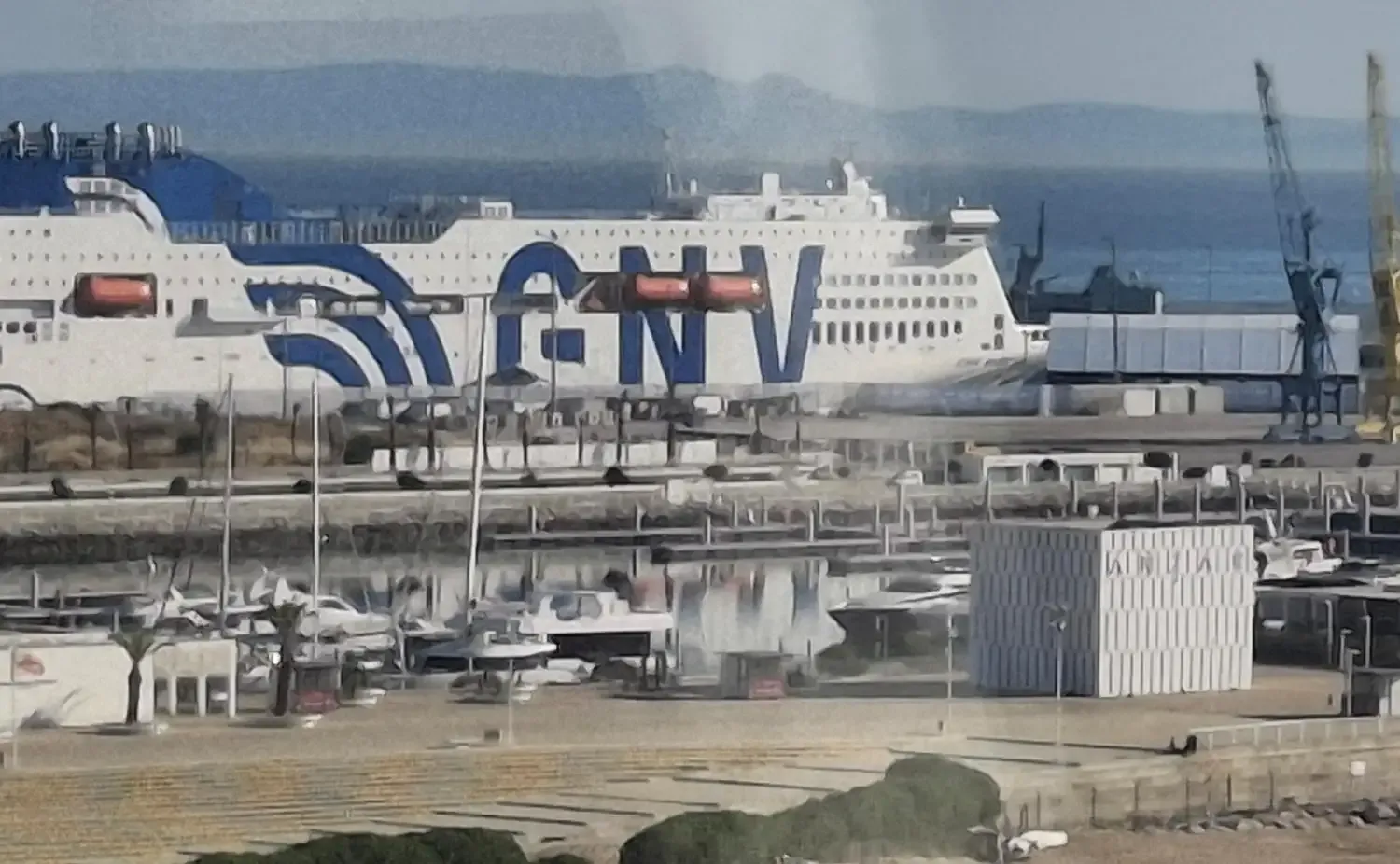
The GNV Aurora can accommodate over 1,700 passengers, features 426 cabins, and has the capacity to carry up to 2,780 linear meters of roll-on/roll-off cargo. Measuring 218 meters in length and capable of speeds nearing 25 knots, it ranks among the most advanced vessels in GNV's fleet. Its notable innovation is the use of liquefied natural gas (LNG) as fuel, which significantly reduces pollutant emissions and is currently seen as the primary energy transition solution for long-distance maritime transport. Furthermore, the new ferries include electric connection systems in port using cold ironing technology, eliminating emissions during docked periods.
GNV's environmental strategy views LNG as a transitional fuel while the industry progresses towards the commercial development of future alternatives such as bio-LNG, methanol, hydrogen, or ammonia. The introduction of the Aurora and Virgo marks just the beginning of a broader renewal program, with GNV having ordered new high-capacity ferries that are expected to be delivered starting in 2028, which will significantly enhance the availability of passenger and cargo services in the Mediterranean. Future vessels will exceed 237 meters in length, feature over 500 cabins, and are designed to carry up to 2,500 passengers and more than 3,500 linear meters of roll-on/roll-off cargo. All will be prepared to operate with LNG and meet the new environmental standards mandated by the sector.
Thus, GNV is aiming to establish a fleet that is increasingly efficient, competitive, and compliant with new European emission regulations. The strategic implications of GNV's maneuvers extend far beyond the introduction of new vessels; they signal a reconfiguration of the major maritime corridors in the Western Mediterranean. The consolidation of the Genoa-Barcelona-Tanger Med axis, the growth of Tanger Med as an international logistics platform, the transformation of Valenciaport, and the steady increase in traffic between Europe and Morocco are shaping a new landscape for maritime highways, which, as emphasized by CEO Mateo di Candia, will replace truck traffic on roads.
In this context, GNV aims to position itself as a leading operator between Europe and North Africa, with Valencia increasingly recognized as a key player in the upcoming years. The launch of the GNV Aurora symbolizes more than just the arrival of a new ferry in the Mediterranean; it represents the consolidation of a new generation of maritime transport characterized by more efficient vessels, greater logistical capabilities, and ever more integrated corridors between Europe and Africa. The pressing question now is not whether GNV will continue to grow in the Western Mediterranean, but rather to what extent ports like Valencia will become part of the next phase of expansion for a shipping company that has already placed Southern Europe and Morocco at the heart of its future.
As reported by interdiario.es.