In Brussels and across major European capitals, the issue of drought has evolved from a sporadic problem to a pressing concern for national administrations. Recent climate monitoring reports from the Mediterranean basin indicate a structural shift: water availability is decreasing, soils are increasingly parched for prolonged periods, and the pressure exerted on rural and urban areas is becoming more suffocating each year. Countries like Spain are experiencing years of water stress in several of their key basins, while Italy oscillates between floods and water restrictions in both its northern and southern regions. Greece has been forced to implement emergency plans on many of its islands reliant on water truck deliveries, and France is already issuing alerts for shortages even in traditionally lush and rainy areas.
The European Environment Agency has clearly indicated that southern Europe is heading toward a scenario where access to running water can no longer be taken for granted. This crisis is not solely due to declining rainfall; it stems from a combination of rising temperatures, accelerated evaporation due to heat, and an ever-increasing demand driven by intensive agriculture and tourism. Water stress is gaining prominence as one of the major issues, surpassing other challenges such as energy crises or food prices.
Morocco's Water Management Success Amidst Drought
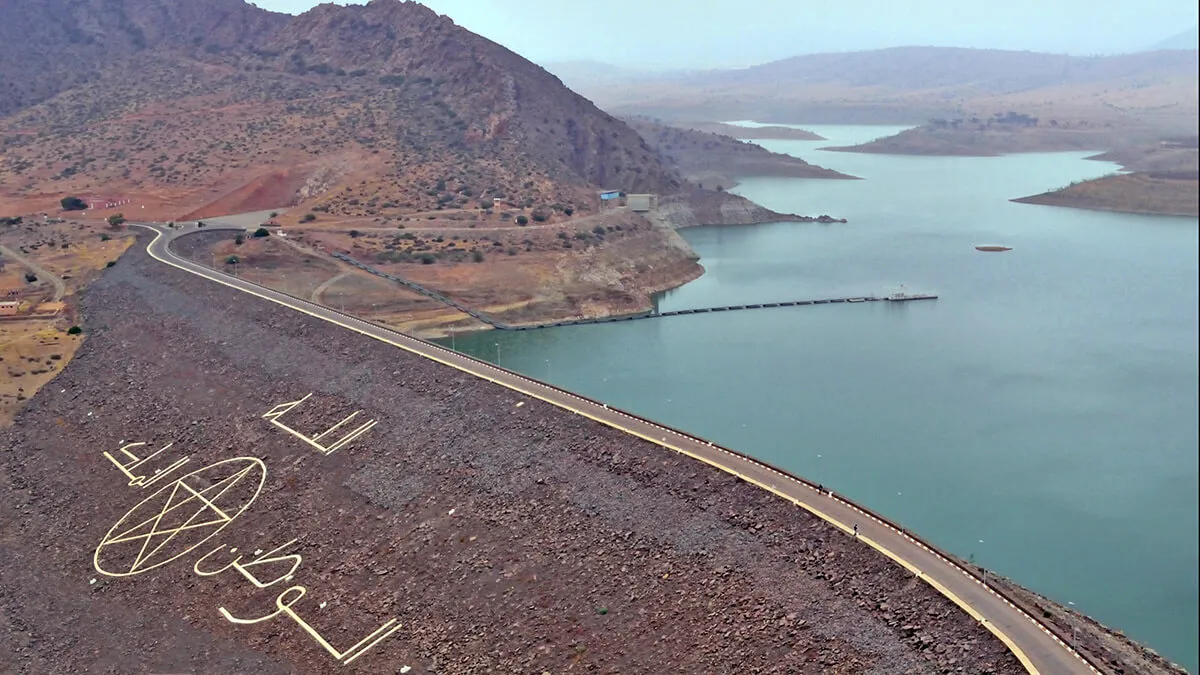
Conversely, across the Mediterranean, Morocco presents a markedly different narrative. A recent statistic has raised eyebrows among climate analysts: Morocco has managed to fill its reservoirs to nearly 75% of their total capacity. This fact is set against the backdrop of one of the most severe and prolonged droughts in its recent history, a challenging period that severely impacted rural areas, dried up urban faucets, and put public management to the test. At the height of the crisis, the Moroccan government had to acknowledge the critical situation, imposing severe restrictions in major cities and sparking a social debate on whether the nation could sustain an agricultural model focused on the export of water-intensive crops.
Consequently, Rabat seized the years of 'lean times' to double down on its hydraulic infrastructure. The outcome is a country that has increased its water storage capacity, even as its northern neighbors remain ensnared in the roulette of climate challenges. In recent years, Morocco's strategy has focused on three main economic and technical fronts: storing water, desalting seawater, and transporting resources to where they are most needed. The country has not only constructed new dams and improved existing ones but has also established significant 'water highways' to connect surplus basins to drier areas, rectifying territorial imbalances. This is coupled with the deployment of desalination plants along both the Atlantic and Mediterranean coasts, designed to alleviate pressure on inland rivers and aquifers.
One crucial reform, albeit less glamorous, has taken place on the ground. Agriculture, which serves as the engine of the Moroccan economy, has become the first casualty of climate change, necessitating a rapid modernization of irrigation systems. The government has mandated the implementation of drip irrigation technologies and extreme efficiency in large farms. King Mohammed VI has reiterated in several speeches that water management should be treated as a national security priority. This message has paved the way for an administration that now places water policy on par with energy and food sovereignty. Nizar Baraka, the Minister of Equipment and Water, encapsulated this sentiment succinctly: water management cannot be left to the whims of nature's cycles. While climate remains chaotic, infrastructures must act as a lifeline.
A Disturbing Comparison Across the Mediterranean
This stark contrast between the two shores of the Mediterranean is becoming a topic of discussion among technical offices, even as European politicians shy away from addressing it publicly. While southern Europe struggles to adopt emergency decrees to save its summers, Morocco presents itself as a state that has successfully tackled the issue of scarcity and replenished its reserves in a remarkably short hydrological timeframe. Experts view this turnaround as reflective of the realities in North Africa, where climate change has compelled governments to treat water as a state matter. In the case of Rabat, this transformation has also become an excellent showcase to the outside world, positioning Morocco as a reliable partner in water, energy, and food security across the continent.
Indeed, Morocco's leadership in 'South-South cooperation' already includes advisory missions and joint projects in infrastructure and crop management across various Sahel and West African countries, regions where water scarcity is a chronic and structural issue. However, the fact that Moroccan reservoirs are filled to 75% does not imply that North Africa has permanently resolved its issues, nor does it present a one-size-fits-all solution for Europe. The economic, geographic, and social model differences make it impossible to replicate these plans exactly.
Nonetheless, the Moroccan case illuminates the European debate, highlighting the distinction between a country that integrates water scarcity into its long-term strategic planning and others that still react with improvisation and emergency aid once the taps have run dry. Amidst the gap between climatic realities and governmental responses, Morocco's management has gained weight and importance that it previously lacked. While it is not a perfect solution, it serves as a mirror reflecting the Mediterranean where water has ceased to be a guaranteed resource and has become the significant factor of instability for the future. As reported by atalayar.com.