
Unveiling the Martian Secrets of Meteorite Northwest Africa 7034
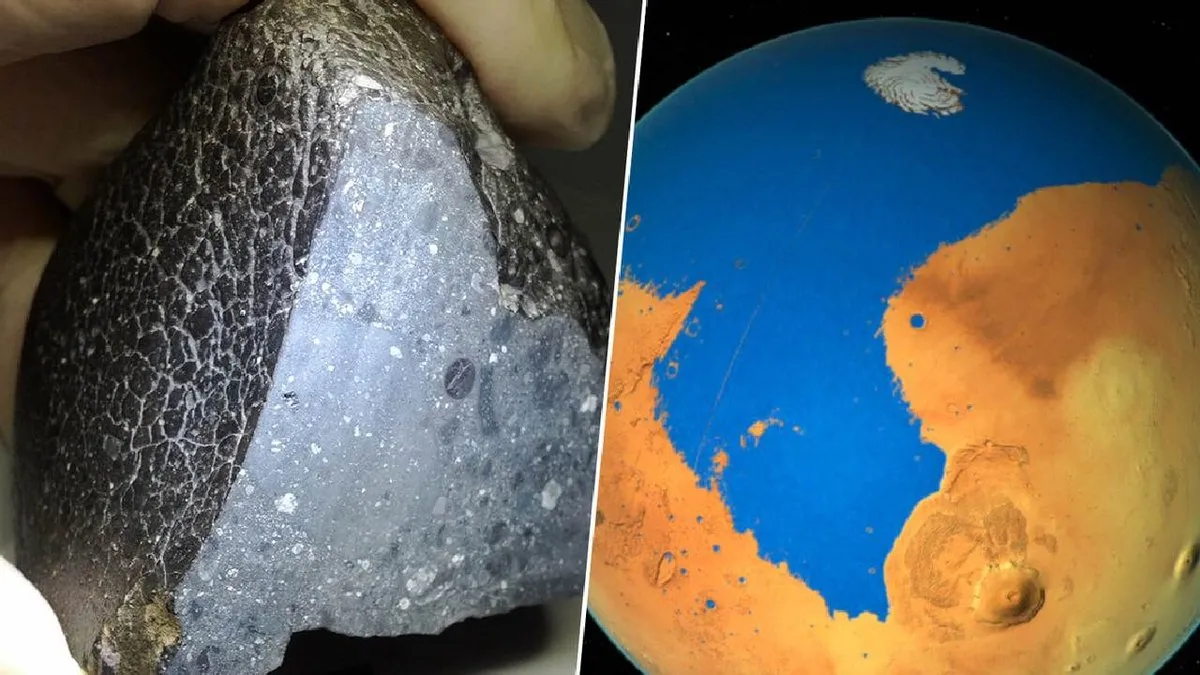
In a remarkable discovery made in 2011, a meteorite weighing 320 grams, which has since been dubbed "Black Beauty," was unearthed in the Sahara Desert by a group of Sahrawis. This extraordinary celestial rock was later sold to an American collector in Morocco and has since captured the attention of the scientific community for its unique composition and significant implications regarding the geological history of Mars.
Officially classified as Northwest Africa 7034, this meteorite is unlike any other previously identified. It possesses a distinctive combination of ancient and relatively recent minerals, providing a valuable snapshot of Mars' crust. This remarkable geological feature is consistent with findings from NASA's rovers, which have been exploring the Martian surface and gathering evidence of past environmental conditions.
What makes this meteorite particularly intriguing is its potential to enhance our understanding of water presence on Mars. The geological composition suggests the possibility of geothermal water, a critical factor for assessing the planet's habitability. This aligns with ongoing research aimed at uncovering the history of water on Mars, a key element in the search for extraterrestrial life.
As scientists continue to analyze Black Beauty, they hope to unlock more secrets of the red planet, contributing to our broader understanding of Mars' geological processes and its capacity to support life in the past. The implications of such findings are monumental for planetary science and astrobiology, as they bring us one step closer to answering the age-old question of whether life ever existed beyond Earth.
As reported by jeuxvideo.com.