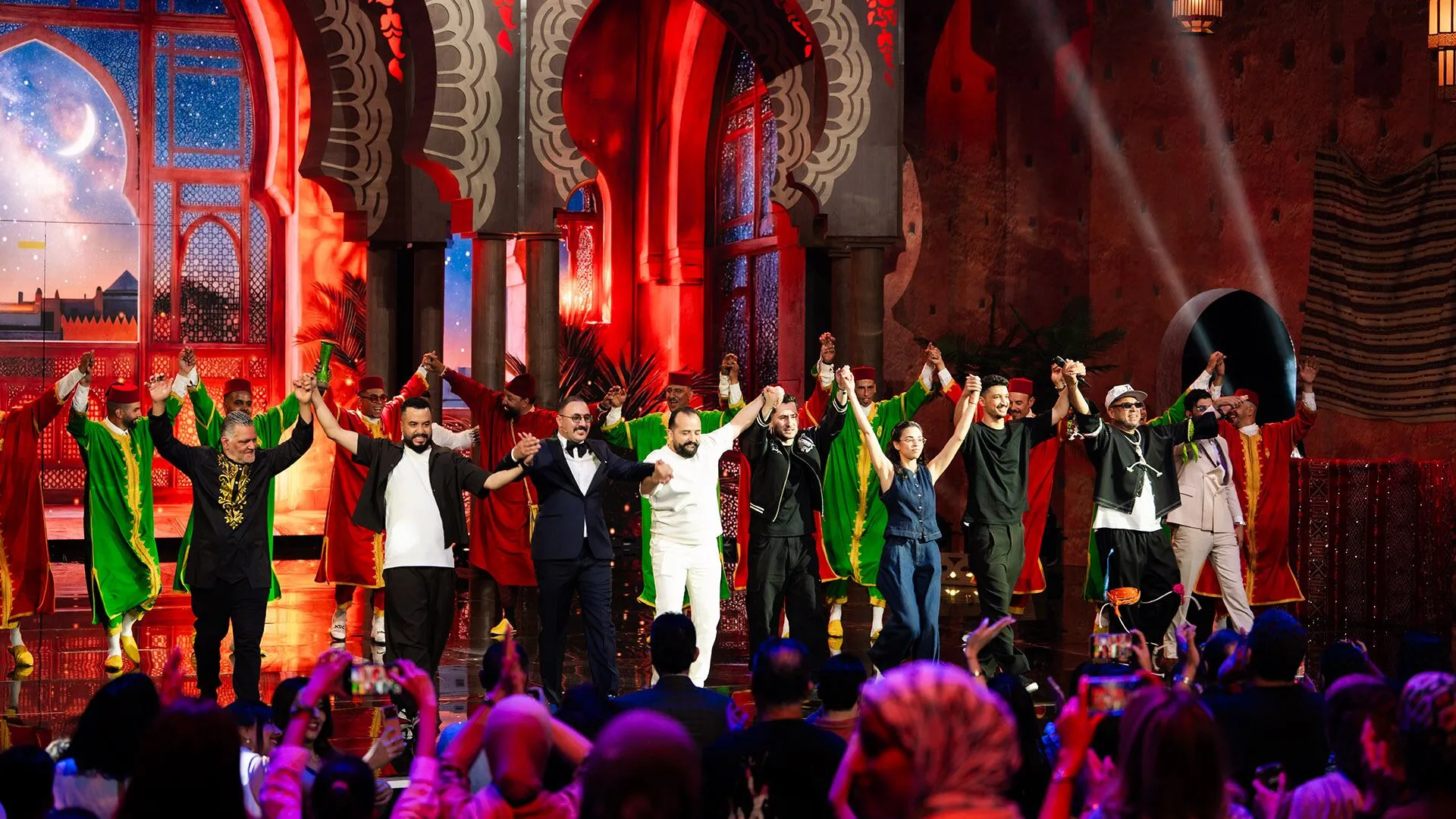
The Marrakech Comedy Festival officially kicked off its inaugural edition on June 4, 2026, at the grand hall of the Palais des Congrès in Marrakech. To commence the festivities, the organizers focused on an Arabophone Gala, which was under the artistic direction of comedian Eko, who also served as the master of ceremonies for the opening night. Throughout the program, a lineup of talented performers took the stage, including Ghita Kitane, Ahmed Boudrouze, Marouane Nbalsi, Saif Eddine Settif, Soufiane Figuigui, Amine Belghazi, and Azzedine Fetouhi, accompanied by DJ REDSupa, the group Bola Bola Dekka Marrakchia, and singer Mounim Slimani.
The festival, initiated by Karim Debbouze and Malik Bentalha, has found its rightful home in Marrakech, a city rich in cultural heritage. In his editorial, Karim Debbouze expressed the ambition to "position the ochre city as the world capital of humor." The festival’s aim extends beyond mere performances in a venue; both the Arabophone and Francophone galas are set to be broadcast on Moroccan and French channels, as well as across social media platforms, allowing the festival to reach an audience far beyond those physically present in Marrakech.
Festival Highlights and Performers
The structure of this first edition is designed around four key highlights spread over three days. In addition to the Arabophone Gala on Thursday, June 5 is dedicated to the Francophone Gala, hosted by Malik Bentalha, alongside a solo performance by Nordine Ganso. The festival will conclude on Saturday, June 6, with Yassar's solo act. There will also be two open mic nights, presented as an opportunity for emerging artists to showcase their talents.
Hailing from Marrakech, Eko took on multiple roles during the opening night as host, artistic organizer, and performer. This choice reflects a clear geographic coherence: having grown up in the city, Eko's career—ranging from viral videos to sold-out one-man shows—represents a generation of Moroccan comedians who first gained recognition on digital platforms before making their mark on stage.
In an homage to the 'guerrab', an iconic figure in Moroccan popular culture, Eko opened the evening dressed in traditional attire, a gesture that immediately set the tone for the night, establishing humor steeped in recognizable cultural references. Jemaâ El Fna, the central square in Marrakech known for storytelling and popular performances, was also invoked during his introduction.
In pre-festival statements, Eko described his comedic sense as being deeply tied to the observation of daily life in Marrakech: "In Marrakech, there is a very special energy; as soon as you step out onto the street, you hear unique expressions, reactions, and discussions." He highlighted that his "greatest school" was "observation," well before media exposure. Following the evening's festivities and in a discussion with _Le360_, he characterized the gala as a "wedding ceremony," expressing that he felt surrounded by his own family.
Contemporary Stand-Up Themes
The performances of the evening revolved around recurring themes in contemporary Moroccan stand-up comedy, such as family dynamics, gender relations, social codes, and language, each explored through the unique lenses of the comedians. Amine Belghazi tackled various subjects, including outdated names that some parents still give to their newborns, the behavior of babies, the intimidating figure of the mother, and gym culture, examining pricing and the demographics of gym-goers. Soufiane Figuigui delved into more intimate topics, discussing the birth of his brother and portraying an aunt described as "open-minded," a term that, in this context, refers to a departure from dominant family and social norms. Ghita Kitane offered a diverse set of observations, ranging from the 2025 African Cup of Nations and the national football team to romantic relationships, the mothers' influence on their children's private lives, and the nuances of flirting across different Moroccan cities. Azzedine Fetouhi wrapped up the performances by addressing societal issues, including women's roles, marriage, and the behaviors of Moroccan men in relationships, particularly focusing on infidelity. His act was notably met with enthusiastic applause from the audience.
Midway through the evening, Malik Bentalha joined Eko on stage for an improvisation segment. Eko playfully commented on his partner's clumsy moments in Darija before introducing him to the rhythms of the Dekka Marrakchia, a popular musical tradition associated with Marrakech, alongside the group Bola Bola Dekka Marrakchia.
The opening night also attracted notable personalities from the cultural and entertainment sectors, including Fati Jamali, Farah El Fassi, Samia Akariou, and Moulay Slimane, who were present to witness this inaugural celebration.
Looking ahead, the Francophone Gala on June 5, hosted by Malik Bentalha, will feature performers such as Paul de Saint Sernin, Sossam, Léopold Lemarchand, Sarah Lele, Meryem Benoua, and Youness Hanifi, alongside Nordine Ganso's solo performance. The festival will conclude on Saturday with Yassar's solo act.
As reported by fr.le360.ma.