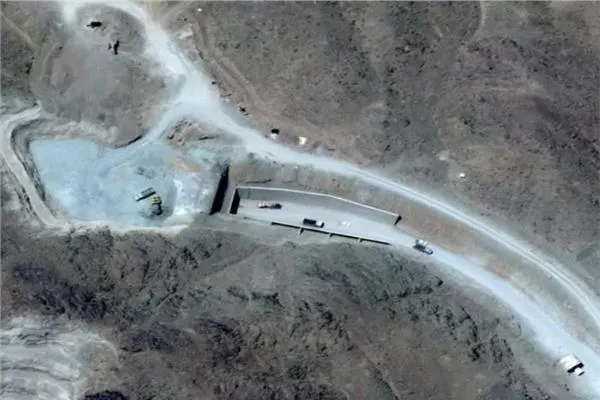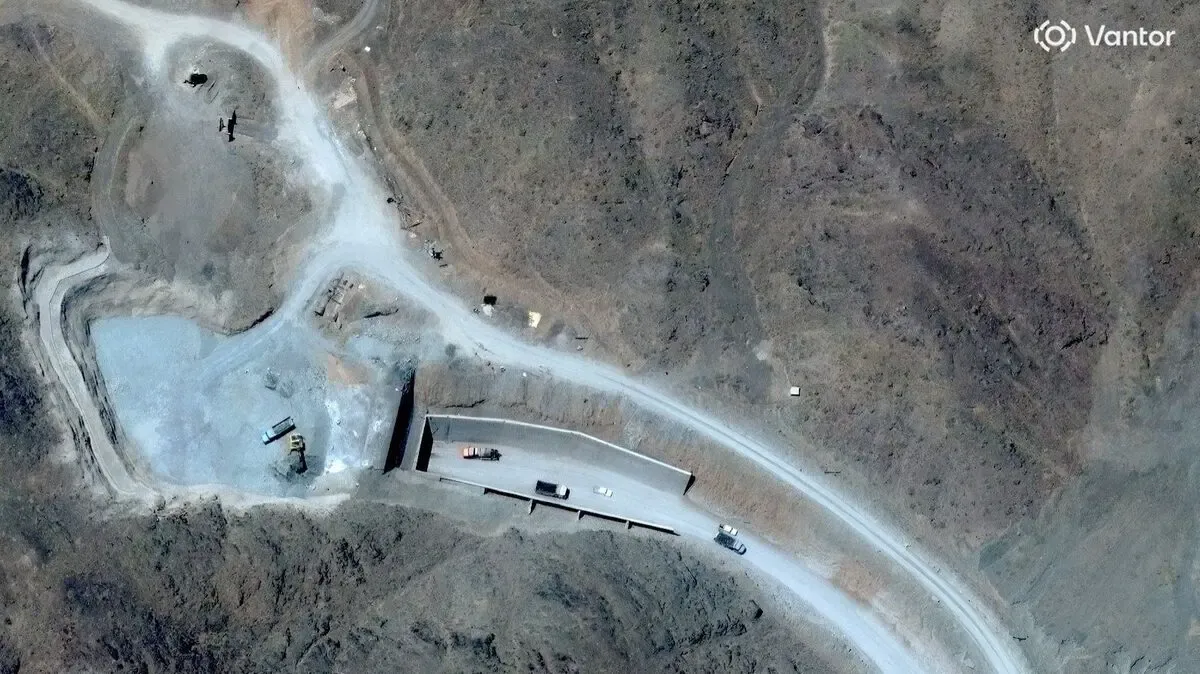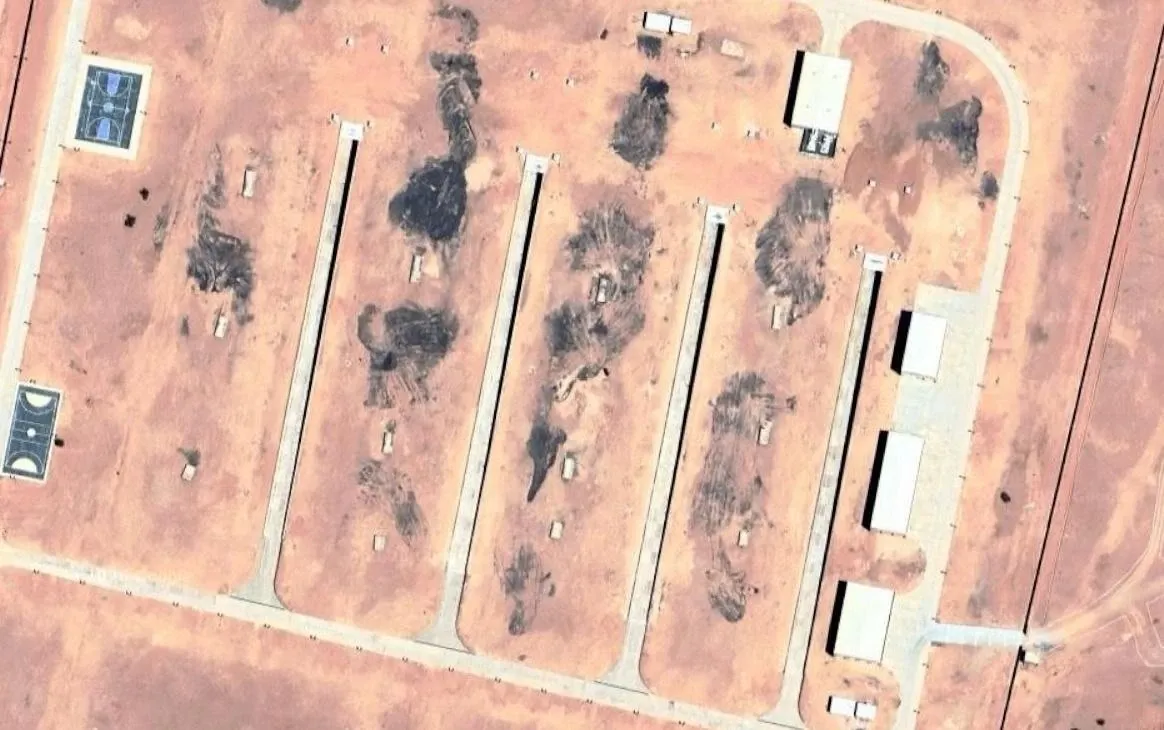
Recent reports from North African media have highlighted a suspected military reinforcement by Algeria near its western border with Morocco, following the dissemination of satellite images that purportedly display new military infrastructures and movements in the region. These images suggest the construction of facilities that analysts believe may include underground infrastructures, protected hangars, or bunkers. This development could be part of a broader strategy aimed at enhancing defensive capabilities in Tinduf, one of the most sensitive areas affecting the strategic balance in the Maghreb.
Though independent verification of these materials remains limited, the analysis aligns with a wider trend observed over the past few years: a sustained increase in Algerian military presence close to Morocco. This detected reinforcement is not an isolated event. Prior intelligence reports based on open-source data had already indicated the growth of a network of Algerian military installations in the border area. Notably, the construction and expansion of an airbase in Oum el Assel, located about 70 kilometers from the Moroccan border, stands out.
Satellite imagery of this base reveals the presence of MiG-29 fighter jets, early warning radar systems, ammunition depots, and reinforced aircraft shelters, as well as expanded runways capable of accommodating more advanced platforms. Furthermore, various analyses point out that this base is part of a larger framework consisting of dozens of military installations distributed along the border, including air defense systems, armored units, and artillery positions.
One of the most striking aspects of the recent reports is the potential construction of underground structures. If confirmed, these types of facilities would serve a clear operational logic: to enhance the survivability of assets against precision strikes, reduce observable signatures, and improve the protection of critical assets. The use of bunkers and buried hangars is common in modern military doctrines, particularly in scenarios where there is a risk of adversarial air superiority or long-range attacks.
However, it is essential to emphasize that in this particular case, the available evidence primarily stems from media analysis and open networks, thus requiring cautious interpretation. This military reinforcement occurs within the context of a structural rivalry between Algeria and Morocco, characterized by the Western Sahara dispute and a growing strategic competition in North Africa and the Sahel.
Both countries have been engaged in a dynamic of military modernization and enhancement of their capabilities for years. In Algeria's case, the increase in defense spending and the acquisition of new systems, particularly of Russian origin, form part of a broader strategy to strengthen its armed forces. Meanwhile, Morocco has also increased its capabilities, with a particular emphasis on aerial systems, drones, and air defense, contributing to a low-intensity regional arms race.
From a strategic perspective, the Algerian deployment can be interpreted through two complementary logics. On one hand, it responds to a defensive necessity in a regional environment marked by instability in the Sahel and the presence of transnational threats. On the other hand, it serves as a deterrent message to Morocco, bolstering rapid reaction capabilities and surveillance along a historically sensitive border.
Some analysts underscore that despite the rhetoric and the increase in capabilities, both countries have managed to avoid crossing red lines that could lead to open conflict, maintaining a strategy of controlled pressure. Overall, the satellite images and associated reports reflect a broader reality: the consolidation of the Algeria-Morocco border as one of the main friction points in North Africa.
The enhancement of infrastructures, whether surface or potentially underground, indicates a shift towards more resilient systems prepared for high-intensity scenarios. However, beyond its military dimension, this process also carries political and strategic implications, in a region where stability largely depends on the balance between both powers. In the absence of detailed official confirmations, this episode highlights the increasing importance of satellite intelligence and open sources in monitoring military movements, as well as the necessity to interpret these data within a broader and more complex geopolitical context.
As reported by infodefensa.com.