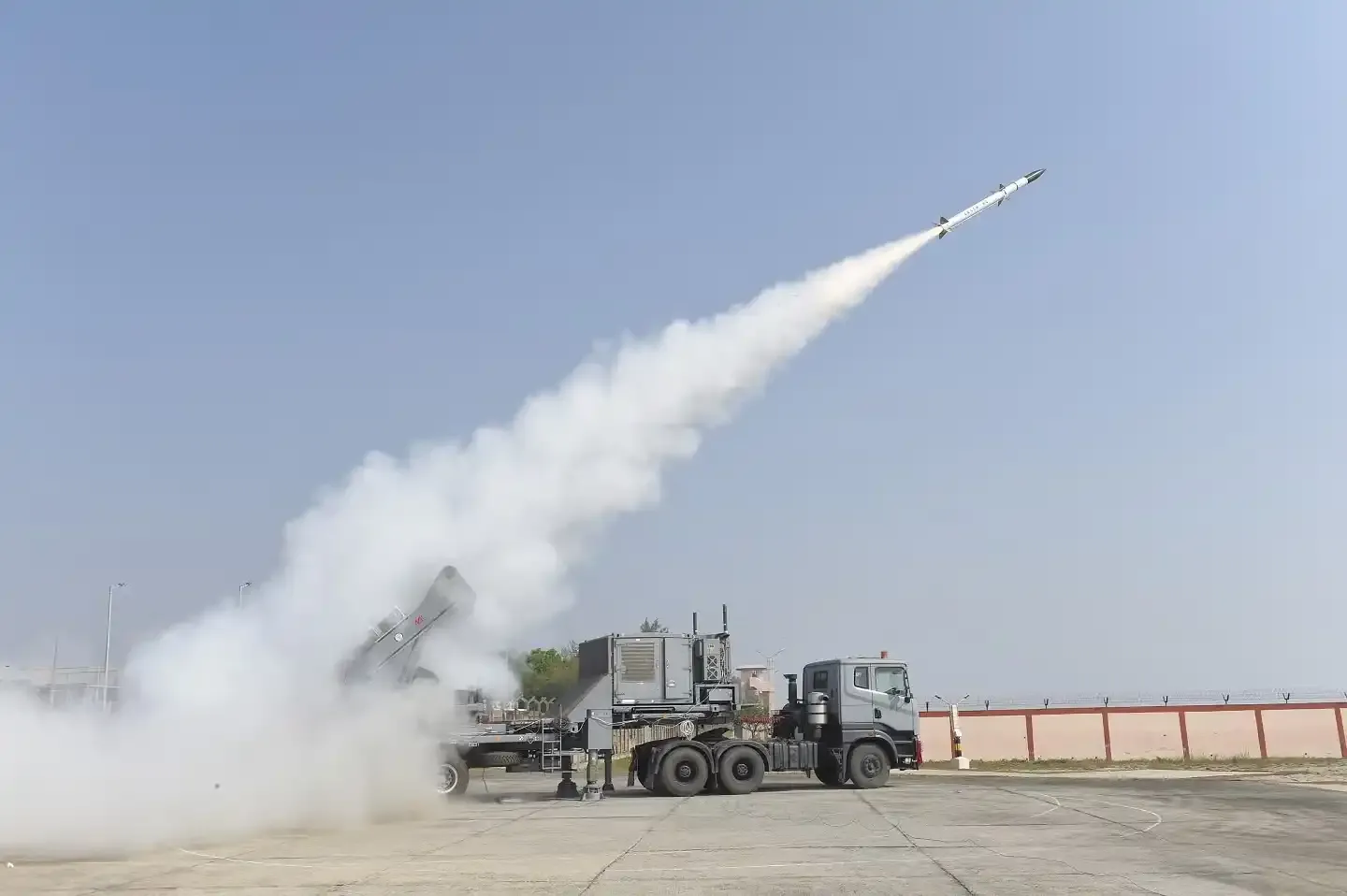

On June 4, 2026, reports emerged from Indian financial and defense studies institutions indicating that the new air defense system, Akash NG, has successfully completed its testing phase. This medium-range defense system represents a substantial upgrade over its predecessors, attracting interest from several countries including Morocco, Brazil, Armenia, Vietnam, and the Philippines. According to Indian sources, the success of these trials paves the way for mass production in the near future, enabling its integration into the Indian armed forces and opening doors for potential exports to international markets.
The Akash NG system is viewed as a culmination of years of development, leveraging insights gained from military cooperation with Israel, particularly through the Barak 8 air defense project, which began as a joint initiative between the two nations. Subsequently, Israel advanced its own version, the Barak MX, which Morocco has adopted into its military arsenal in recent years. Notably, the new Indian system incorporates numerous technical features akin to Western and Israeli systems in terms of design, missile operation, and launch mechanisms. One of its key attractions is its cost-effectiveness, with estimates suggesting that each missile is priced below $500,000, making it an attractive option for countries requiring a substantial number of missiles and air defense systems. Additionally, discussions are ongoing about the possibility of transferring part of the missile production operations or some components to Morocco as part of a potential industrial partnership with India.
Technically, the Akash NG system boasts the capability to intercept targets at distances of up to 80 kilometers, utilizing a missile equipped with an active radar seeker of the AESA type, which allows for autonomous target tracking during the final phase of flight. The missile also employs a dual-pulse engine that provides an extra boost of speed and energy as it approaches its target, thereby enhancing its hit probability. This new system marks a significant evolution compared to the original Akash-1, which was heavily influenced by Russian philosophies in air defense design. The first generation was the product of Indo-Russian collaboration, utilizing a large missile weighing approximately 700 kilograms, with a range limited to 25 kilometers, primarily designed to engage aircraft. Each launch vehicle could only carry three missiles, which significantly restricted the fire density that could be achieved.
In contrast, the Akash NG has been developed with a more modern design philosophy, reducing the missile weight to about 350 kilograms—almost half that of its predecessor—while extending the range to 80 kilometers. Additionally, the launch vehicles are now capable of carrying a greater number of ready-to-launch missiles, significantly enhancing the combat effectiveness of the system. Thanks to these advancements, the Akash NG can engage a diverse array of targets, including fighter jets, helicopters, drones, and cruise missiles.
Regarding radar capabilities, the system relies on a medium-range radar that can detect targets up to approximately 120 kilometers away and guide missiles to a range of 80 kilometers. However, some observers suggest that the capabilities of this radar may not meet the standards of the latest Western and Israeli systems, potentially prompting any prospective user to integrate it with more advanced radars. Among the features seemingly inspired by Israeli systems is the adoption of closed launch containers for the missiles, which are delivered ready within their containers and can be mounted directly onto the launch platform. This method minimizes maintenance requirements, simplifies transport and storage operations, and accelerates reloading by allowing for quick replacement of empty containers with new ones.
The repeated mention of Morocco among the countries interested in the Akash NG system clearly reflects India's desire to market this system to the Kingdom. Furthermore, its low cost and the possibility of local production of some components render it a viable option for a country like Morocco, which has extensive territory and needs to deploy a large number of air defense systems to secure its various vital regions.
As reported by defense-arabic.com.