Iran's Oil Export Resilience Amid Global Turmoil
In a remarkable demonstration of resilience, Iran has reported that its oil exports have surged to approximately 1.5 million barrels per day, even in the face of escalating conflicts involving the United States and Israel. This figure marks an impressive 50% increase in sales compared to earlier months, as reported by the semi-official Tasnim News Agency. The timing is particularly significant as this spike coincides with the holy month of Ramadan, a period traditionally associated with increased economic activity.
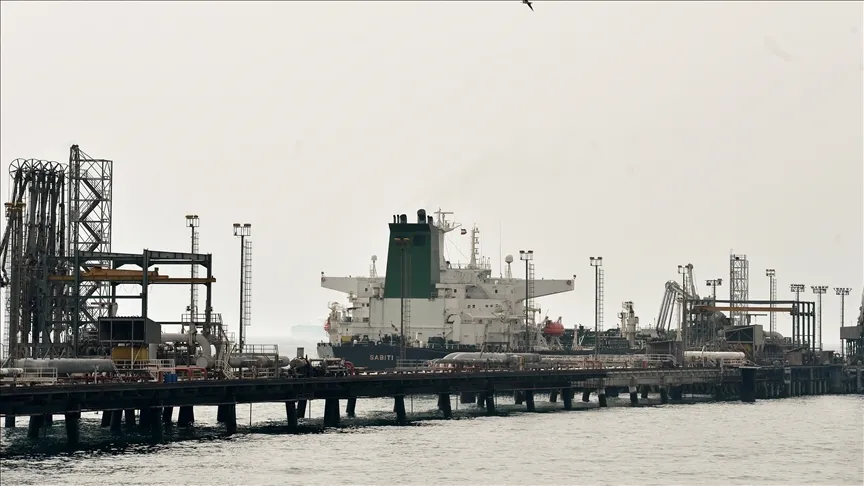
The surge in exports can be attributed to Iran's strategic pricing, as the country has begun to align its oil prices more closely with global benchmarks. This pricing strategy has not only boosted revenue but also positioned Iran advantageously within the current volatile global energy market. With the ongoing war causing disruptions, Iran’s decision to impose navigation restrictions in the Strait of Hormuz—an essential oil transit route—has further influenced the dynamics of oil pricing and availability.
Global Market Impacts and Future Outlook
Approximately 20 million barrels of oil transit through the Strait of Hormuz each day, and the recent restrictions imposed by Iran have led to increased shipping and insurance costs, contributing to a rise in global oil prices. Consequently, this situation has resulted in inflationary pressures felt worldwide, as countries grapple with the ramifications of heightened energy costs. Reports suggest that since the onset of hostilities, Iran has generated hundreds of millions of dollars in additional oil revenues, benefiting from elevated crude prices amidst restricted access for some exporters.
Despite these financial gains, the geopolitical landscape remains fraught with uncertainty. Investors and analysts express concerns over the potential for further destabilization in global markets, particularly given the ongoing military operations between the US, Israel, and Iran. The risks posed to energy infrastructure in the Gulf region could have severe economic and environmental consequences, should hostilities escalate further. As the conflict continues, Iran's ability to maintain its oil export levels will be pivotal not only for its economy but also for the broader dynamics of the global energy market.
As reported by aa.com.tr.