
Securing a Place in Moroccan Football's Elite
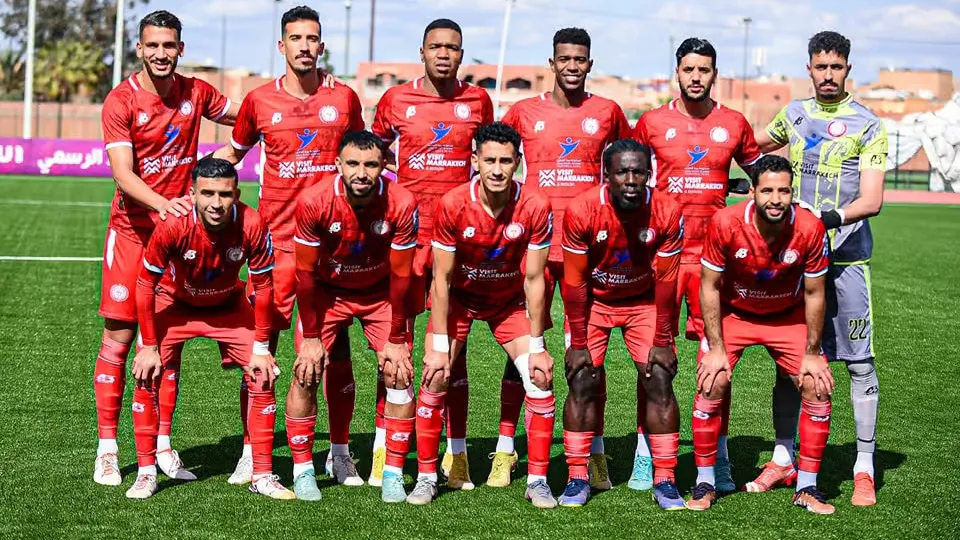
When the referee blew the final whistle of the HUSA-KACM match, ending at a 1-1 draw, an overwhelming sense of relief swept through the players, management, and thousands of supporters. The Kawkab Athletic Club of Marrakech had successfully secured its position in the top tier of Moroccan football, a feat celebrated by all associated with the club. For some, this was merely about survival in the league. However, for the city of Marrakech, it represented much more: it was a testament to the resilience of a historic club refusing to succumb to adversity.
While this achievement does not erase the struggles and mistakes of a grueling season, it serves as a reminder that great institutions always find the strength to rise when everything seems to falter. In returning to Botola Pro D1, Kawkab finished in tenth place with 36 points, accumulating eight victories, twelve draws, and ten losses. This rollercoaster season, although challenging, aligned perfectly with their initial goal: to establish a lasting presence in the elite league.
From Challenges to Opportunities
However, the start of the season had ignited high hopes. Under the guidance of Rachid Taoussi, combined with the experience of new recruits, a calmer season appeared to be on the horizon. Unfortunately, the anticipated results did not materialize. The team struggled to find its rhythm, confidence began to wane, and uncertainty loomed within the squad. In Marrakech, every setback transcends sports; Kawkab represents a significant cultural asset, deeply woven into the discussions and passions of an entire city.
In response to this precarious situation, the club's management took decisive action. The appointment of Hicham Dmii marked a pivotal moment. While he did not promise miraculous changes, he focused on hard work, dialogue, and the gradual rebuilding of a weakened collective. Even before results improved, the team regained its identity, solidarity, and confidence. Victories returned, and Kawkab began to reclaim its destiny.
The statistics tell a compelling story. With 26 goals scored and 27 conceded, Kawkab demonstrated solid defensive capabilities, although their offensive efficiency left much to be desired, costing them crucial points. The twelve draws reflect numerous missed opportunities to turn matches in their favor. Yet, this season was not solely defined by the change in coaching staff. The summer recruitment did not yield all the expected results, necessitating several adjustments as the weeks progressed. Nonetheless, the club remained united around a shared objective: to retain its status among the elite.
A heartfelt tribute is due to those who worked tirelessly, often behind the scenes, to help Kawkab navigate this challenging phase. Under the leadership of President Idriss Hanifa, the club initiated a comprehensive restructuring project aimed at restoring its historical prestige and ensuring KACM's long-term presence among Morocco's premier football institutions, notably with the appointment of Fatima Zahra Mansouri as honorary president. In the frequent absence of the president, First Vice President Youssef Dahir distinguished himself through his unwavering support for the team, displaying a commendable sense of responsibility. Alongside him, Second Vice President Tarek Samirs, Secretary General Mohcine Ballal, his assistant Hassan Mezraoui, Treasurer Berrada Selouane Afandi, and his assistant Khalid Timam all played vital roles in stabilizing the club and ensuring its continuity in Botola Pro D1 while preparing for future challenges, including enhancing governance and sports organization.
While securing their place in the league is crucial, it is merely a stepping stone. Kawkab must now confront several structural challenges stemming from years of instability. The focus must shift to consolidating achievements, pursuing reforms, and implementing a genuine sports project rooted in rigorous governance, transparent management, and a long-term vision. Recruitment must precisely meet the first team's needs, and youth development should again become a top priority. Marrakech is rich in young talent, and Kawkab must reclaim its identity as a training club to build a sustainable future and end the cycle of promotion and relegation.
This season also highlights the importance of strengthening Kawkab's communication strategy. A club of this stature cannot sustainably grow without fostering a relationship of trust with the media, which play a crucial role in enhancing its image, projects, and influence. At times, journalists have felt they did not receive the attention and working conditions they rightfully expected. A more open, regular, and organized communication strategy would undoubtedly serve the club's interests.
Special thanks must be given to Kawkab's supporters, who stood by the team throughout the season. In both good and bad times, they rallied behind their team with unwavering loyalty, making the Marrakech public one of the most passionate in the Kingdom. Their fervor has often been a powerful motivator for a group seeking confidence.
Finally, it would be remiss to conclude this season without acknowledging the support of local authorities. Under the guidance of Mr. Khatib Lahbil, Wali of the Marrakech-Safi region, various state services have contributed to providing optimal conditions for match organization and public safety. This commitment, alongside that of local governments, security services, and all institutional partners, has been invaluable throughout this transitional season.
The most challenging aspect was not merely regaining entry into Botola Pro but ensuring a lasting presence. This initial mission has been accomplished. The next challenge is far more ambitious: to gradually reposition Kawkab among the leading references in Moroccan football. The club's survival has rekindled hope for an entire nation of supporters, but the story of Kawkab is too illustrious to settle for mere survival. This club is destined for greater heights, to reconnect with a culture of performance and ambition for grand conquests. For an institution of its scale, survival is never the end goal; it merely marks the beginning of a new chapter.
As reported by lopinion.ma.