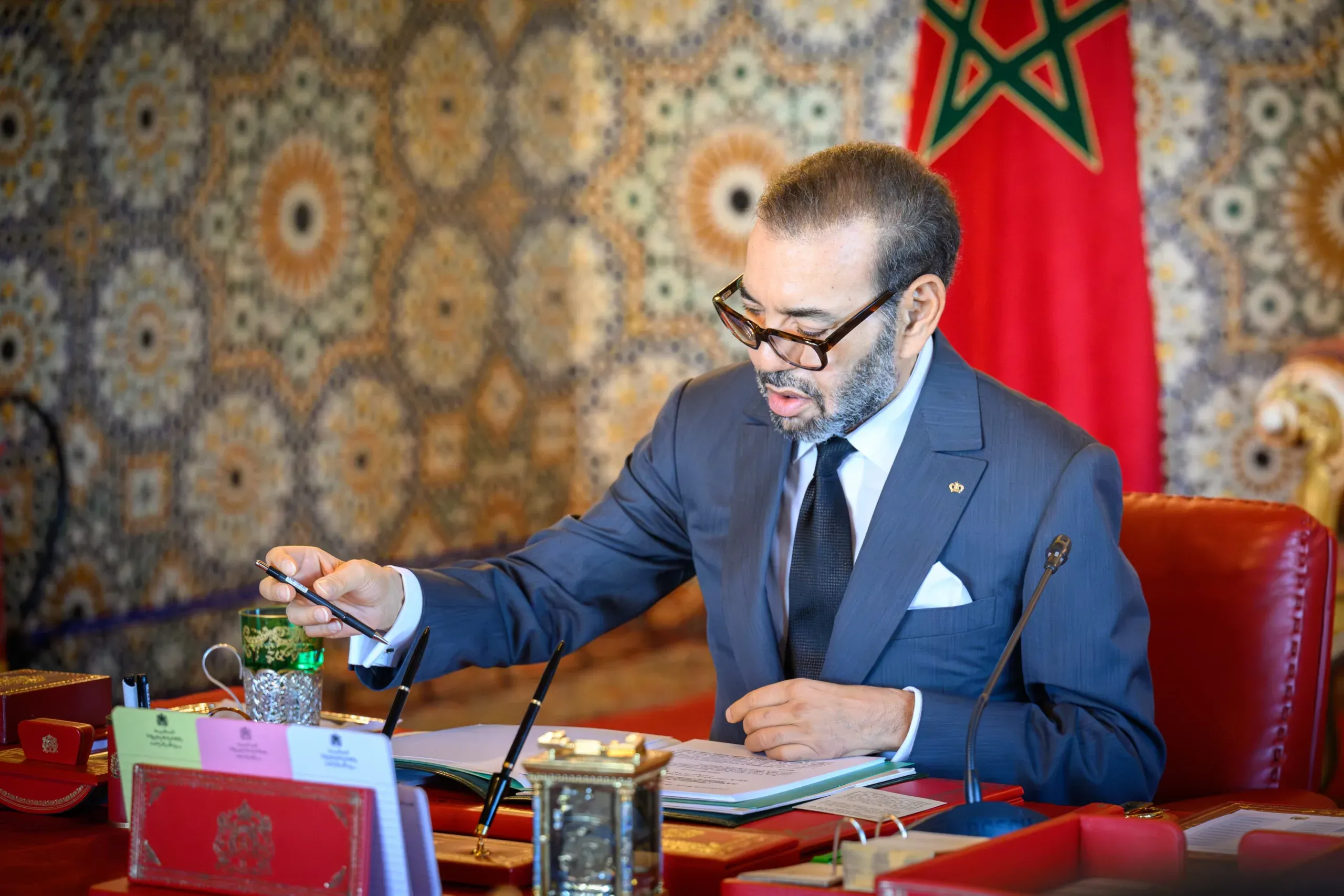

King Mohammed VI Leads Ministerial Meeting in Rabat
On April 9, 2026, King Mohammed VI convened a ministerial council at the Royal Palace in Rabat. The meeting was primarily dedicated to the approval of significant legislative reforms, international agreements, and strategic appointments to high-ranking positions. The King opened the session by inquiring about the current agricultural season, where the Minister of Agriculture presented promising statistics. Rainfall levels reached 520 mm, reflecting a substantial 54% increase over the normal average, which elevated the water reservoir levels to 12.8 billion cubic meters, achieving a fill rate of 75%.
Morocco also reported a record olive production of 2 million tons, marking a remarkable 111% increase, along with significant growth in citrus and date crops and notable improvements in livestock conditions and pasture quality. In the realm of territorial reform, the Minister of Interior presented a comprehensive initiative aimed at enhancing the governance of integrated territorial development programs. This ambitious project aims to improve citizens' living conditions through public policies backed by a financial envelope of 210 billion dirhams over eight years.
Innovative Governance and Legislative Changes
This new approach emphasizes direct engagement with local community needs and establishes innovative governance mechanisms, including the formation of a national committee chaired by the Prime Minister and local committees led by regional governors. To ensure effective performance, the decision was made to transform the "regional project execution agencies" into joint-stock companies headed by regional presidents, merging public oversight with the flexibility of private sector management. These agencies will be subject to annual audits by both the General Inspectorate of Finance and the Ministry of Interior to ensure accountability and enhance transparency through a digital platform allowing citizens to monitor project progress.
The ministerial council also approved a legislative amendment to the organic law concerning regions to strengthen the financial capabilities of regional authorities, enhance their autonomy, and clarify their specific and shared responsibilities as a lever for economic development. Additionally, the council endorsed modifications to the law governing appointments in high-ranking positions, including the "National Agency for Child Protection" among strategic institutions and adding the position of "General Judicial Registrars" to the government appointment list while renaming the Mohammedan Foundation for Social Services for Judicial Staff.
In the military domain, the King, as the Supreme Commander and Chief of General Staff, ratified a draft decree concerning military attachés abroad and expanding their roles. The council also approved 15 international agreements, including 11 bilateral and four multilateral treaties, covering areas such as air transport, customs cooperation, cybersecurity, and establishing a national office for the African Union Development Agency (NEPAD) in Morocco.
In line with Article 49 of the Constitution, the King appointed general directors for health groups in five major regions (Casablanca-Settat, Rabat-Salé-Kénitra, Fez-Meknes, Laâyoune-Sakia El Hamra, and Souss-Massa) to accelerate the implementation of a national health system reform project aimed at improving medical services for citizens.
As reported by alhayatalyaoumia.ma.