
A Journey Filled with Obstacles
As the referee blew the final whistle in Budapest, Luis Enrique was not only celebrating his third UEFA Champions League title but also marking a significant victory over a long series of challenges he has faced throughout his career, both on and off the football pitch. The man who has led Paris Saint-Germain to retain the European trophy for a second consecutive season did not reach this pinnacle through a smooth path; rather, it has been a winding journey filled with criticisms, failures, personal shocks, and tough decisions that have made him one of the most intriguing figures in the world of football.
On the Brink of Greatness
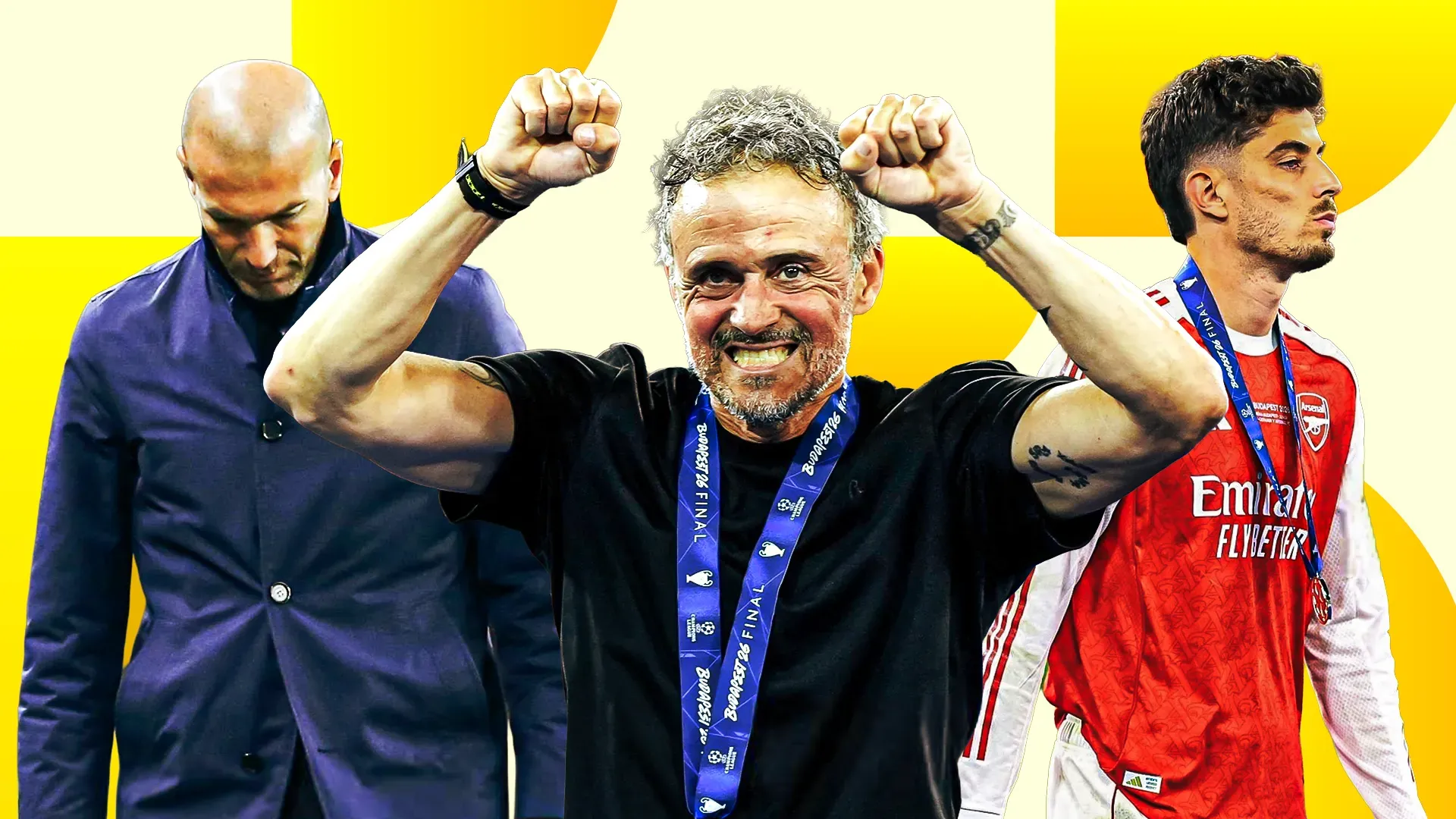
While fans celebrated a new title for the French club, Enrique found himself closer to achieving a feat that for many years seemed unattainable: equaling the historic treble won by Zinedine Zidane with Real Madrid. He is now just one European title away from achieving this milestone, which sets the stage for an exceptional upcoming season for the Spanish coach, who has a remarkable ability to turn crises into motivations and failures into new beginnings. In a paradox that is hard to ignore, the final match saw him face a team led by one of the most unusual stars in European football, Kai Havertz, whose personal story has captivated the fans.
Havertz is not just a player who scored in the UEFA Champions League final; he has transformed in recent years into a different personality in the eyes of the public due to his well-known affection for donkeys, a passion that has accompanied him since childhood and has now become a part of his public persona. Some of his friends even affectionately call him "the donkey." The German forward has spoken multiple times about his bond with these animals, claiming they are calm and friendly, resembling his own personality. He has shared his experiences of owning several donkeys, highlighting his ongoing interest in them amidst the pressures of football and fame.
His love for donkeys reached such an extent that his parents gifted him the care of three donkeys when he turned 18. However, what transpired in the final was not just another chapter in this amusing tale; it also marked an exceptional personal achievement for the German star. By scoring against Paris Saint-Germain, Havertz entered a rare list of players who have succeeded in scoring in a UEFA Champions League final for two different clubs. He had previously scored the winning goal for Chelsea against Manchester City in the final in 2021, and five years later, he found the net again in the biggest European match, this time donning the Arsenal jersey. Despite the changes in his career, from club transfers to the ongoing debates about his performance and position on the field, his ability to shine in crucial moments has remained remarkably present.
Nevertheless, Havertz's individual achievement was not enough to grant him the ending he desired. While he successfully added a new line to his personal record, Luis Enrique was penning the most important chapter of the story. What makes Enrique's accomplishments today even more impressive is that his image just a few years ago was entirely different. After the 2022 World Cup, the Spanish coach found himself at the center of one of the harshest waves of criticism he had faced during his coaching career. The Spanish national team entered the tournament with grand ambitions, especially after a remarkable performance at the outset. However, everything collapsed against Morocco in the Round of 16.
On that night, modern Spanish football collided with a well-organized Moroccan team that knew how to close down spaces and draw the match into their comfort zone. As the minutes passed, the Spanish team seemed incapable of finding solutions, ultimately leading to a penalty shootout that turned into a complete nightmare as the players of "La Roja" failed to convert any penalties. The defeat was not merely an exit from the tournament; it became a moment of significant doubt regarding Enrique's capabilities. Spanish media unleashed a torrent of criticism, with many believing the coach had become a prisoner of his tactical ideas and that the team needed a fresh start away from him. Indeed, his journey with the national team ended shortly thereafter, and it seemed at the time like the conclusion of an important chapter in his career. However, what many did not realize then was that Enrique was preparing to write a new, even more successful chapter.
Yet, everything that transpired in Qatar pales in comparison to the tragedy he experienced a few years prior. In 2019, Luis Enrique found himself facing a battle unrelated to tactics, football, or titles; his young daughter was diagnosed with bone cancer, which shifted his focus entirely from the pitch to hospitals and treatment rooms. The Spanish coach stepped away from his work and devoted himself to his family during this difficult time, revealing a deeply human side of his personality, far removed from the strict coach persona known to the public. Unfortunately, the outcome was harsh and painful, as his daughter passed away at the tender age of nine. This moment was enough to shatter any individual, and it was not surprising that many expected Enrique to withdraw from the limelight for an extended period or even lose the desire to return to the world of football.
However, what unfolded was entirely different. Over the following years, the Spanish coach spoke about his daughter in a manner that impressed many around the world, refusing to reduce her story to mere sadness. Instead, he chose to express gratitude for the years he spent with her and the memories she left in his life. From this point, a new image of Enrique began to take shape—not just as a successful coach but as a person with an extraordinary ability to rise after the harshest blows. If personal tragedy and technical criticisms shaped one side of Enrique's journey, the other side has always been tied to his complicated relationship with Real Madrid. The Spanish coach began his career as a player for the royal club and was one of the stars of the team before later transferring to Barcelona in one of the most controversial transfers in Spanish football history.
In Catalonia, he became a leader within the dressing room and one of the most prominent faces, before returning years later as a coach and leading the club to a historic treble that solidified his status in Barcelona's history. However, a significant portion of Real Madrid fans never forgave him for that move, and the label of "traitor" has followed him on numerous occasions, as he is considered one of the players who moved from the capital to their Catalan rival and then became a symbol on the other side of the rivalry. Even nearly three decades after his transfer, this story remains present whenever his name is mentioned, as if it is an inseparable part of his football identity.
Today, after two consecutive titles in the UEFA Champions League with Paris Saint-Germain, Luis Enrique stands at the cusp of an opportunity that could place him in the same echelon as Zinedine Zidane in the history of the competition. The three consecutive titles achieved by the French coach with Real Madrid have long seemed like an accomplishment that would be difficult to replicate in modern football, yet the Spanish coach is now just one season away from equaling it. Perhaps the most beautiful irony is that Enrique's path to this goal has been anything but ordinary. It is a path that has traversed through irreparable personal wounds, a painful defeat against Morocco, and many years of controversy with Real Madrid fans. Nevertheless, all of these stories have concluded in the same way: Luis Enrique remains standing. In fact, he is now closer than ever to achieving football immortality, a mere step away from matching the feat that made Zidane a legendary figure in the UEFA Champions League.
As reported by kooora.com.