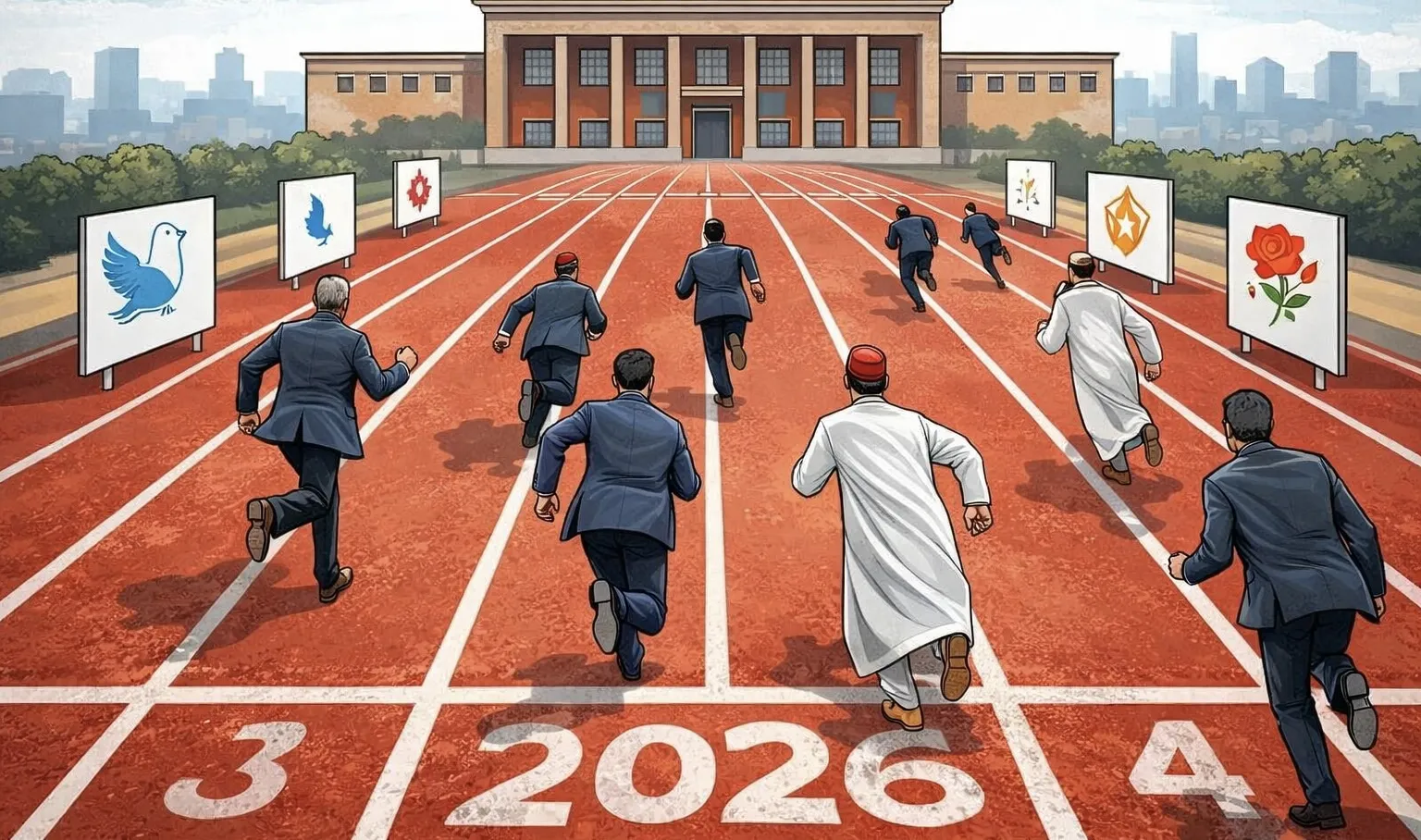

The Marrakech-Safi region has been witnessing significant political activity in recent weeks, driven by speculation regarding the candidacy intentions of various political figures for the upcoming legislative elections scheduled for 2026. Despite this notable dynamism and the buzz it has created in the media landscape, it does not yet reflect the actual initiation of the electoral process within party organizations.
A key observation at this stage is that a considerable portion of political discussion is occurring outside the confines of political institutions. Potential candidates are being named through media outlets and social networks, yet these discussions are not accompanied by official decisions or indications of parties beginning to manage their internal processes related to nominations. This situation reveals a paradox: while early competition is intensifying, organizational mobilization remains absent, as parties have not yet entered the practical preparation phase for the upcoming electoral challenges.
This delay can be partially explained by the fact that the electoral timetable has not yet entered its execution phase, despite the clarity of the legal framework governing the electoral process. The scheduled date for voting remains relatively distant, which makes the current period seem more like preliminary repositioning rather than a genuine electoral campaign.
The Marrakech-Safi region holds particular importance on the national political map due to its demographic weight and spatial diversity, along with overlapping economic, tourism, and real estate interests that significantly influence voter behavior and the nature of political competition. Consequently, the recorded activity is intertwined with early attempts to rearrange power dynamics, both within and between parties, in anticipation of the upcoming elections.
The emergence of new names or the return of former political figures reflects shifts in the political landscape, as several stakeholders seek to leverage the current phase to build an electoral presence or reclaim their positions, especially in light of new legal changes that may redistribute opportunities among various actors.
In this context, the 2026 elections will take place within a newly updated legal framework that has introduced changes to the eligibility criteria and mechanisms for monitoring the electoral process. Notable among these changes is the tightening of eligibility conditions and enhancing oversight of funding, aimed at reducing irregularities related to electoral integrity. The door has also been opened for independent nominations under specific regulations, which may partially explain the rise of individual initiatives outside party frameworks.
Furthermore, the amendments include measures to encourage the participation of youth and women, as well as the integration of digital tools in managing electoral procedures through the adoption of electronic mechanisms for declaring nominations, which contributes to simplifying procedures and improving transparency.
On another front, the legal framework governing the role of media, particularly digital platforms, during election periods has been strengthened. These provisions target the combat against fake news and misinformation, regulating the use of digital space to protect the electoral process. However, these measures raise discussions about finding a balance between combating misinformation and ensuring freedom of expression, amidst concerns over potential broad interpretations of certain provisions.
In conclusion, the political landscape in the region is undergoing a transitional phase characterized by advancements in the legal framework juxtaposed with the delayed organizational launch by political parties. This situation opens the door for individual actors to take center stage in the media while awaiting decisions within party structures regarding nominations and alliances. While the current activity, despite its unofficial nature, reflects early indicators of developing electoral competition, the actual test will depend on the parties' ability to transition to a phase of grassroots mobilization and manage their internal processes within a competitive context marked by diverse actors and shifting rules of engagement.
As reported by marrakechpost.com.