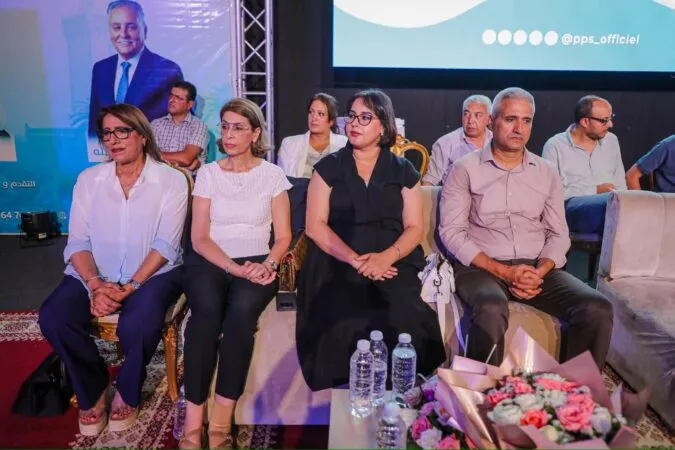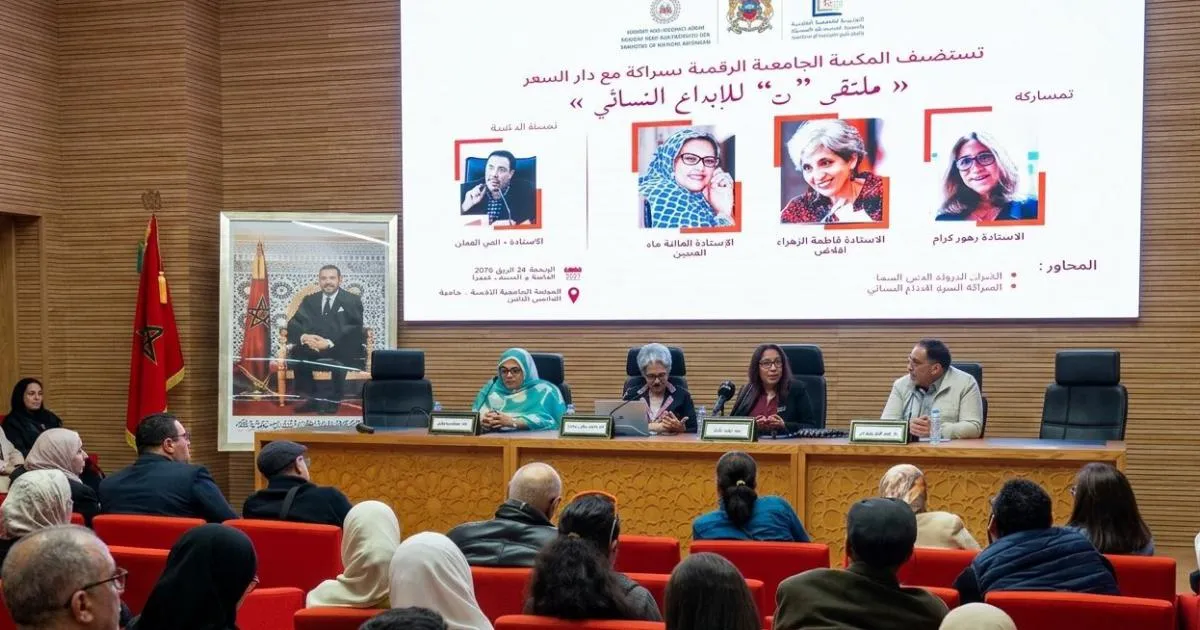
The inaugural session of the "Marrakech Women’s Creativity Forum" has been hailed as a significant platform for open dialogue and critical thinking surrounding issues pertinent to women and the intricacies of writing. This event was organized by the House of Poetry in Marrakech in collaboration with the digital university library of Qadi Ayyad University, marking a celebration of World Book Day and Copyright Day on April 24th. The forum featured the participation of esteemed researchers including Zahra Karam, Alia Maainin, and Fatima Zahra Iflahen, who engaged in profound discussions on contemporary topics related to memory, writing, digitization, gender, and interpretation.
In their presentations, Karam, Maainin, and Iflahen focused on addressing pressing issues that transcend the mere re-examination of terms and concepts, aiming instead to establish the forum as a vital intellectual space for critical inquiry into matters concerning women's writing. The “N” Creative Women’s Forum aspires to position itself within the broader agenda of the House of Poetry, fostering a collaborative environment with the digital library to facilitate a new arena for critical thought regarding writing and women's issues, thereby moving away from narrow classifications. It seeks to transform into an open workshop for dialogue and exploration on topics surrounding poetry, narrative writing, and the arts, while also addressing critical inquiries related to libraries, books, and the implications of digitization.
Discussions on writing and creativity, alongside the memories associated with libraries and books, were thoroughly examined by Dr. Zahra Karam, Dr. Alia Maainin, and Dr. Fatima Zahra Iflahen, who are prominent figures in the realms of scientific research, literature, and translation. Dr. Karam emphasized the necessity of reevaluating our current moment, linking it to broader critical questioning. She has previously articulated that "women serve as a contentious subject in the social transformation of any society, as altering static images of them can liberate memory." This perspective is reflected in her critical works, where she posits that when women write, they emanate from a sense of self, offering a distinct viewpoint that draws attention to feminine identity beyond the ready-made images dictated by prevailing culture. In light of the technological revolution and digitization, Dr. Karam has reformulated concepts surrounding artificial intelligence, digital memory, and the memory of books, urging the need to be cognizant of the opportunities that these rapid developments may unveil today.
Dr. Alia Maainin, from the Faculty of Arts and Humanities at Mohammed V University in Rabat and author of the study "Al-Tibra, Women on the Wings of Poetry," delved into the theme of "personal memory," exploring the complex relationship between personal memories and the collective memory of libraries and books. She illustrated how her family heritage, represented by the Maainin family, intertwines with the narrative of her grandfather, whose life was accompanied by books wherever he went. This led her to construct a new understanding of the concept of "family" within Hassani culture, distancing it from the predominant oral traditions, and showcasing how books became an integral part of people's lives.
While poetry serves as a custodian of Arab life, in Hassani culture, memory extends beyond written texts to encompass the revival of poetic heritage as a tool for cultural resistance and identity. Through her explorations of classical Arabic literature figures such as Al-Ma’arri and Abu Tammam, Dr. Maainin reveals how books have the power to alter trajectories, lives, and cities, producing foundational texts that remain significant today. One of Borges’ famous quotes, "I have always imagined paradise as a kind of library," encapsulates the essence of the first thematic session focused on the memory of libraries and books.
The second thematic exploration centered on writing, women, and creativity, presented by Dr. Fatima Zahra Iflahen, a prominent academic and activist currently teaching English literature at Qadi Ayyad University. Her presentation embarked on a deep examination of the intricate relationship between women and writing, positioning writing as a form of resistance for women. Dr. Iflahen articulated how writing can serve as a means for women to transcend darkness, transforming women's literature into not just a platform for self-expression but also a means to dismantle silence in deeply personal spaces.
Dr. Iflahen reflected on significant theoretical frameworks that underlie this complex relationship between women and writing, traversing vital contributions from both Western and Arab scholarly traditions that have shaped the contemporary presence of women in interpretive spaces. The foundational forum stands as a vital venue for discussion and dialogue, capable of reshaping thought and "repairing the self" while forging new horizons for questions surrounding identity, selfhood, and writing.
The "N" Women’s Creativity Forum is part of the ninth cultural and poetic season of the House of Poetry in Marrakech, developed through collaborative efforts with the digital university library, a bastion of knowledge striving to engage with questions and issues pertinent to creativity and criticism, particularly at the intersection of women’s studies and the discourse of writing.
As reported by middle-east-online.com.