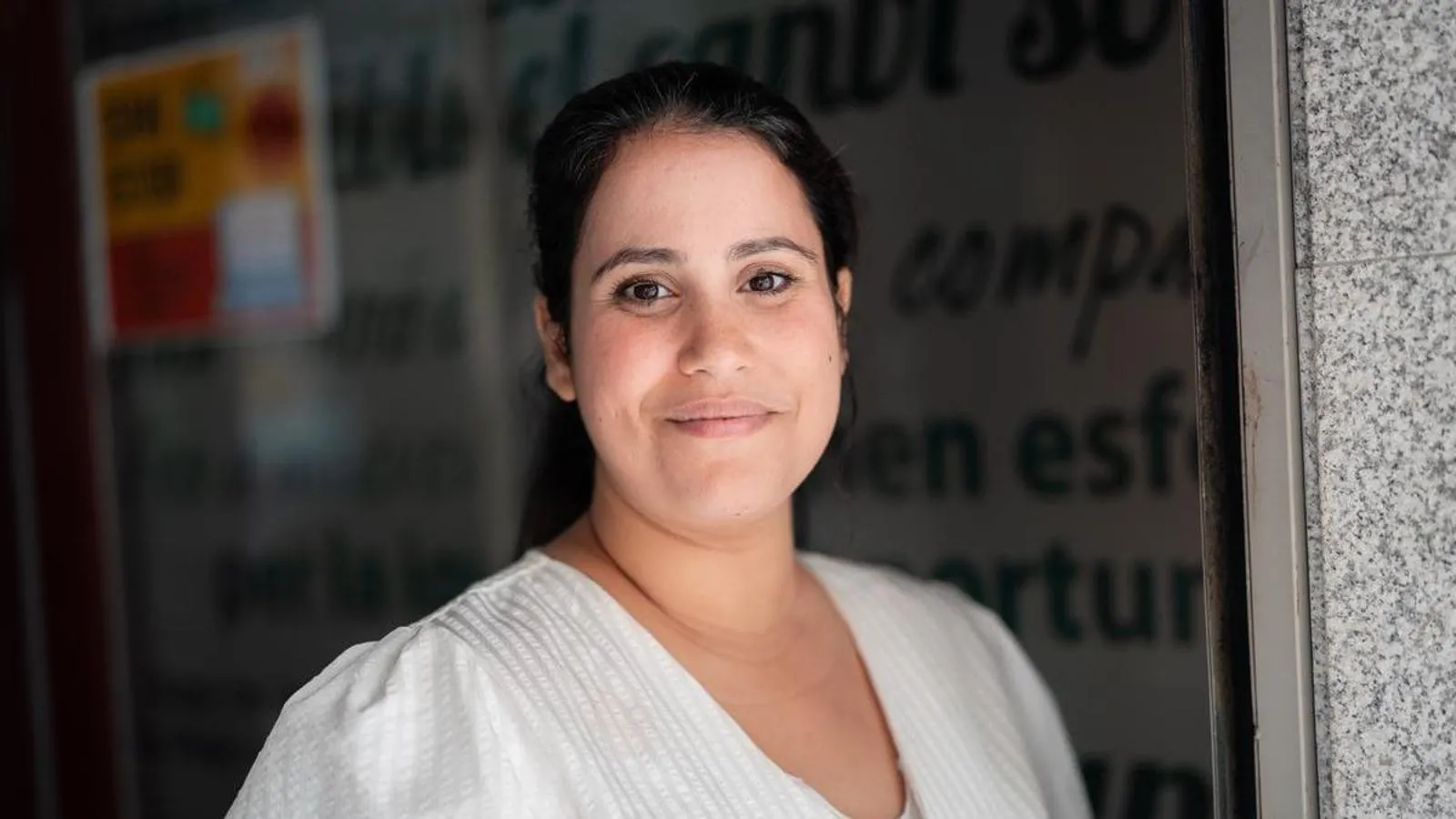

Maryam El Hamidi, a dedicated educator from Tangier, Morocco, has a profound connection to the challenges faced by her students, especially those from immigrant backgrounds. Having relocated to Castelló d’Empúries at the age of six to reunite with her family, she understands the complexities of navigating life between two cultures. Maryam's journey from being a young immigrant to a respected teacher is not just a personal success story; it serves as an inspiring testament to resilience and the importance of education in empowering individuals. In her words, "In the schools where I have worked, they see me as a mirror. Especially women, they see a role model. Perhaps I haven't gone through the same circumstances as them, but I know their needs. I give them confidence and motivation." This unwavering commitment to her students highlights her belief that education can bridge gaps and create opportunities.
After returning from maternity leave, Maryam rejoined the teaching staff, bringing with her a wealth of experience from her time at the Language Classroom of Casal dels Infants in Salt. There, she worked to equip vulnerable young people and adults with the Catalan language, which she views as a vital tool for integration and empowerment. Her own journey through the educational system was heavily influenced by the supportive environment at Escola Ruiz Amado in Castelló, where she learned that teachers play a crucial role in shaping students' futures. "Being the child of immigrants limits the perception of you and your capabilities, doors are closed to you. But I knew I had capabilities and had clear goals: I would go to university, I didn't doubt myself," she asserts, emphasizing the importance of self-belief and familial support in overcoming challenges.
Maryam reflects on the changing landscape of socialization among immigrant children in schools today. While there is an increase in diversity among students, she observes a troubling trend of segregation, where children from immigrant backgrounds often form their own groups, leading to missed opportunities for cross-cultural friendships. "Now that I am a mother, I feel tremendous frustration at these attitudes. After twenty years, I see that things are getting worse and I don't want my children to go through this," she expresses. This sentiment underscores her desire for a more inclusive environment where children can foster friendships across cultural lines, free from the biases that often stem from parental influence.
Living between two cultures presents unique challenges for immigrant children, as they navigate their identities in a society that often demands conformity. Maryam eloquently articulates the struggle of reconciling her Moroccan heritage with her Catalan upbringing, stating, "The reality is that I am not 100% Catalan. I have Moroccan origins and I grew up in Catalan culture: this confusion of identities takes years to assimilate." The evolution of her relationship with language further illustrates this complexity; she associates Catalan with her local identity, English with formality, and Arabic with spontaneity. This linguistic diversity enriches her life yet complicates her sense of belonging.
Despite her deep integration into Catalan society, Maryam still grapples with the label of being an immigrant. "They put the label on me when I arrived and I still wear it. I have accepted it and it no longer affects me because I see that I cannot change it," she laments. This enduring label serves as a reminder of the biases that persist despite her contributions to the community and her fluency in the language. Her experiences reveal the ongoing struggles against prejudice, as she describes how people often question her background and identity, asking intrusive questions about her family's practices and origins. "They see you as very integrated, but in the end they end up asking you if your mother wears a veil, where your parents were born, if you eat pork... But why do I have to explain all this?" she challenges.
As reported by en.ara.cat.