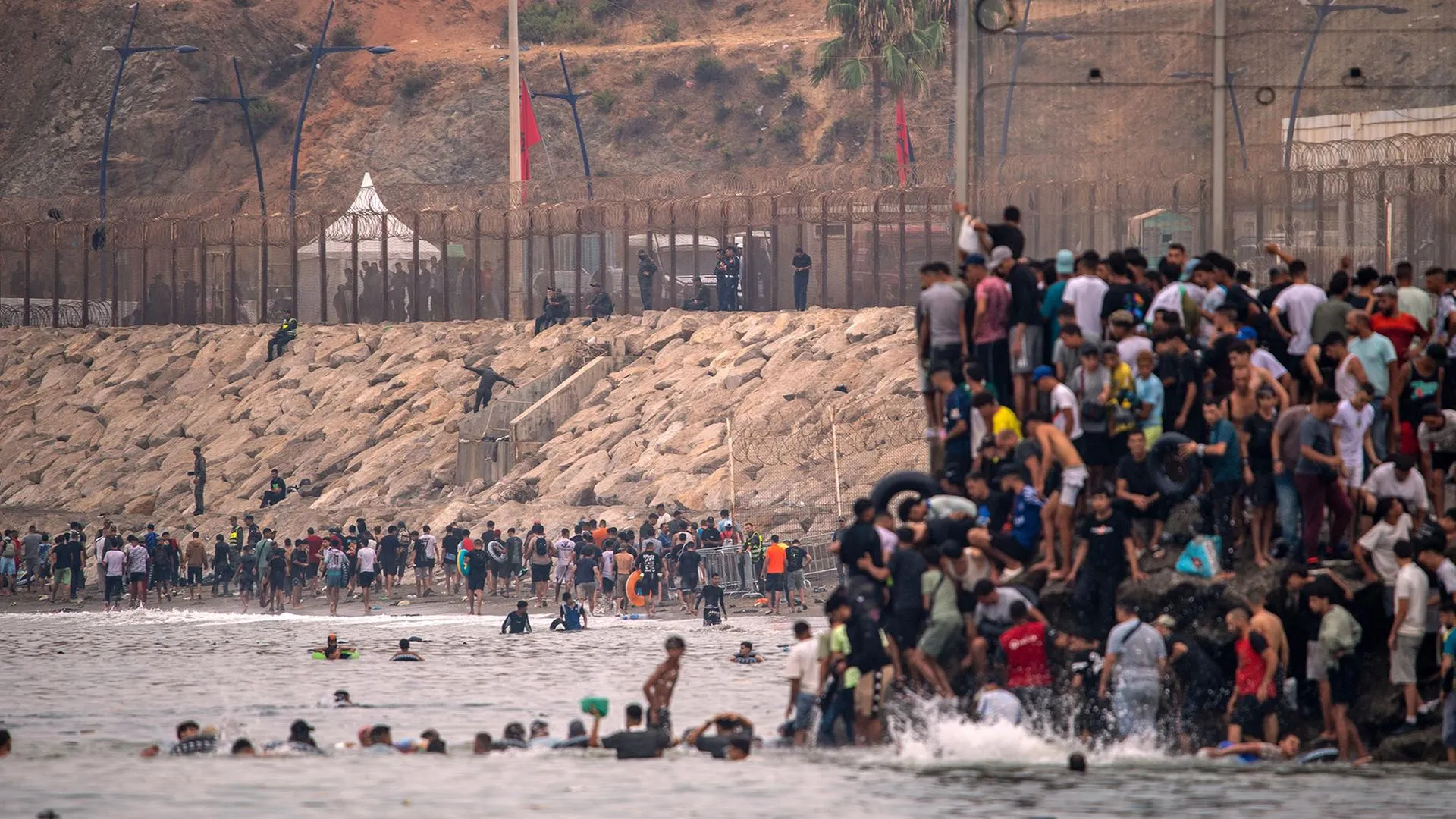
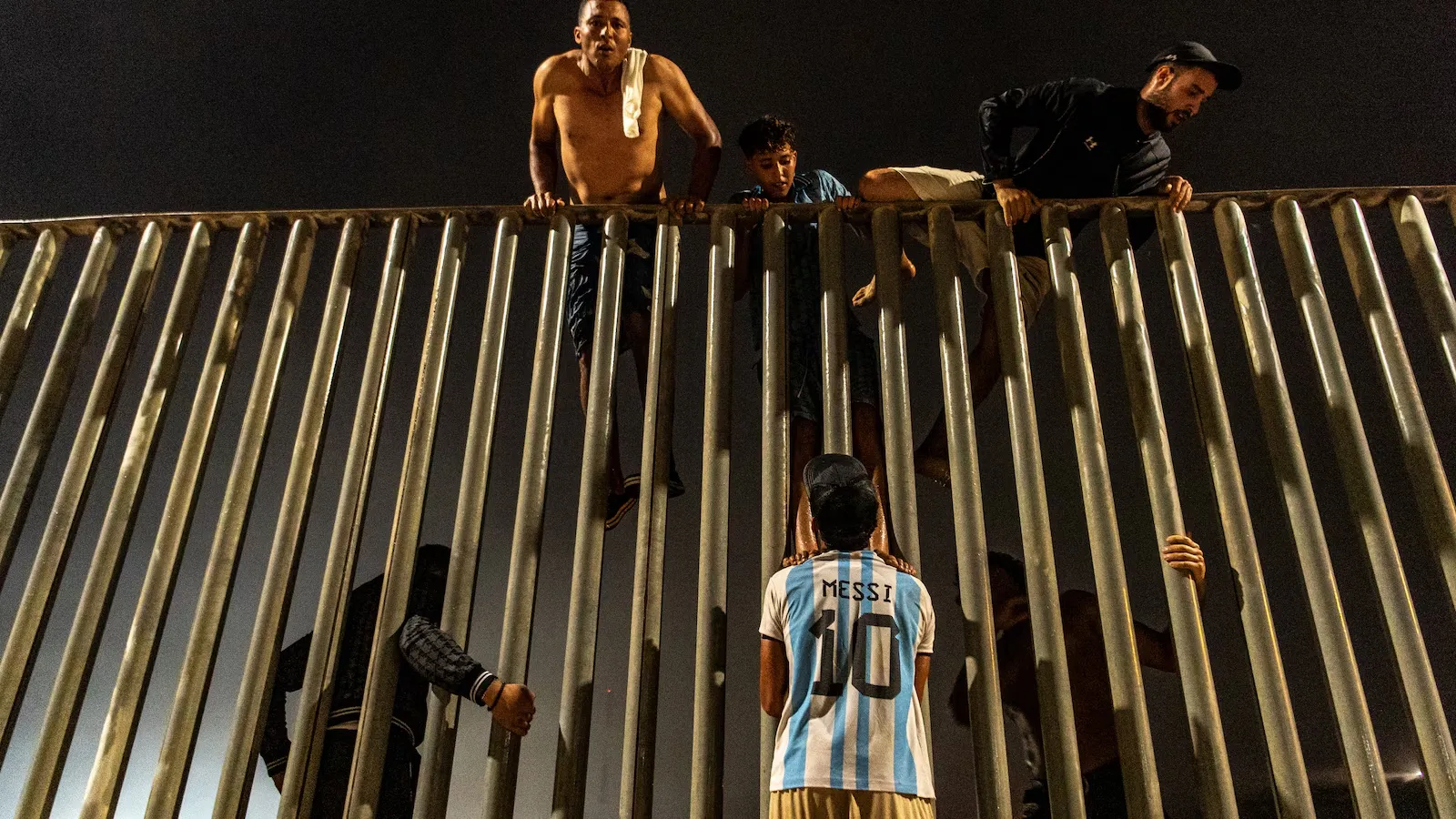
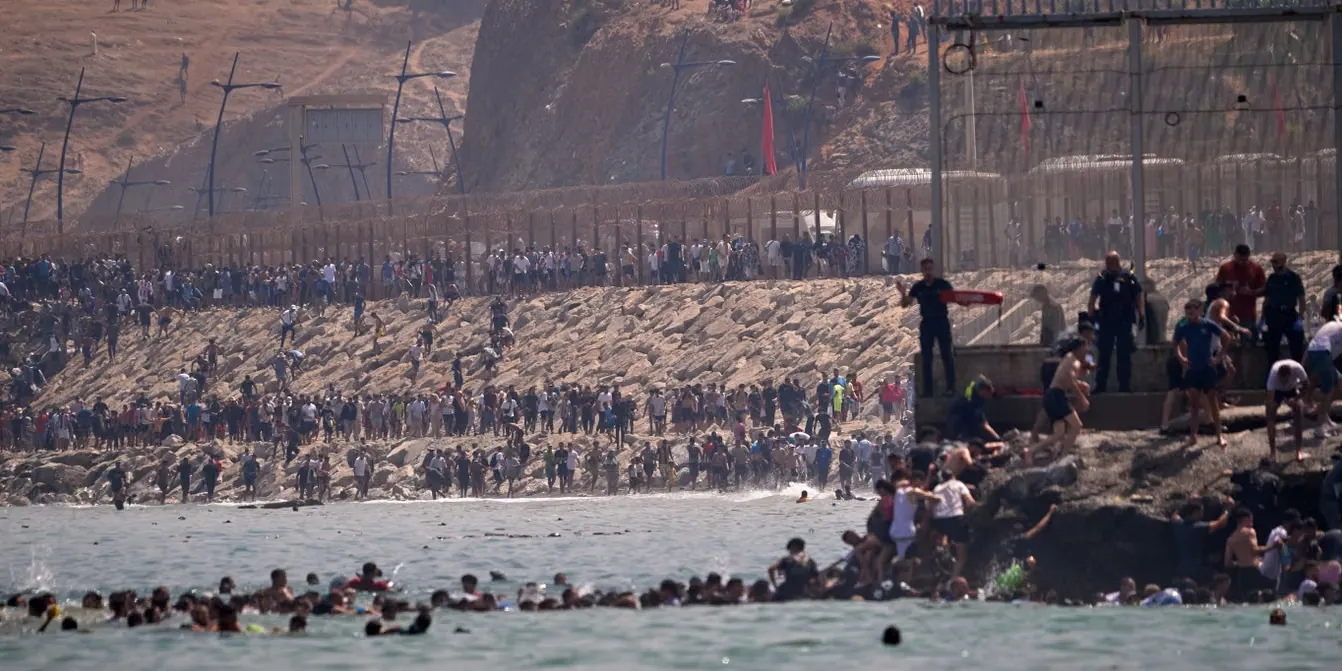
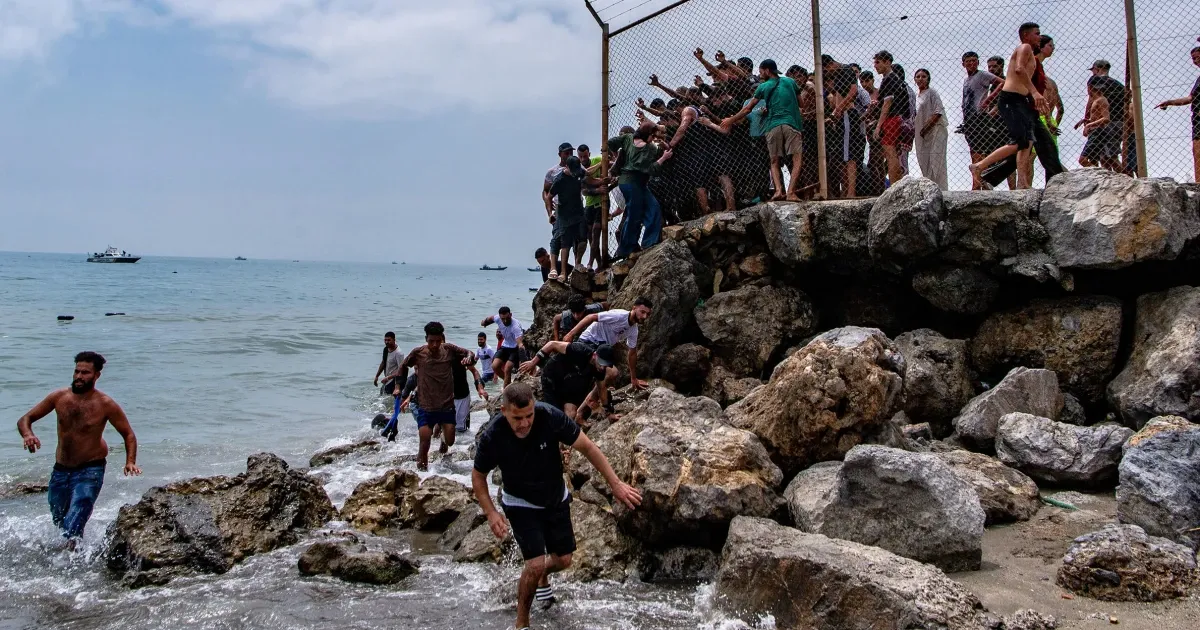
Since Thursday, a massive influx of migrants from Morocco into the Spanish enclave of Ceuta has intensified, with various factors contributing to this unprecedented situation. One prominent trigger appears to be a recent ruling by Spain's Supreme Court, which has raised concerns and uncertainties regarding the legal status of migrants crossing into Spanish territory. As hundreds of young Moroccans, undeterred by the perilous Mediterranean waters, make their way towards Ceuta, the scale of the situation has escalated beyond initial estimates. Reports suggest that as many as 49,000 migrants may have crossed the border, far exceeding the figures from previous crises, including the significant incident in May 2021, when over 8,000 were allowed entry amidst geopolitical tensions.
Even in the face of potential tragedy, as 19 bodies were recovered from the sea, the determination of these young individuals remains resolute. Many have been seen making the treacherous journey barefoot and soaked, some equipped with swimming aids, while others donned wetsuits. The sheer numbers arriving have overwhelmed Ceuta, a small town with a population of approximately 84,000, where locals have expressed their fears through shuttered businesses and empty streets. The only reception center is already overcrowded, forcing many migrants to sleep outdoors, highlighting the immediate humanitarian crisis this influx has precipitated.
In response to the chaos, the Spanish government, led by Prime Minister Pedro Sánchez, has mobilized military forces to secure the border while also sending reinforcements to local police. The situation has attracted political scrutiny, with opposition parties accusing the government of neglecting Ceuta. Additionally, the Moroccan authorities have initiated operations to manage the flow of migrants, yet many are still waiting on their side of the border, eager for the opportunity to cross into Spain.
Notably, the recent Supreme Court ruling complicates the expulsion process for migrants who reach Ceuta and Melilla by sea, as immediate deportations are now prohibited unless they cross certain barriers. This legal challenge has been cited as a possible reason behind the surge in crossings. Furthermore, the Moroccan government has expressed concern over the crisis, attributing the surge to organized criminal groups, while also emphasizing their commitment to orderly migration. The political commentary surrounding this situation has intensified, with various European leaders reacting to the unfolding events and calling for tighter border control measures, igniting further debate on migration policies across the continent.
As reported by faz.net.