
Insights on Recent Seismic Activity in Northern Morocco
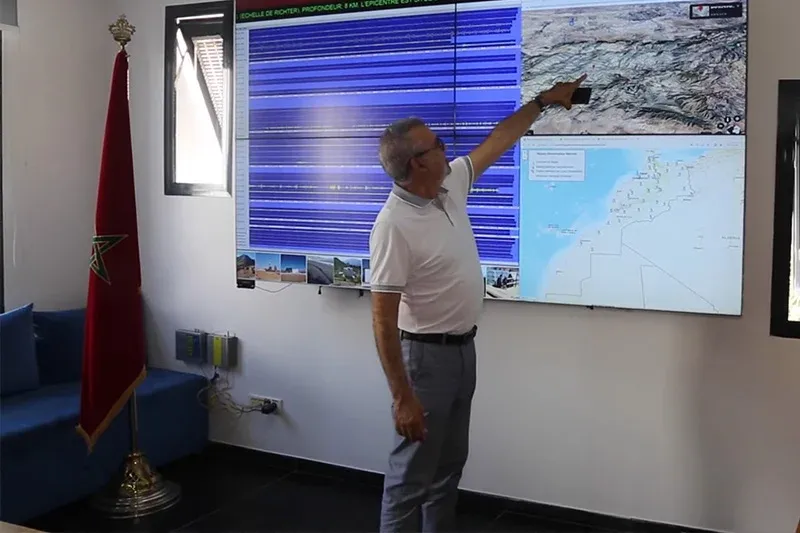
In a recent statement, Nasser Jabour, the director of the National Institute of Geophysics, emphasized that seismic aftershocks, while often concerning, do not always warrant panic. The essence of preparedness remains a crucial element in responding to natural phenomena like earthquakes. He noted that being proactive is significantly more effective than reacting post-event. On Tuesday, an earthquake measuring 4.9 on the Richter scale was recorded off the coast of Tarifa, at a depth of 55 kilometers. Numerous residents from various Moroccan cities, including Tangier, Rabat, Casablanca, and Kenitra, felt the tremors despite being relatively distant from the epicenter.
Jabour classified this earthquake as moderate, highlighting its occurrence along the northern coast of Morocco, an area historically recognized for its recurrent seismic activity. He explained that feeling the tremors even in far-off locations is typical given the earthquake's strength and depth. The geological expanse between northern Morocco and southern Spain is characterized by active faults that regularly release tectonic energy, leading to periodic earthquakes.
Moreover, Jabour pointed out that the scientific ability to predict earthquakes remains limited. It is challenging to accurately determine the time or location of future seismic events. Certain regions may experience prolonged periods of seismic quietude before resuming activity, a natural dynamic tied to the movement of tectonic plates and the release of accumulated stress.
On the same day, a minor tremor measuring 3.1 on the Richter scale was recorded in the area of Mdiq. This was classified as a mild aftershock and is considered negligible compared to the primary event that occurred the previous night. Jabour highlighted that the recent quake's depth, surpassing 50 kilometers, is characteristic of this region, which features relatively deep seismic foci. This depth explains why the tremors were felt across a broad geographical area within the national territory.
Currently, aftershocks related to the Al-Haouz earthquake continue to be felt, with Jabour indicating that such aftershocks may persist for years following major seismic events. This ongoing activity is a result of the tectonic imbalance caused by the initial earthquake and its impact on various faults, even those located at a distance. Jabour reassured that these observations do not provoke alarm but rather call for vigilance and readiness. He noted that Morocco has gained significant experience in managing seismic risks, particularly following the 2004 Al-Hoceima earthquake. In this regard, relevant authorities have placed increased emphasis on seismic studies and scientific research, along with reassessing risks and enhancing standards to improve preparedness and mitigate the effects of such natural events.
As reported by hespress.com.