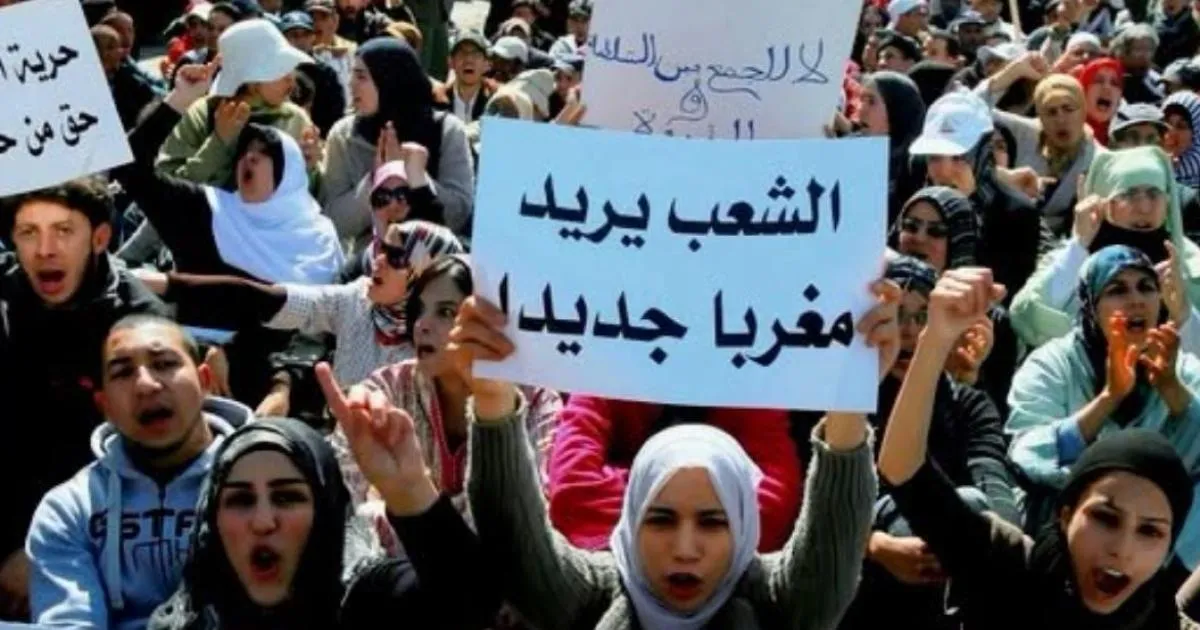

Continued Crisis and Political Failures in Morocco
Prominent Moroccan politicians, human rights advocates, and writers have voiced their concerns regarding the persistent structural crisis affecting the kingdom across various sectors. This discontent has intensified as social conditions deteriorate and networks of corruption and favoritism expand, infiltrating multiple facets of public life and plundering the nation's resources. The National Council of the Justice and Spirituality Youth, in a recent statement, pointed out what it described as the failure of the Moroccan government in managing the country's affairs, particularly as unemployment and precarious employment rates continue to rise, the quality of education and healthcare declines, job opportunities dwindle, and a growing sense of migration and despair takes hold, with Moroccan youth disproportionately bearing the brunt of this crisis.
The council emphasized that the current situation in Morocco represents a "political structural crisis that continues to reproduce authoritarianism and corruption by marketing illusions of relief and reform, while the same policies and choices deepen the nation's crises and erode citizens' trust in institutions." Furthermore, the organization denounced the ongoing normalization policies with the Israeli entity, demanding an immediate end to all agreements made with it, consistent with the Moroccan people's will and in defense of values such as freedom, justice, and the rights of peoples.
Education and Tax Reforms: The Struggles of the Moroccan People
In a related matter, the Moroccan Association for Human Rights criticized the state of education in the country, particularly highlighting the so-called "leadership institutions project." The association pointed out the persistent issue of school dropout rates and the declining quality of education, despite substantial financial allocations dedicated to the sector. The organization noted that the recent decision to borrow $750 million from the World Bank to support educational reforms and implement the 2022-2026 roadmap coincided with the allocation of approximately 117 billion dirhams to the national education sector for the years 2025 and 2026, of which 20 billion dirhams are earmarked for investment in infrastructure and facilities, including leadership institutions. However, these allocations have yet to translate into improvements in educational quality or learning conditions. According to local and international reports, school dropout rates have reached 5.3% in primary education and 12% in middle school during the 2025-2026 academic year, alongside increasing repetition rates in several institutions, and a continued learning crisis, with approximately 60% of ten-year-old children unable to read and comprehend a simple text.
On another front, the Moroccan government introduced new taxes at the beginning of July to address the treasury's deficit amid reports of ongoing corruption and the embezzlement of public funds. Local media reports indicate that these taxes cover various areas, notably real estate rental, property transactions, and registration fees, with an expanded definition of rental income subject to taxation. These measures add to previously enacted taxes in recent months, at a time when the country is witnessing a decline in support for essential goods and a deterioration in purchasing power, according to the same sources. The recent tax increases have sparked widespread discontent, with media coverage highlighting that citizens are now bearing the brunt of the adopted economic policies. In 2025, public treasury revenues in the kingdom rose due to a 35.5% increase in direct taxes and a 12.1% increase in indirect taxes, yet this has not led to any improvement in public services, as reported. Economist Ayoub Al-Radwani pointed out that around 45 billion dirhams from the emergency education reform plan "vanished without a trace," asserting that the trials of some lower-level officials served to protect higher-ranking individuals within the sector. He added that 65 billion dirhams of public support funds benefited 272 public institutions in 2024, while the annual tax evasion was estimated at about 25 billion dirhams, emphasizing that the beneficiaries of tax exemptions are wealthy business elites. He concluded that "the Moroccan people are paying for the enrichment of companies and wealthy individuals from the business sector," while human rights activists and political activists criticized the recent tax measures as they come at a time when citizens are still struggling to secure the most basic elements of a dignified life.
As reported by entv.dz.