

Understanding Morocco's Unique Stability in the Arab World
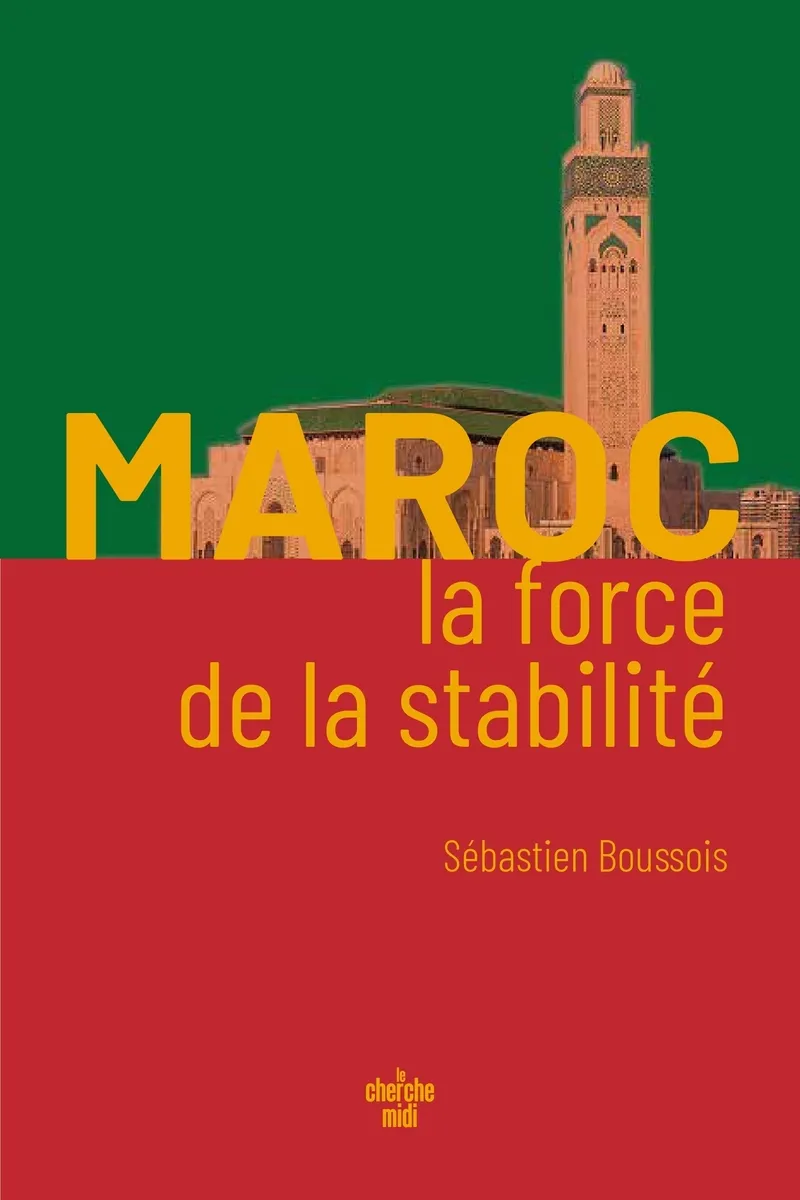
Le Courrier de l’Atlas presents exclusive excerpts from "Morocco, the Force of Stability," a new book by Sébastien Boussois set to be released on June 25. In this insightful work, the author delves into the factors that have positioned Morocco as a significant African power, emphasizing the nation's political stability, diplomatic prowess, sovereignty, and regional strategy. Boussois argues that Morocco stands out as an exception in the Arab world, particularly in its ability to maintain stability amid regional crises and geopolitical shifts. The monarchy plays a crucial role in this equation, serving as a stabilizing force that has enabled the country to navigate challenges without falling into turmoil.
“Morocco demonstrates that stability can be a form of power, that sovereignty can be strengthened through adaptation, and that security, when conceived as a comprehensive strategy, can be a lasting factor of influence rather than a mere defensive reflex,” states Boussois. A pivotal moment in Morocco's recent history was its response to the Arab Spring movements, where the country opted for a reformist path instead of succumbing to the chaos that plagued many of its neighbors. The author highlights that fifteen years post-2011, Morocco remains a functional and stable state, effectively integrated into international balances, showcasing a resilience that stems not from a lack of issues but from its monarchy's capacity to absorb shocks without disintegration.
The Role of Reform and Monarchy in Morocco's Stability
Boussois asserts that the 2011 reforms, initiated by King Mohammed VI in response to popular demands, did not signal a regime collapse but rather a transformation of the existing one. The king’s decision to embrace a “third way” of political initiative—including a constitutional reform announced in March 2011—has been pivotal in transitioning street dynamics into institutional processes, thereby averting the fate faced by other nations in the region. The monarch's approach included extending government and parliamentary powers, recognizing the country’s cultural diversity, and reinforcing certain rights, while maintaining the monarchy as the guarantor of institutional balance.
At the heart of Morocco's singularity lies its monarchy, which Boussois describes not as a mere historical remnant but as the heir to a historical construct that spans over twelve centuries. The Moroccan monarchy acts as a systemic stabilizer, absorbing conflicts and channeling dissent while allowing for a continuous reconfiguration of political balances. This ability to produce continuity amid change is a fundamental reason why Morocco has avoided the collapses and civil wars that have afflicted much of the Arab world over the past fifty years.
Moreover, the book highlights the significance of Moroccan Islam as a tool for national cohesion, presenting a model of “balanced Islam” rooted in moderation and social embedding. Boussois argues that Morocco has strategically chosen to transform Islam from an ideological battleground into a resource for stability and an instrument of international projection, thus providing a distinctive Moroccan model against the backdrop of radicalization challenges.
Internationally recognized for its security credibility, Morocco has developed a comprehensive counter-terrorism strategy since the early 2000s, integrating intelligence, prevention, judicial cooperation, and religious oversight. The Moroccan security services have gained recognition on the global stage, particularly for their collaboration with European partners, enhancing the kingdom’s diplomatic stature as a key player between Europe, Africa, and the Middle East.
Additionally, the Sahara region is central to Morocco’s development strategy, with Boussois noting a “demonstration of sovereignty through development.” The author emphasizes significant investments in infrastructure and renewable energy, suggesting that the U.S. recognition of Moroccan sovereignty over the Sahara in December 2020 marked a crucial strategic shift that bolstered Rabat's diplomatic positions. This strategy illustrates Morocco's desire to control value chains, create skilled local jobs, and diversify its commercial partners in an ever-evolving global landscape.
Ultimately, Boussois portrays Morocco not merely as a peripheral state but as a discreet pivot between various worlds, having established itself as a central player in regional security. With Mohammed VI at the helm, the kingdom has transformed its internal stability into continental influence, positioning itself as a bastion of political stability, administrative capability, and financial credibility amidst the fragmentation many African states face. This combination offers Morocco a strategic depth that transcends its geographic size, showcasing the kingdom’s evolution into a significant African power through practice, investment, and institutionalization.
As reported by lecourrierdelatlas.com.
