
Morocco's Maritime Connectivity Achievements
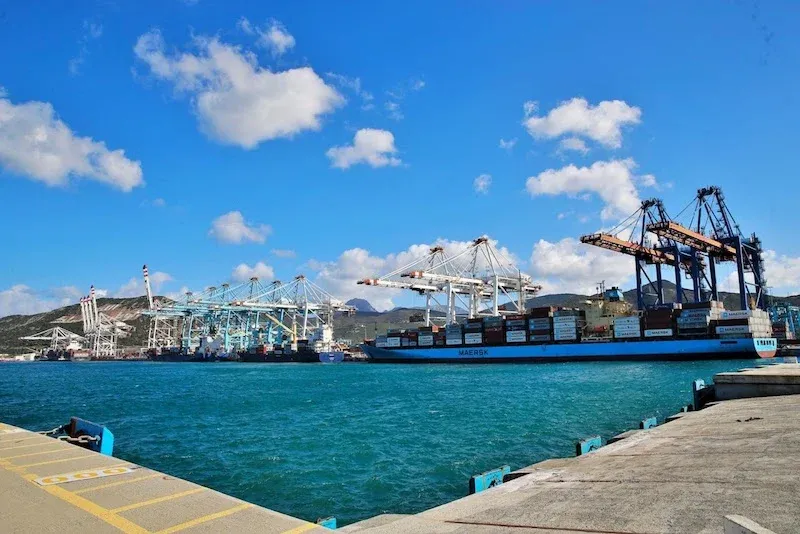
According to a recent report by the Arab Investment and Export Credit Guarantee Corporation (Dhaman), Morocco's ports, specifically the Tangier-Med and Casablanca ports, have made significant strides in maritime connectivity. These ports have been ranked among the top in a classification of 71 Arab ports, evaluated for their connection to the global navigation network, which includes over 930 ports worldwide. This recognition highlights Morocco's strategic importance in the maritime transport sector.
The report was released as part of Dhaman's fourth sectoral report for 2025 concerning maritime transport in Arab countries, published from its headquarters in Kuwait City. It indicates that the maritime transport sector in the Arab region has attracted 146 foreign projects, with an investment cost nearing $4 billion over the past 23 years. This influx of investment underscores the growing interest in enhancing regional maritime infrastructure and services.
Furthermore, the report notes a 4% increase in the Arab commercial fleet's size, reaching approximately 2,900 vessels by 2025. The capacity of these vessels has also risen by 4.6%, totaling about 109 million metric tons of deadweight tonnage, representing 5% of the global shipping volume. Such figures demonstrate the expanding capabilities of Arab maritime transport in the international market.
Intra-Arab Investments and Trade Growth
On the topic of intra-Arab investment in the maritime sector, the report identifies six Arab countries—Morocco, the UAE, Saudi Arabia, Bahrain, Oman, and Egypt—that have collectively invested in 11 joint projects, with expenditures exceeding $218 million. This collaboration is vital for enhancing regional connectivity and promoting economic growth across the Arab world.
In terms of cargo handling, Arab ports received over 423 million metric tons of goods in 2023, with Morocco, the UAE, Saudi Arabia, and Egypt accounting for 58% of this total. The amount of goods loaded through Arab ports was reported to be 1.6 billion metric tons during the same year, representing 14% of the global total, with oil making up 58% of all cargo shipped. This significant volume of trade illustrates the critical role of the maritime sector in the region's economy.
The report also highlights a remarkable 19% increase in cargo throughput at 10 Arab ports in 2023 compared to 2019, with approximately 59 million twenty-foot equivalent units (TEUs) handled. This growth reflects the recovery and expansion of maritime trade routes and port operations in the post-pandemic landscape.
Finally, the average ranking of Arab countries in the regular maritime navigation connectivity index showed improvement in the fourth quarter of 2024, with Morocco, the UAE, Egypt, and Saudi Arabia leading the way in the Arab world. The report emphasizes that the value of maritime transport services exports from Arab nations increased by 14% to nearly $9 billion, while imports rose by 13% to approximately $45 billion in 2024.
Established in 1974 and headquartered in Kuwait, Dhaman is a joint Arab organization owned by Arab states and four financial Arab institutions, marking it as the first multilateral investment guarantee institution globally. Its efforts continue to enhance investment security and promote economic cooperation among Arab nations.
As reported by hespress.com.