
Morocco's Expanding Partnership with Israel: A Strategic Shift
As of March 24th, 2026, the Moroccan government is rapidly advancing its collaboration with Israel, marking a shift from discreet diplomatic efforts to an overt strategic alliance. This development is evidenced by an upcoming economic delegation from Morocco, scheduled to visit Israel, facilitated by Startup Nation Central. This partnership is not merely a symbolic gesture; rather, it signifies an entrenched relationship that extends into highly sensitive sectors, which directly impacts the economic and technological landscape of Morocco.
This evolution is taking place within the broader context of the Abraham Accords, a framework that has integrated various Arab nations into a geopolitical landscape heavily influenced by Israeli and American interests. What might be branded as technological cooperation is, in essence, a calculated maneuver to embed Israeli influence within Morocco's economic and strategic sectors. Wendy Singer, a notable figure associated with AIPAC, plays a crucial role in orchestrating this penetration, ensuring that Israeli interests are firmly established in countries that have normalized relations with Israel.
Technological Normalization: A Tool for Surveillance and Control
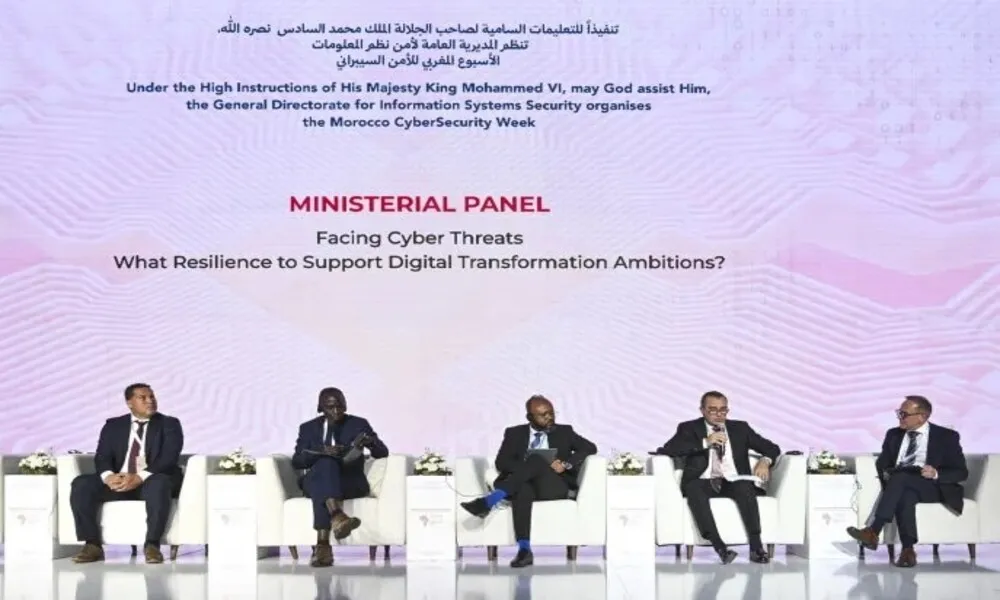
The "Connect2Innovate" program exemplifies this expansion, designed to weave Moroccan stakeholders into technology ecosystems dominated by Israeli entities, especially in cybersecurity and advanced digital systems. Key figures in this initiative, including Lital Eshel from military intelligence and Yariv Becher, formerly of Check Point Software Technologies, underscore the security-centric nature of this collaboration. This is not a benign exchange of expertise but rather an extension of a strategic apparatus focused on surveillance and intelligence supremacy.
Tamar Saraga acts as an essential conduit among Rabat, Paris, and Israel, fostering structured economic relationships through the Israel-Morocco Chamber of Commerce and Industry. These networks operate methodically, ensuring that normalization progresses through interconnected political, economic, and private avenues. On the Moroccan side, this alignment enjoys robust institutional support, with the Ministry of Foreign Affairs under Nasser Bourita backing the initiative alongside the liaison office in Tel Aviv led by Abderrahim Beyyoud. The strategy is clear: to cultivate this partnership while maintaining minimal public visibility, thus allowing extensive collaboration to flourish without facing public scrutiny.
At its essence, this partnership is predicated on the transfer and implementation of technologies developed by Israelis that have been utilized for monitoring and repressing Palestinian populations in the West Bank. The extension of these systems into other regions, including the surveillance of Sahrawis in occupied territories, reveals a common approach to repression and technological dominance. Through this alignment, technology transforms into a means of coercion, enhancing the mechanisms of surveillance and reinforcing asymmetrical power dynamics that enable the systematic monitoring of populations. Morocco's adoption of these tools signifies a concerning shift toward prioritizing control over individual rights and dominance over national sovereignty.
The normalization process between Morocco and Israel transcends mere diplomatic adjustments; it constitutes a fundamental restructuring that embeds Israeli influence across crucial sectors of the Moroccan state. This development consolidates a governance model centered around surveillance, expanding the reach of Israeli-controlled systems and aligning Morocco with a geopolitical architecture characterized by domination and exclusion. Rather than a partnership aimed at progress, this convergence amplifies injustice, institutionalizes control, and reinforces a regional order marked by coercion and imbalance.
As reported by dzair-tube.dz.