Intense Rivalry for the 2030 World Cup Final
The competition is heating up among Madrid, Barcelona, and Casablanca to host the prestigious final of the 2030 World Cup. Rafael Louzán, the president of the Spanish Football Federation (RFEF), has recently acknowledged the uncertainty surrounding the selection of the stadium, notably highlighting Morocco’s ambitious bid. With the FIFA assessment process underway, the stakes are higher than ever as both nations vie for the honor of hosting the tournament's culminating match.
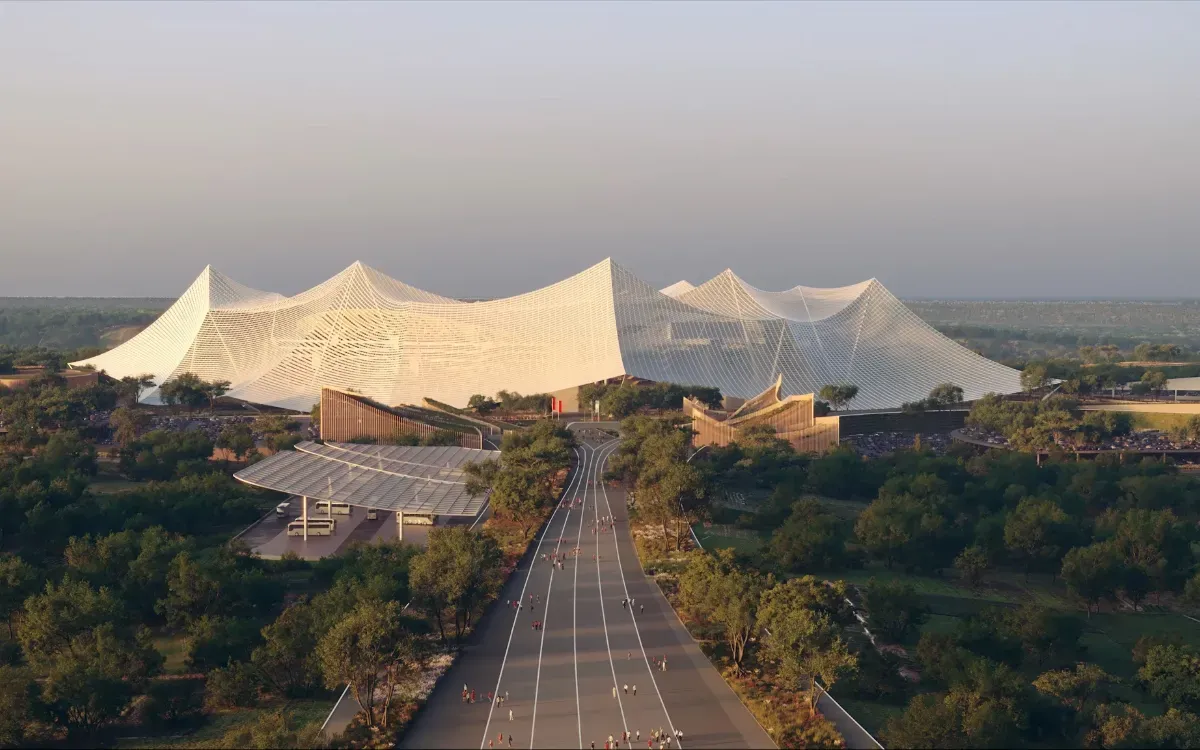
Louzán's statements have raised eyebrows, particularly as he emphasized that there are no guarantees that the final will take place at the iconic Santiago Bernabéu Stadium in Madrid, which has a capacity exceeding 80,000 seats. Meanwhile, Barcelona's Camp Nou can accommodate 105,000 spectators, but Morocco's ambitious Hassan II Stadium, currently under construction near Casablanca, is designed to hold a remarkable 115,000 fans. This significant difference of 25,000 seats is anticipated to play a pivotal role in maximizing revenue and ensuring greater access for supporters, a factor that could heavily influence FIFA's final decision.
Morocco's Strategic Infrastructure Investment
In response to the competitive landscape, Morocco is not standing idly by; it is launching an aggressive strategy to enhance its bid. The Moroccan government is investing an impressive €500 million to construct the Hassan II Stadium, which is designed to be one of the most spectacular venues in the world, rivaling the historic infrastructures found in the Iberian Peninsula. The stadium's location along the coast, near a prominent mosque, offers an appealing backdrop that could attract international organizations and media, further strengthening Morocco's position.
Moreover, Louzán pointed out that the location of the International Media Centre is a crucial technical aspect often overlooked by the general public. The city that hosts this centre is likely to be favored for the final. Casablanca's picturesque seaside location stands in contrast to Madrid's Casa de Campo, which has already received high marks for its functionality in preliminary FIFA technical evaluations.
As the countdown to the final decision begins, expected after the conclusion of the 2026 World Cup, both the Real Federación Española de Fútbol and the Royal Moroccan Football Federation are ramping up their diplomatic efforts. They aim to convince international inspectors that their respective projects embody the future of global football, making the competition for hosting the final a fascinating narrative in the lead-up to one of the world's most significant sporting events.
As reported by bladi.net.