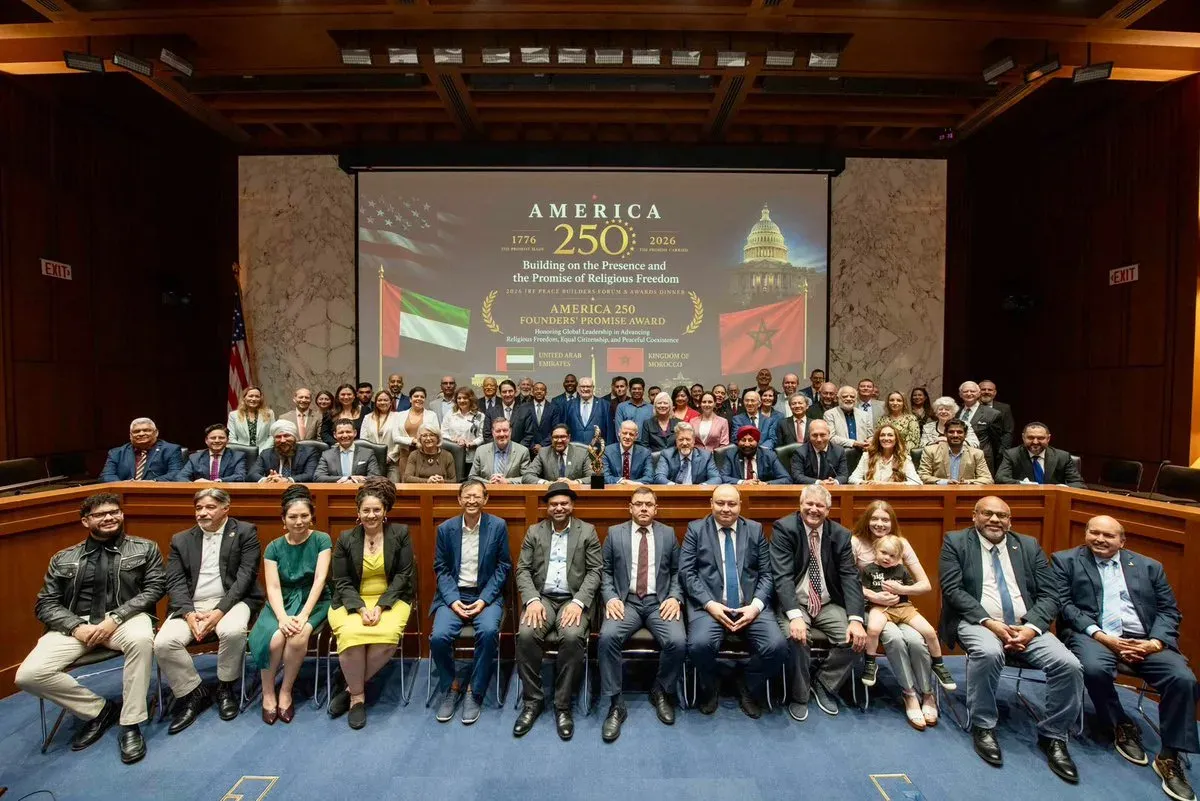

Historic Recognition for Morocco and UAE
Marrakech – In a momentous occasion marking the United States’ 250th independence anniversary, Morocco and the United Arab Emirates have gained international acclaim as the inaugural recipients of the America 250 Founders’ Promise Award. This prestigious recognition was conferred during an official session held at the US Senate in Washington, D.C., symbolizing the deep-rooted ties and shared values between these nations and the United States.
As reported by moroccoworldnews.com.
This announcement was made at the conclusion of the America 250: Building on the Legacy and Promise of Religious Freedom Forum, which took place over two days from July 16-17. The first day was hosted at the Museum of the Bible, culminating in an official session at the Senate. Attendees included members of Congress, State Department representatives, religious leaders, diplomats, policymakers, and international experts, all gathered to celebrate the significance of religious freedom and humanitarian values.
A Celebration of Religious Freedom and Coexistence
The America 250 Founders’ Promise Award was established specifically for these celebrations, recognizing nations that have significantly advanced concepts of religious freedom, equal citizenship, human dignity, minority rights, and the promotion of a culture of peace and coexistence. The organizing committee, led by Greg Mitchell, CEO of the International Religious Freedom Secretariat, acknowledged Morocco’s historical legacy in its relations with the United States, emphasizing its role in fostering religious moderation and preserving cultural diversity.
Morocco's historical ties with the United States are profound, as it was the first nation to officially recognize American independence. This occurred in December 1777 when Sultan Mohammed III opened Moroccan ports to American vessels during the Revolutionary War. The formalization of their relationship through the Treaty of Peace and Friendship in 1786, which was negotiated in Marrakech and signed by prominent American figures such as John Adams and Thomas Jefferson, stands as the longest continuous bilateral agreement in U.S. history.
The UAE, on the other hand, was honored for its exemplary national model that embodies values of tolerance, coexistence, and interfaith dialogue within its policies and initiatives that have a global impact. The organizing committee noted the UAE's significant contributions to humanitarian diplomacy and its efforts in fostering trust and cooperation among diverse communities.
The forum also featured notable addresses from key figures, including Senator Jim Lankford, Senator Jim Risch, and Riley Barnes, Assistant Secretary of State for Democracy, Human Rights, and Labor. Additionally, Ambassador Sheikh Al-Mahfoudh bin Bayyah discussed the importance of protecting religious minorities and promoting equal citizenship, highlighting the Moroccan and Emirati experiences as pivotal models for peace and coexistence.
Central to these discussions was the landmark Marrakech Declaration of 2016, a collaborative initiative between Morocco's Ministry of Endowments and Islamic Affairs and the Abu Dhabi Forum for Peace, which advocates for minority rights and religious pluralism. This declaration, endorsed by over 250 Muslim leaders from more than 120 nations, represents a modern revival of the Charter of Medina’s principles, emphasizing the need for peaceful coexistence in Muslim-majority contexts.