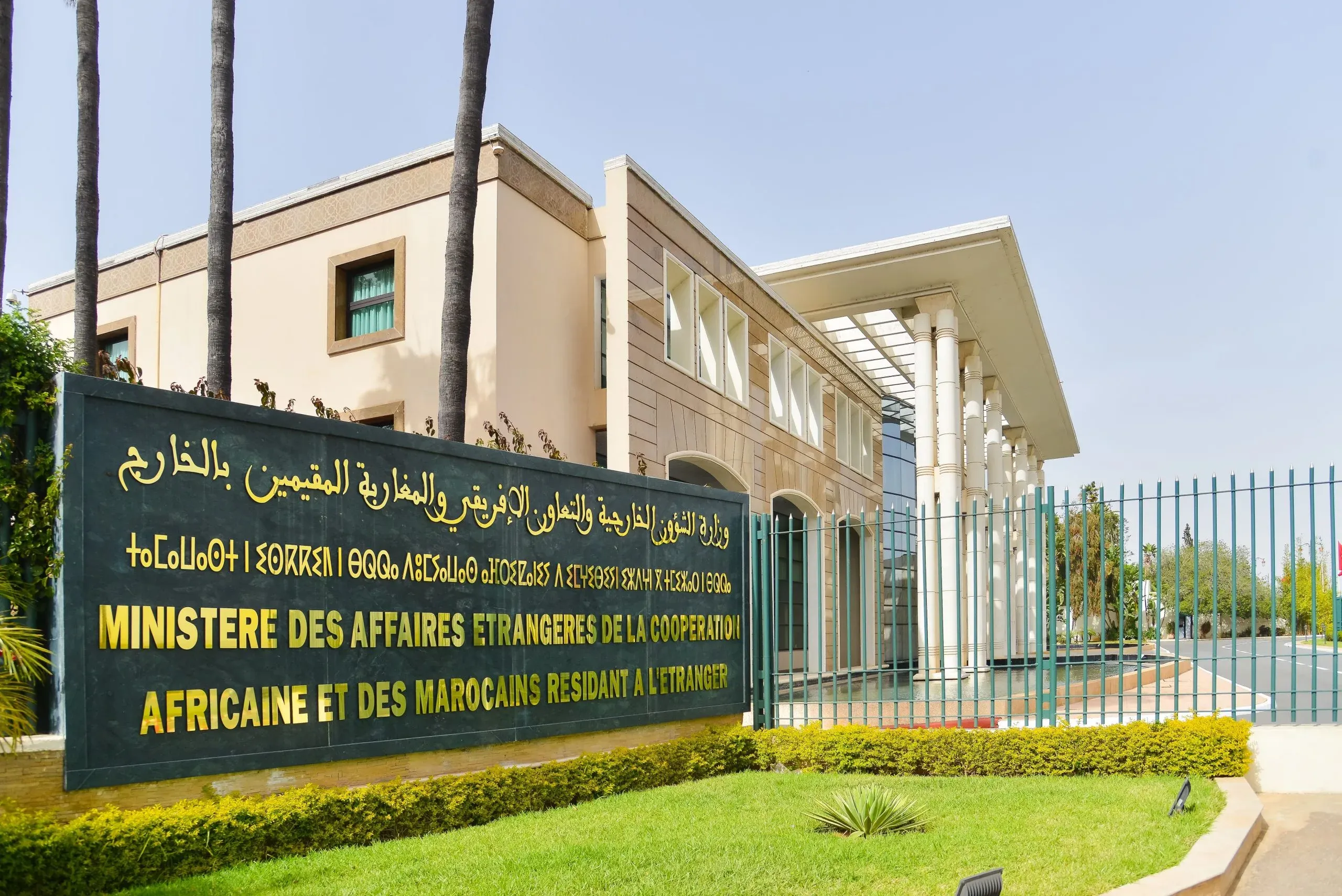

In a significant diplomatic development, Morocco has expressed its approval of the recent memorandum of understanding reached between the United States and Iran, which aims to bring an end to hostilities that have persisted for over 100 days. The Moroccan government, through an official statement, emphasized that this agreement is crucial in reinforcing the ceasefire and safeguarding the freedom of maritime navigation through the vital Strait of Hormuz, a key artery for global oil trade.
This peace deal, successfully mediated by Pakistani Prime Minister Shehbaz Sharif, has been heralded for its immediate cessation of military actions. However, it is important to note that critical issues such as Iran’s nuclear ambitions and the access regulations for the Strait of Hormuz are set to be deliberated further in forthcoming negotiations scheduled for Friday.
Morocco has urged for the swift implementation and adherence to the terms of this agreement, while also expressing gratitude towards the mediators involved in the process. The nation has voiced optimism that this accord will not only contribute to peace but also aid in resolving other lingering regional disputes in line with international law.
The announcement of this deal has elicited a flurry of global reactions following the official statements made by US President Donald Trump and Iranian representatives late Sunday. Prime Minister Sharif confirmed that a formal signing ceremony is slated to occur in Geneva on Friday.
Iran’s deputy foreign minister, Kazem Gharibabadi, disclosed that the finalized text of the agreement includes a declaration for an immediate and permanent cessation of warfare across various fronts, including Lebanon. This memorandum comprises 14 points that solidify the ceasefire and establish a 60-day negotiation period to address Iran’s nuclear program, the alleviation of sanctions, and other outstanding issues, although the full text remains undisclosed to the public.
In his initial response, President Trump underscored the significance of the Strait of Hormuz, through which approximately 20% of the world’s oil supply transits. He proclaimed, "I hereby fully authorize the toll-free opening of the Strait of Hormuz, and, simultaneously, authorize the immediate removal of the United States Naval blockade. Ships of the World, start your engines. Let the oil flow!" He later clarified that the opening would commence for the purpose of mine removal following the signing on Friday.
Reports from Iran’s state news agency Mehr indicated that the reopening of the strait is anticipated within 30 days, contingent upon arrangements made by Iran. Tehran has also suggested that it has negotiated maritime service fees for vessels passing through Hormuz, a proposition that the US has historically opposed.
Vice President JD Vance conveyed expectations that the Strait of Hormuz would be opened without tolls for an extended duration, asserting that technical specifics would be addressed during the 60-day negotiation phase. Furthermore, Iran’s Supreme National Security Council confirmed that the agreement entails an immediate halt to military operations across all fronts, including Lebanon, although Trump’s announcements did not mention this aspect.
Israel, while not a signatory to the agreement, reacted with caution. Defense Minister Israel Katz stated that Israeli military presence would persist in southern Lebanon, Gaza, and Syria indefinitely. Trump had previously criticized Israeli Prime Minister Benjamin Netanyahu for a military action that almost jeopardized the peace deal, questioning his judgment in making such attacks.
In relation to nuclear matters, Trump maintained a firm stance, asserting that “Iran will never possess a nuclear weapon.” Vice President Vance indicated that the administration is collaborating with Tehran and the UN nuclear watchdog to dismantle Iran’s stockpile of enriched uranium, although the details of this technical process remain vague. Iran is currently estimated to hold around 440 kg of uranium enriched to 60%, exceeding civilian use limits.
Another point of contention has surfaced regarding frozen Iranian assets. The Iranian Revolutionary Guard (IRGC) claimed that $24 billion in frozen funds would be released during the negotiation period, a figure Vance denied, stating that “$24 billion just doesn’t appear anywhere in any of the texts.”
Following the announcement, oil prices experienced a notable decline, with Brent crude dropping approximately 4% to just below $84 a barrel, marking one of the lowest rates since the onset of the war in late February. Conversely, US stock futures saw an increase, with S&P 500 and Nasdaq contracts rising about 1% and 1.6%, respectively.
Experts have cautioned that structural damage to Gulf energy infrastructure and unresolved political tensions might delay a complete return to pre-war shipping levels for several months.
As reported by moroccoworldnews.com.