
Morocco is set to enhance its national grain storage capacity to approximately 68.7 million quintals by the end of 2025, a significant increase from around 60 million quintals recorded just a year prior. This strategic move underscores the country’s commitment to strengthening food security infrastructure and advancing its national storage system.
According to data released by the National Office for Professional Grains and Pulses, storage facilities account for the largest share of this capacity, exceeding 43.29 million quintals. Following closely are industrial mills, with a capacity of 17.30 million quintals, while units for producing compound animal feed hold a capacity of 8.12 million quintals.
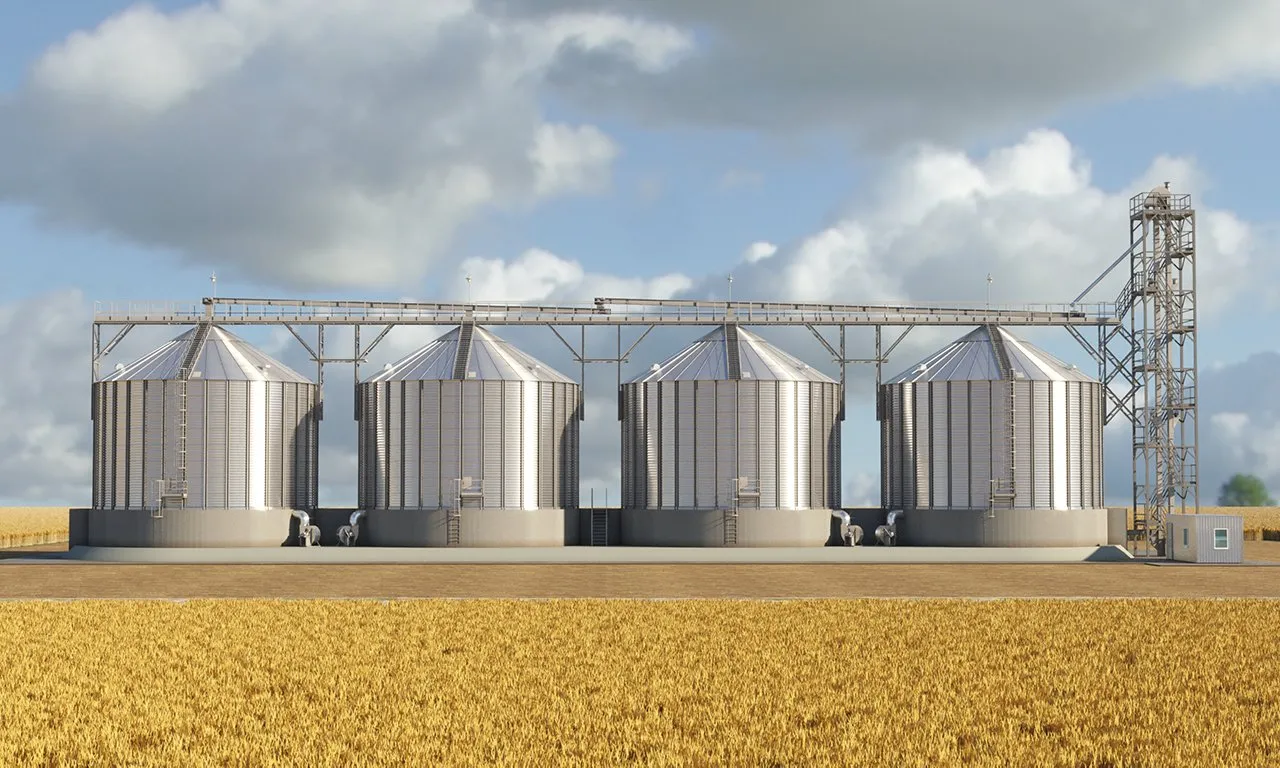
The storage system has also seen advancements in equipment, with modern silos now representing over 40% of the total storage capacity of storage entities. This improvement enhances the preservation of grain quality and increases storage efficiency over extended periods.
In terms of infrastructure, the country boasts 169 grain storage warehouses, with the Casablanca-Settat and Fes-Meknes regions leading the way, each having 56 warehouses, which constitutes one-third of the national total. They are followed by the Rabat-Salé-Kenitra region with 14 warehouses and the Eastern region with 13 warehouses.
The Souss-Massa region has 12 warehouses, while the Tangier-Tetouan-Al Hoceima region has 8. Both the Marrakech-Safi and Béni Mellal-Khénifra regions have five warehouses each. Data indicates a growing trend toward establishing large-capacity warehouses, where nearly half of the national units exceed 170,000 quintals in storage capacity, with the average capacity per warehouse being approximately 265,000 quintals.
The Casablanca-Settat region maintains its leading position in terms of storage capacity, boasting a total of 19 million quintals, which represents 44% of the total capacity of storage entities. This is followed by the Fes-Meknes region with a capacity of 11 million quintals, accounting for 26% of the national total.
In this context, the National Office for Professional Grains and Pulses continues to implement the "temporary storage" system, allowing professionals to utilize unused capacities by leasing them or making them available to other stakeholders. This mechanism has contributed to mobilizing an additional storage capacity of 16 million quintals in 2025, distributed across 44 warehouses in various regions, thereby enhancing the flexibility of the storage system and its ability to meet market demands.
As reported by iktissadkom.ma.