
The race to host the final of the 2030 FIFA World Cup has sparked intense discussions in Spanish media, with many outlets highlighting Morocco's potential to outshine Spain in this prestigious competition. According to the Spanish publication _The Objective_, Morocco has reportedly garnered substantial support within the FIFA Council, which is crucial for determining the venue of the tournament's grand finale. This development reignites the conversation surrounding the cooperative hosting arrangement between Morocco, Spain, and Portugal, as the three nations prepare for this monumental event.
Recent reports indicate that Morocco has managed to secure the backing of 22 out of the necessary 37 votes from FIFA Council members, positioning the North African nation as a formidable candidate to host the final match. The support reportedly comes from various international entities, including the African, Asian, North American, and Oceanian confederations, bolstered by alliances with influential partners such as the United States under Donald Trump's administration, Qatar, and Saudi Arabia.
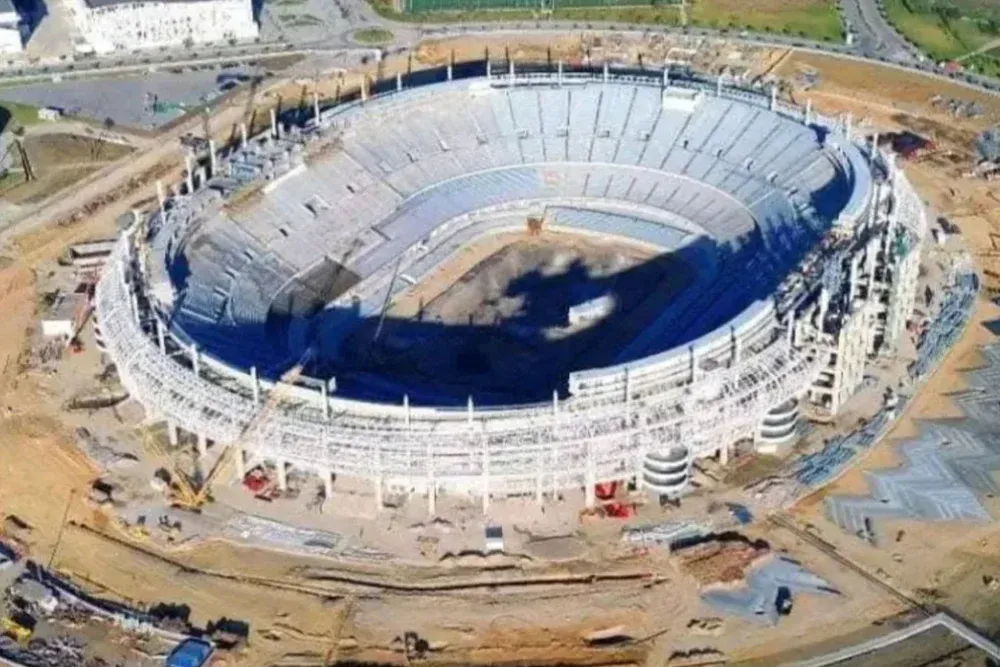
Spanish media, including _Cadena SER_, have quickly picked up on these assertions, noting the rapid progress of the Grand Stade Hassan II construction project in Casablanca. Initiated a year ago, this ambitious endeavor is said to involve nearly 10,000 workers engaged in continuous efforts to complete the stadium, which is expected to accommodate 115,000 spectators by the end of 2027. This stadium is being touted as the largest football venue in the world and is seen as Morocco's key asset in the bid for the World Cup final. Designed by renowned architecture firms Oualalou + Choi and Populous, the stadium's design draws inspiration from traditional Moroccan tents (_moussem_) and is set to meet FIFA's highest standards, featuring extensive hospitality amenities for international events.
Beyond the stadium's construction, Morocco is also focusing on a comprehensive investment strategy aimed at upgrading transportation infrastructure. Moroccan authorities have committed to significant projects to modernize railways, highways, and airports, ensuring smooth mobility among the various host cities. These enhancements are part of the broader preparations for the 2030 World Cup, which will be a historic first, spanning three continents and six nations.
Journalists from _Cadena SER_ who recently visited Morocco noted that the Moroccan lobbying efforts have been ongoing for several years, emphasizing that hosting the final is considered a matter of national interest for the country. In response to these speculations, Rafael Louzán, president of the Royal Spanish Football Federation, continues to advocate for Spain's candidacy. He insists that the final should rightfully be held in Spain, pointing out that the World Cup bid originated from Spain and Portugal before Morocco joined the initiative. Over the past few months, Louzán has expressed confidence that the final will take place in Spain, particularly at either the revamped Santiago Bernabéu Stadium in Madrid or Camp Nou in Barcelona. However, it is worth noting that FIFA has not confirmed these assertions nor announced any decisions regarding the selected stadium.
Since the announcement of the joint bid from Morocco, Spain, and Portugal, various scenarios regarding the allocation of key matches have been discussed. While the three centennial matches will be hosted in Uruguay, Argentina, and Paraguay to celebrate the 100-year anniversary of the World Cup, the official opening and the final remain focal points of negotiation among the host countries. FIFA has confirmed that the final will be held on July 21, 2030, but has yet to designate the stadium that will host this significant event.
At this juncture, no official decision has been made by FIFA concerning the allocation of the final match. The information circulated by the Spanish press derives from internal sources and media analyses, lacking direct confirmation from the global football governing body. Nevertheless, these developments underscore the intense diplomatic, sporting, and strategic competition already unfolding among the host nations as they prepare for this landmark event just five years away.
As reported by fr.hespress.com.