
Recent official data submitted by South Korea to the United Nations Register of Conventional Arms has revealed that Morocco is set to bolster its defense arsenal in 2025 by acquiring portable Chiron air defense systems. This strategic move underscores the Royal Armed Forces' ongoing commitment to a comprehensive military modernization strategy aimed at diversifying its weapons sources and enhancing its defense capabilities.
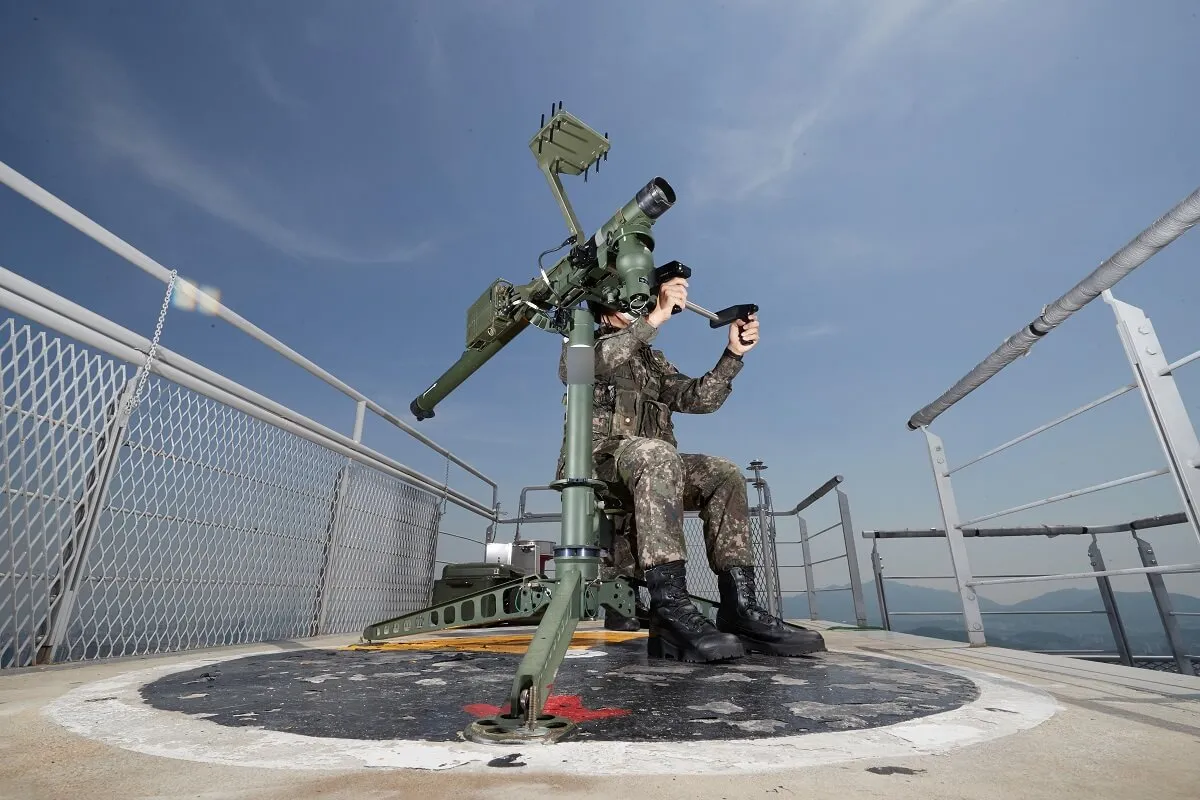
According to the information provided in the UN register, the deal includes Morocco receiving 101 ground-to-air Chiron missiles and 50 portable launch platforms. These systems fall under the category of short-range air defense known as MANPADS, specifically designed to enhance the protection of ground forces and field units against low-altitude aerial threats. This category of systems is among the most widely used in modern militaries due to its flexibility, ease of deployment, and ability to provide rapid responses in the field.
In this context, the website InfoDefensa highlighted that the Chiron system, also known as KP-SAM, is one of the defense systems developed by South Korea to enhance its short-range air defense capabilities. It is engineered to intercept a wide array of aerial threats, including attack and transport helicopters, low-flying combat aircraft, and drones, which have become pivotal in modern conflicts.
The Korean system utilizes a dual guidance technology that combines infrared and ultraviolet rays, granting it superior resistance to thermal jamming and countermeasures employed by certain aircraft. The technical specifications indicate that the system can hit targets at distances of up to approximately 7 kilometers, with a vertical interception capability nearing 4 kilometers. This makes it suitable for providing an effective defensive umbrella for ground forces in various combat conditions, particularly in environments threatened by low-altitude aerial assaults or heavy use of unmanned aerial vehicles.
The integration of these systems into Morocco's military arsenal represents a significant step towards gradually modernizing its defense infrastructure by diversifying sources of armament rather than relying on a single supplier. In recent years, Rabat has worked to expand its military partnerships to include emerging countries in the defense industry, with South Korea emerging as an increasingly important player in the global military export market, thanks to the advancement of its land, sea, and air systems.
This acquisition also reflects the growing defense relations between Rabat and Seoul, at a time when South Korea is actively seeking to expand its international presence through the export of advanced systems to several countries across Asia, Europe, the Middle East, and Africa. Observers believe that this cooperation is likely to evolve further to include even more advanced systems in the future.
Moreover, previous reports have indicated Morocco's potential interest in acquiring advanced Korean military submarines, a move that could have direct implications for military balances in the Western Mediterranean and the Strait of Gibraltar. Sources suggest that Rabat is considering various international options to enhance its naval capabilities, including South Korea's KSS-III submarines, as well as offers from France, Germany, and Russia, alongside the potential purchase of used submarines from Greece or Brazil. The acquisition of such a submarine would mark a significant transformation in the operational capabilities of the Royal Navy, as it is designed for deep-sea operations and boasts advanced surveillance and deterrence capabilities.
As reported by assahifa.com.