
Exploring Morocco's Representation in French Documentaries
In a delicate regional and international context, France Télévisions recently aired two significant documentaries focused on Morocco, commemorating the 70th anniversary of the country's independence. These documentaries highlight the shared history between Rabat and Paris, offering a retrospective on a relationship that has oscillated between tension and rapprochement over the decades. This renewed media interest, however, cannot be viewed in isolation from the current political climate, particularly as it follows a wave of official outrage from Algeria after the broadcast of a French media piece that sharply criticized the Algerian authorities' practices.
The first documentary, titled "Je t’aime moi non plus–France-Maroc," directed by Benoît Bringer, artfully narrates the complex relationship between the two nations, aptly described in the film as one that is "doomed to understanding." This documentary aired on Friday, while the second documentary, which focuses on the figure of Mohammed V and his pivotal role in Moroccan independence, entitled "Mohammed V, père de l’indépendance marocaine," is scheduled to be broadcast on Sunday.
According to Lahcen Aqrati, an expert in international relations, the timing of these documentaries coinciding with Morocco's independence anniversary represents a clear political overture from Paris toward Rabat. Aqrati shared in a statement to Hespress that this media initiative reflects a renewed French acknowledgment of Morocco's geopolitical and geostrategic position in the region. He pointed out that the restoration of normalized relations began with France’s recognition of Moroccan sovereignty over Western Sahara, which lays the groundwork for a new strategic future.
Moreover, the documentaries reference significant historical milestones that reinterpret the close cooperation that began during the late King Mohammed V's leadership as a champion of independence, leading to strengthened ties during King Hassan II's reign, and now under King Mohammed VI. Aqrati emphasized that the current phase is marked by a shift in the balance of power, where Morocco has emerged as a significant regional force in Africa. This newfound status previously caused diplomatic tensions, peaking with the Pegasus scandal. However, the current documentaries convey a message of political goodwill that anticipates a future where Morocco rejects the narrative of being the "younger brother" and demands an equal footing in its relationship with Paris, indicating a profound transformation in the French approach toward Morocco.
Rachid Lazrak, head of the North Africa Studies Center, added that this continuous French media coverage reveals Paris's efforts to reorganize its perceptions of the Maghreb according to a clear political logic: Morocco is now presented in French public media as a strategic partner, with a historical and political narrative being crafted to facilitate rapprochement and reconstruction, while Algeria is depicted in a confrontational narrative that reflects a crisis rather than seeking reconciliation. Lazrak noted that airing documentaries about the depth of the Franco-Moroccan relationship, following weeks of heightened tensions with Algeria due to a provocative French television program, is not merely a programmatic coincidence; it signifies a shift in France's priorities in North Africa—from a strained relationship with Algeria handled with suspicion and conflict to a partnership with Morocco pursued through symbolic investment and diplomatic groundwork for closer collaboration.
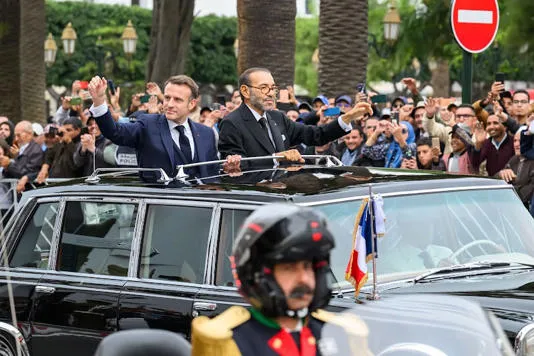
He further explained that this is not merely a temporary media maneuver to pressure Algeria, but rather a reflection of a deeper French political transformation that has been solidified at the Élysée since the summer of 2024, when President Emmanuel Macron officially endorsed the Moroccan autonomy proposal as the sole basis for resolution. This position was reiterated publicly during his official visit to Rabat in October 2024. Such developments suggest that the current media coverage and French documentaries serve a symbolic and cultural role in this political transformation, preparing the French public opinion and re-narrating the relationship with Morocco within the French media imagination, rather than acting solely as a pressure tool.
While it is true that Paris benefits indirectly from this positioning in managing tensions with Algeria—especially following recurring diplomatic crises between the two nations in 2025—the prevailing evidence suggests that pressure on Algeria is not the primary objective of this media narrative.
As reported by mnamerica.com.