
Morocco's Commitment to Human Rights Reporting
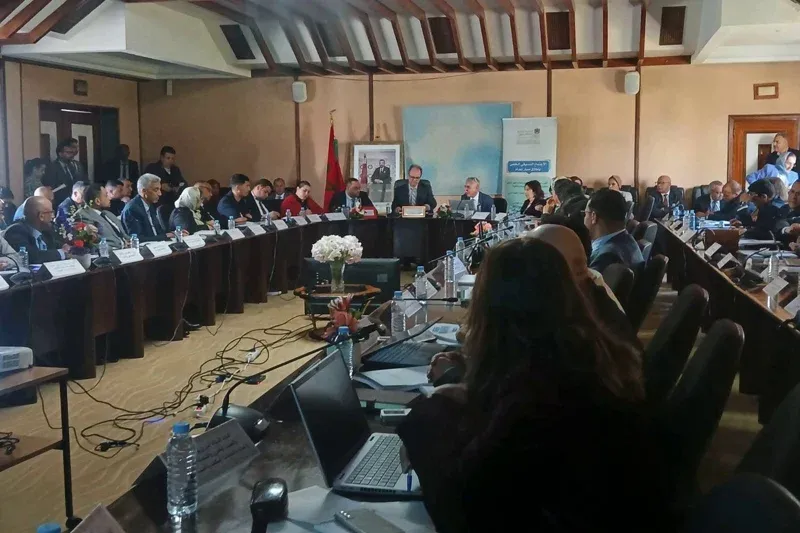
On April 14, 2026, in a significant step towards bolstering its international human rights obligations, Moroccan Minister Delegate for Human Rights, Mohamed Habib Belkouch, convened a coordination meeting in Rabat. This meeting marked the official launch of the national reporting process on human rights, attended by representatives from several key sectors, including the General Directorate of National Security, the Royal Gendarmerie, the Office of the Public Prosecutor, and the Supreme Judicial Council. During this session, Belkouch outlined the methodology and phases involved in the preparation of reports that align with Morocco's international commitments stemming from its engagement with fundamental human rights treaties.
Emphasizing the importance of these reports, the meeting confirmed that the focus would be on the preparation of the fifth periodic report concerning the implementation of the International Covenant on Economic, Social and Cultural Rights, alongside the seventh periodic report on the International Covenant on Civil and Political Rights. Additionally, they will compile a combined report addressing the fifth and sixth periodic reports regarding the implementation of the Convention on the Rights of the Child. These reports are set to be submitted to the relevant United Nations committees within the current year, based on foundational references, predominantly the constitution which serves as the primary legal framework for all rights and freedoms.
Holistic Approach to Human Rights Implementation
Belkouch articulated that the philosophy behind these reports transcends mere “sectoral inventory” of achievements, evolving into state reports that reflect an institutional commitment to harmonizing government and institutional efforts in the realm of human rights. The emphasis will be on showcasing the impact of international commitments on the legislative landscape by monitoring the alignment of national laws with international standards. Furthermore, it will involve scrutinizing how these commitments are integrated and applied within the national judicial framework.
In his address, Belkouch stated, “The preparation of national reports holds significant importance as Morocco has ratified most international agreements pertaining to human rights.” He highlighted the nation's commitment to various major reforms initiated by His Majesty King Mohammed VI, which encompass transitional justice, family law, linguistic and cultural rights, and developmental efforts, among others. These initiatives are prominently reflected in the constitutional document, which dedicates a substantial portion to human rights issues.
Moreover, he noted that the responsibility for human rights does not rest with a single sector but is a collective obligation across all state institutions. Therefore, the commitments in this domain should permeate the public policy framework of the government and be evident in the sectoral strategies of various ministries.
Belkouch also mentioned the development of a database to share recommendations from various UN bodies with each sector, underscoring the role each sector must play in this area. This technical mechanism is nearing completion and aims to provide access to government sectors while also being available to researchers, civil actors, and international institutions observing these issues.
He concluded by expressing the hope that these efforts will not culminate in isolated meetings timed around report submissions but will serve as a foundation for creating a network within each sector to monitor human rights issues from their respective perspectives. This approach will facilitate tracking the implementation of recommendations directed at Morocco, which currently exceed 1,300 in number.
Belkouch reiterated that the involvement of various sectors in this initiative reflects a genuine commitment to enhance engagement in this critical area, highlighting the political will of the Moroccan state to submit these reports at this juncture. He acknowledged that some reports may cover a decade, a lengthy period compared to treaty requirements, yet emphasized that it represents a response to an international obligation, as Morocco's ratification of these treaties is voluntary and reflects the country’s strategic choice.
Finally, he specified that the new strategic orientations of the ministry aim to elevate the performance of human rights reporting, enhancing the credibility of reports before international experts. The expectation is not solely to present achievements but also to identify the obstacles and challenges facing these experiences, which is a reality shared by all nations worldwide. This requires a methodological approach that is ambitious, reflecting Morocco's democratic project while simultaneously realistic, outlining what has been accomplished and recognizing areas needing improvement.
Belkouch emphasized that at such junctures, Morocco is not at odds with any specific UN agency but rather engaging in dialogue with partners on a unified platform defined by the treaties. He affirmed that experts are involved in accompanying experiences, and Morocco welcomes constructive criticism. As an example of this collaborative spirit, he noted the upcoming visit of the UN Special Rapporteur on Torture next month, who is set to make her second visit to Morocco at the government's invitation.
As reported by hespress.com.