
According to stakeholders and experts in the tourism sector, the year 2026 is poised to be a "strong transitional phase" for tourism in Morocco, as positive figures emerge in the first quarter. The Ministry of Tourism, Handicrafts, Social, and Solidarity Economy, led by Minister Fatima Zahra Ammor, announced that Morocco welcomed approximately 4.3 million tourists during the first quarter of 2026, marking a 7% increase compared to the same period last year.
This performance underscores the positive dynamism of the tourism sector, bolstered by improved air connectivity, diversification of source markets, and enhanced tourism offerings, with a strong performance recorded in March. Zoubir Bouhout, a tourism expert, noted that the Moroccan tourism sector experienced significant growth at the start of the year, with January and February witnessing an increase exceeding 20%.
However, as March arrived, Bouhout pointed out that the cumulative growth rate declined to just +7%. This drop reflects a sharp decrease in performance for March compared to the previous year, as the stabilization of the rate at 7% after a strong start (20%) indicates negative figures for that month.
This slowdown, according to the tourism expert, is attributed to external factors, particularly the ramifications of ongoing conflicts that have affected air travel and travel costs. Despite Morocco's status as a safe destination, external influences are not purely mechanical but subject to fluctuations in the global market and transportation costs.
Moreover, the rise in fuel prices (kerosene) has contributed to increased airfare, compounded by inflation that diminishes tourists' purchasing power. Bouhout concluded that while these factors may not deter tourists from visiting Morocco, they will likely reduce the length of their stays and lower their spending.
Looking ahead, the forecast indicates a continued recovery, albeit at a moderate pace of between 5% and 6%. Bouhout considers that achieving a cumulative increase of around 10% by the end of the coming months would be a positive figure amid the current structural and situational crises.
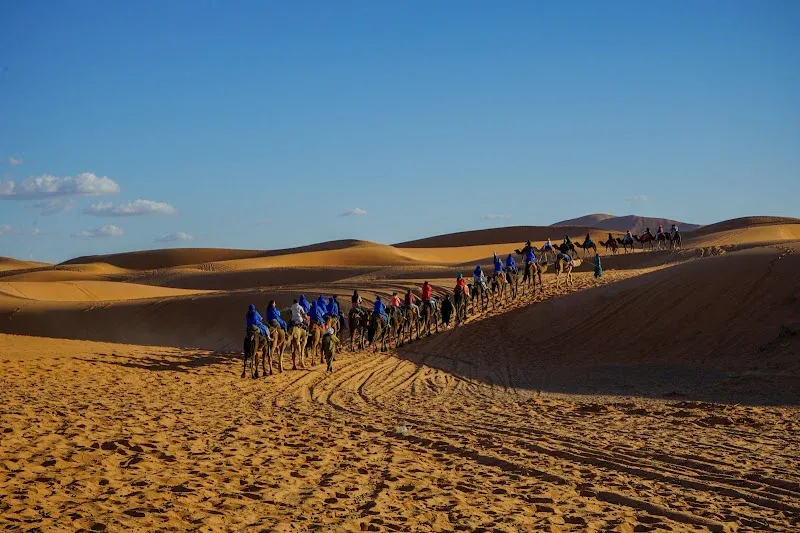
On a regional level, Soufiane Bachar, president of the Regional Hotel Industry Association for the Drâa-Tafilalet region and a member of the National Hotel Industry Union, remarked that the region is experiencing a palpable tourism boom, evidenced by increasing figures and visible demand. Bachar noted that collaborative efforts between the regional authorities and industry professionals have addressed issues in the unregulated sector, allowing many tourism units, previously outside of official statistics, to be included, revealing a more accurate representation of tourism activity in the area.
In numerical terms, the recovery of tourism activity in the region, which has seen challenging years, is evident, with approximately 9,000 beds available, including 7,000 in camping sites and 2,000 that were previously unclassified. Overcoming this obstacle has enabled thousands of overnight stays to be included in general statistics, providing a clearer picture of tourism activity that rivals major national destinations like Marrakech and Agadir.
As reported by hespress.com.