
Morocco Becomes the 64th Signatory of the Artemis Accords
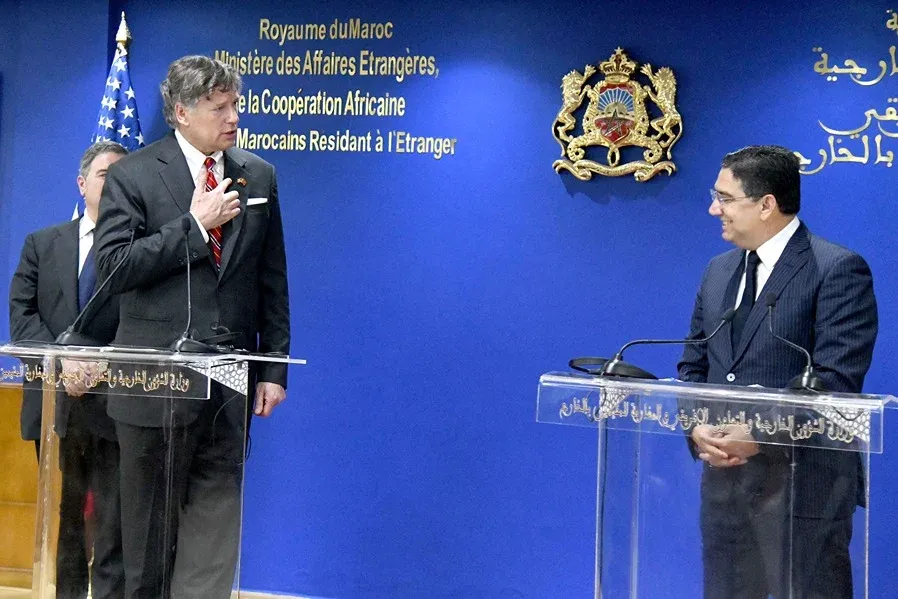
On April 30, 2026, Morocco officially joined the Artemis Accords, becoming the 64th nation to do so. These accords are designed to guide the responsible exploration of outer space, establishing practical principles to enhance security and cooperation among countries with shared visions during lunar, Martian, and beyond explorations. The signing ceremony took place during a joint press conference in Rabat, featuring Morocco's Minister of Foreign Affairs, Nasser Bourita, and U.S. Deputy Secretary of State, Christopher Landau. Landau expressed gratitude towards Morocco and King Mohammed VI for their commitment to this human endeavor, stating, "Morocco's adherence to the Artemis Accords advances space exploration efforts in a responsible manner that benefits humanity."
The Goals and Principles of the Artemis Accords
The Artemis Accords were initiated by NASA in 2020, in collaboration with the U.S. State Department and seven founding nations, including the United Arab Emirates, the United Kingdom, and Japan, during Donald Trump’s first term. The primary aim is to facilitate cooperative activities in the realm of space exploration. They emphasize the commitment of signatory nations to adhere to principles regulating state actions in space exploration and its use, while promoting best practices and norms for responsible civil space exploration and utilization.
The accords aim to establish a shared vision through a practical compilation of guidelines and best practices to streamline the organization of civil space exploration and usage, advancing the Artemis program. Signatories are required to transparently publish information regarding their national space policies and exploration plans, in accordance with their domestic laws. Furthermore, the agreements mandate nations to make all reasonable efforts to assist individuals working in outer space who may find themselves in peril. The Artemis principles also compel signatories to preserve historical heritage in space and ensure the safe disposal of debris and space waste.
Additionally, the accords outline a series of guidelines to structure cooperation in space exploration among countries participating in NASA’s plans for lunar exploration in the 21st century. These provisions will be implemented through bilateral agreements that specify responsibilities and legal frameworks, restricting cooperation activities to peaceful purposes only.
In November 2017, the French Guiana Space Centre announced the launch of Morocco's first satellite, named Mohammed VI-A, developed by Thales Alenia Space and Airbus Defence and Space. This satellite is intended for mapping, land management, agricultural and ecological monitoring, as well as border surveillance. A second satellite, Mohammed VI-B, was launched the following year, further enhancing Morocco's capabilities in space technology and exploration.
As reported by fr.hespress.com.