Building a Strong Institutional State through Democratic Processes
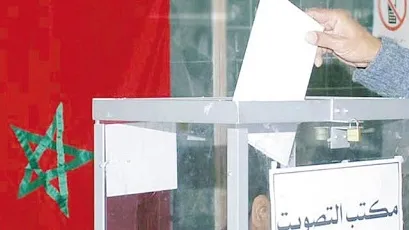
Morocco is gearing up for a significant legislative election scheduled for September 2026, which represents a critical juncture in the ongoing effort to establish a constitutional state supported by the principles of representative democracy, wherein political parties play a fundamental role. This initiative aligns with the spirit of the constitutional document, the political party law, and the legal framework governing electoral processes. The preparations for this legislative landmark have sparked an unprecedented dynamism in political communication and the nature of party discourse, opening the door to extensive academic debate among various political interpretations that seek to dissect the underlying factors of the current political landscape and predict its future outcomes.
In this context, Abbas Al-Wardi, a professor of public law at Mohammed V University in Rabat, provided insights to "Elaph" regarding the pragmatic approach of political parties. Conversely, political analyst Hassan Jefali shed light on the institutional actions related to the upcoming elections.
The Rise of Pragmatism and Social Cost Language
In his analysis of the political scene leading up to the elections, Al-Wardi, who is also the director of the African Journal of Public Policy, noted that political discourse forms the central point of interaction between the citizens and the electorate. Despite the diversity of perspectives and ideologies, a common element persists: the concept of the "nation-state" founded on the philosophy of "Magribiya" and the unity of the nation from Tangier in the north to Laayoune in the south. Al-Wardi posits that the 2026 elections are unprecedented due to the fierce party competition, characterized by a new style of discourse that embraces public language and colloquialisms relatable to the everyday lives of Moroccans. This approach criticizes the avarice of commercial intermediaries who amass wealth during social crises, commonly referred to by the public as "farakashia" or "shanaqa." He questions whether this shift is merely a transient electoral phenomenon or a genuine reflection of the public's increasing awareness of national issues, especially in light of the expanding digital communication landscape via social media platforms and the public's engagement with parliamentary sessions broadcasted by the national radio and television company, particularly the monthly sessions led by the Prime Minister.
Al-Wardi remarked, "The political courage to address the issues of intermediaries and label them as 'farakashia' within parliament signifies a clear departure from the conventional language and tone of political actors." He added, "This pragmatic discourse, corroborated by national institutional reports and the reality of rising prices, is likely to drive a significant portion of the citizenry to activate the pragmatic choice barometer, which will be pivotal in determining who will lead public affairs management."
In contrast, academic researcher Hassan Jefali offers a perspective that emphasizes the "institutional and programmatic structure" of parties as a true criterion for evaluation, rather than merely focusing on the verbal changes in political rhetoric. Jefali suggests that the resort of political actors to employing street language and colloquial terms related to soaring prices and daily life might sometimes be interpreted as a "communication tactic born out of social crisis" aimed at quick electoral consumption and emotional appeal, rather than representing comprehensive developmental programs. He asserts that the real challenge facing Morocco is not the ability of parties to align with street language, but rather their maturity in providing structural and sustainable responses. Jefali cautions that the Moroccan voter’s choice should be based on assessing the programmatic alternatives proposed by political entities to implement major national projects, including social protection initiatives, support system reforms, and territorial governance. He concludes, "The strength of a political party in the 2026 election will be measured by its institutional capacity to formulate implementable and fundable programs, moving away from ephemeral promises and slogans, as the growing awareness of citizens demands that political elites transition from merely diagnosing social issues to practically engineering structural solutions."
As reported by elaph.com.