
Morocco's Migration Strategy and Algeria's Rising Emigration
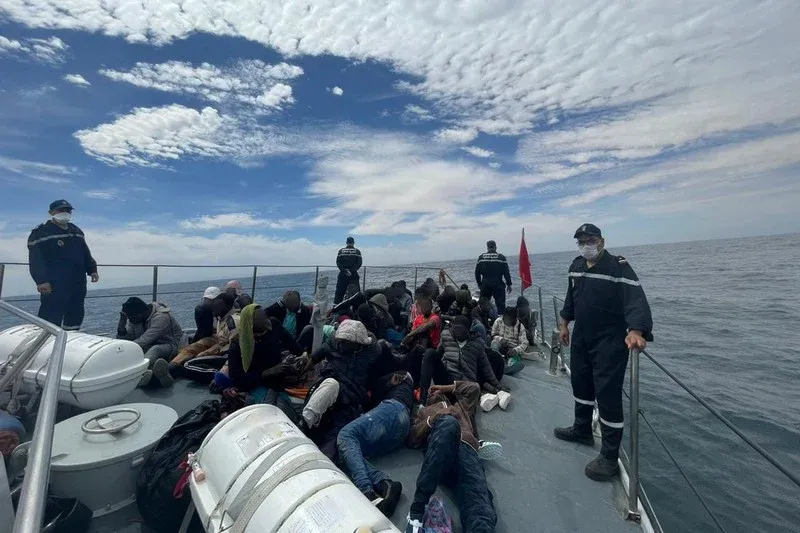
Recent findings from a report by the European Union Asylum Agency underscore the critical role of bilateral cooperation in managing migration and asylum flows. The report indicates that enhanced operational coordination between Morocco and Spain has led to a significant decrease in irregular migration across the West African route. Specifically, there has been a staggering 63% decline in detection cases of illegal crossings, with departures from Morocco dropping by 17%. In stark contrast, neighboring Algeria is witnessing a surge in emigration, highlighting a complex regional dynamic.
The data reveals that asylum applications within the European Union have plummeted by nearly 20% at the end of last year compared to 2024. This decline stems from a reshaping of the asylum landscape, influenced by various factors affecting specific nationalities, alongside broader shifts in policies and geopolitical contexts. Notably, the number of asylum requests from Syrian citizens has fallen to approximately 42,000, marking a 72% decrease from the previous year. Conversely, Venezuelans continue to file asylum applications in record numbers, driven by the ongoing crisis in their homeland and changing political responses abroad.
Furthermore, the report highlights that while the drop in Syrian applications is primarily a consequence of developments within Syria itself, the shift in Afghan asylum requests in 2025 largely emerged from the European legal framework and associated countries. In October 2024, the European Court of Justice altered the legal landscape for Afghan women's protections, recognizing that they face systemic persecution under Taliban rule. Consequently, both nationality and gender were deemed sufficient grounds for granting refugee status, leading to a notable increase in repeated applications from Afghan women and their families already residing in EU countries. Notably, 42% of all Afghan applications in 2025 were repeat requests, a significant rise from 14% in the prior year. This trend has been particularly pronounced in Germany, where authorities reported a sharp increase in asylum applications from Afghan women mid-2025.
The report further points out that by mid-last year, Venezuelans emerged as the second-largest group seeking asylum in EU countries, with around 91,000 applications submitted, the highest number recorded to date. This reflects a 23% increase compared to 2024, with the vast majority of these requests made in Spain. Germany remains the top destination for asylum seekers within the EU, accounting for nearly one-fifth of all applications (163,000 requests). France follows closely with about 152,000 applications, while Spain recorded 143,000, representing 17% of the total asylum applications across the European Union.
As reported by hespress.com.