Morocco's Leap into Electric Vehicle Battery Production
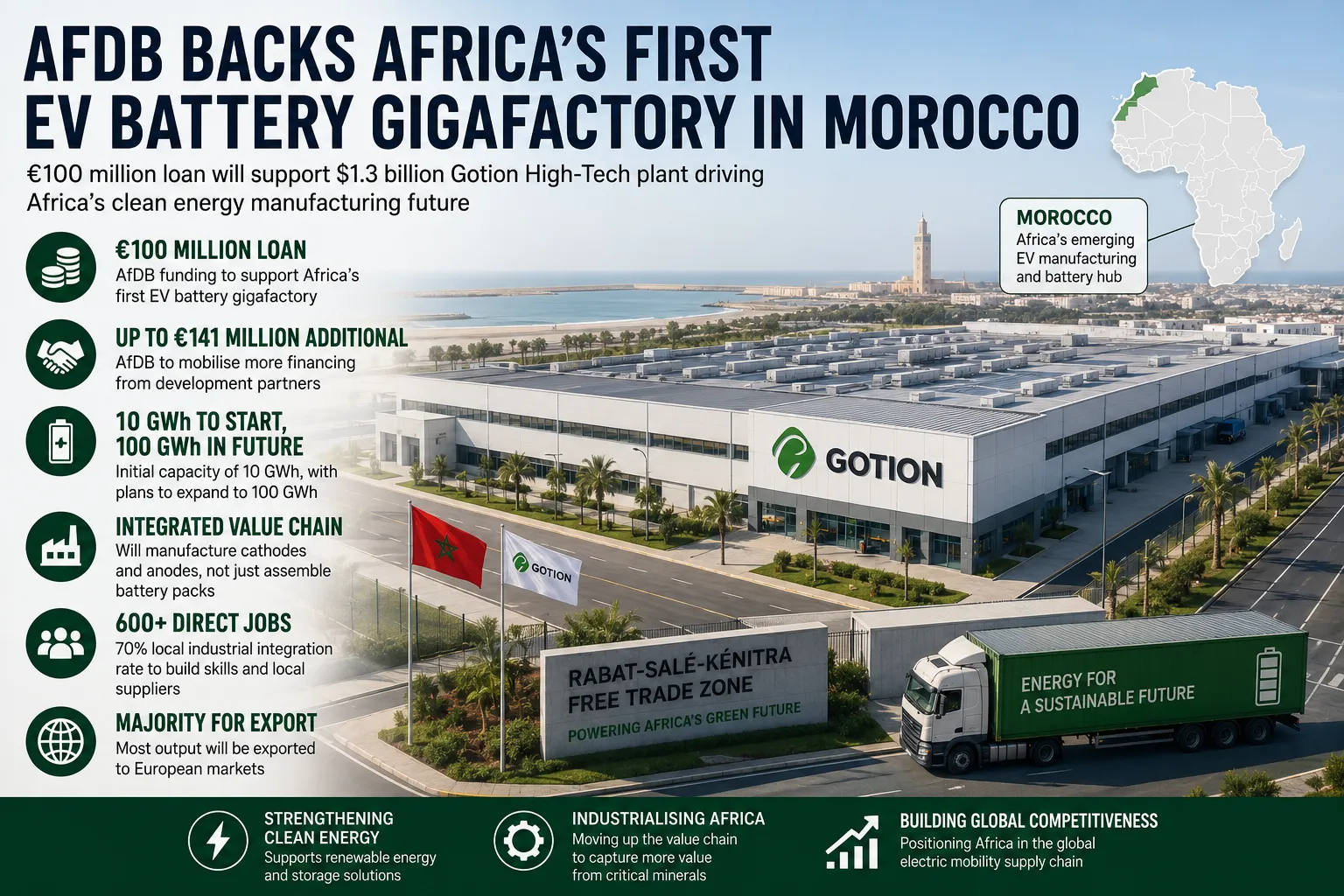
The African Development Bank (AfDB) has taken a significant step towards advancing Africa's clean energy manufacturing capabilities by approving a loan of €100 million (approximately $114 million) aimed at developing the continent's first electric vehicle (EV) battery gigafactory in Morocco. This initiative not only highlights the growing importance of electric vehicles in Africa's future but also represents a major milestone in the region's ambition to establish its own manufacturing sector for clean energy technologies.
The project, spearheaded by Chinese company Gotion High-Tech, is projected to require an initial investment of around $1.3 billion to construct a state-of-the-art lithium iron phosphate battery plant within Morocco's Rabat-Salé-Kénitra Free Trade Zone. This facility is set to manufacture critical components such as battery cells, cathodes, and anodes, which will primarily be exported to European markets. Notably, the project is expected to enhance Morocco's status as a pivotal hub for electric vehicle manufacturing and battery supply chains across the region.
Creating Jobs and Strengthening Local Manufacturing
The AfDB's support extends beyond the initial loan, as it plans to mobilize an additional €141 million (approximately $161 million) from development finance partners to ensure the project's success. The first phase of the gigafactory is anticipated to produce 10 gigawatt-hours (GWh) of battery cells and packs annually, with the potential to scale up production to 100 GWh, positioning Morocco among the leading battery manufacturing sites globally.
Unlike many battery projects that focus solely on assembling battery packs, this Moroccan facility will encompass all aspects of battery production, including the manufacturing of cathodes and anodes. This approach aims to create a comprehensive battery value chain within Africa, thereby retaining more value locally and reducing reliance on imports. In addition to fostering local manufacturing, the project is expected to generate over 600 direct jobs during its initial phase, contributing to a local industrial integration rate of 70% and boosting domestic suppliers and technical expertise.
AfDB's Vice President for Power, Energy, Climate, and Green Growth, Kevin Kariuki, emphasized that projects of this scale are crucial for Africa's clean energy transition, as they will bolster renewable energy systems and create green jobs. This investment aligns with the AfDB's broader strategy of promoting industrialization, regional integration, and value addition to Africa's natural resources, ultimately enhancing the continent's competitiveness within global electric mobility supply chains.
As reported by africa.businessinsider.com.