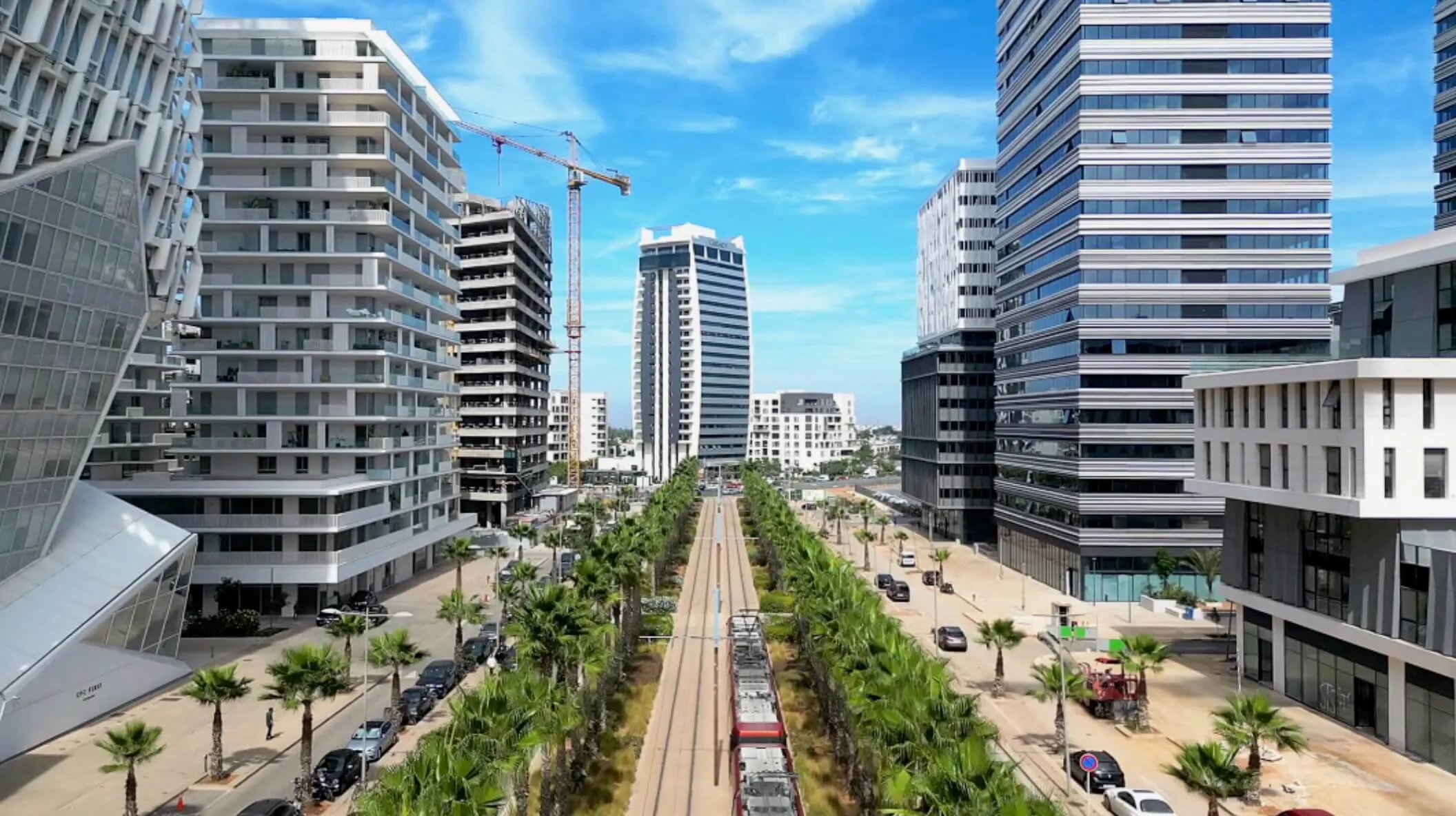

A recent report issued by the African Development Bank has revealed that Morocco has surpassed South Africa to become the leading industrial economy in Africa. This transformation is attributed to the kingdom's successful development of an advanced industrial base, diversification of its exports, and the enhancement of its industrial policies in recent years. This finding was part of the newly released "Manufacturing Index for Africa 2025," presented during the bank's annual meetings held in Brazzaville, the capital of the Republic of Congo, along with the inaugural "African Industrial Investment Gauge," developed in partnership with WITBA Invest SA and Trendeo.
The report highlights that Morocco's achievement stemmed from its commitment to sustainable industrial modernization and its success in creating a more diverse and export-capable industrial system. In contrast, South Africa has experienced a gradual decline in its competitiveness, even though it remains a significant industrial power on the continent. Furthermore, the report indicates that Morocco's success is not solely tied to attracting foreign investments but also to its ability to retain a larger share of value-added within its national economy by developing local production chains and strengthening the interconnectivity between various industrial sectors.
North and South African countries still dominate industrial activity on the continent and excel in exporting manufactured and advanced products, while East, West, and Central African nations continue to face challenges due to weak industrial integration and inadequate regional production chains. The source also pointed out that Africa is experiencing a "quiet yet irreversible industrial transformation," although this change remains uneven and concentrated in a limited number of economies that have successfully built more sophisticated industrial infrastructures linked to international trade.
According to the report, 41 out of 54 African countries improved their manufacturing indicators between 2010 and 2024, with an overall increase in continental industrial performance by 6%. However, Africa still accounts for less than 2% of global industrial output. The report places this data within a broader context of reshaping African production chains and the emergence of new industrial models that have transitioned from rentier or traditional agricultural economies to an industrial economy focused on exports, technology, and integration into global value chains. Morocco is noted for successfully establishing this trajectory over the past decade through "aggressive" industrial policies and a remarkable expansion of infrastructure and export-oriented industrial sectors.
Presented alongside the annual meetings of the African Development Bank, the report also highlighted the first "Barometer for Industrial Investment in Africa," prepared by WITBA Invest SA in partnership with Trendeo. These reports are described as the most comprehensive and accurate to date in measuring the fastest industrializing African economies and the countries most attractive to industrial investments, in addition to evaluating the value that African nations manage to retain within their national economies, rather than merely serving as low-cost production platforms for multinational corporations.
The report affirms that Morocco's rise to the top industrial rank in Africa resulted from continuous "upgrading of the industrial chain," diversification of exports, and the adoption of a strong and stable industrial policy. These elements have enabled the kingdom to gradually transform into one of the most significant industrial and logistical hubs on the continent, particularly in sectors such as automotive, aerospace, electronics, renewable energies, and food industries.
In contrast to Morocco's ascent, the report illustrates a complex and intertwined reality of African manufacturing, confirming that the continent still suffers from significant weaknesses in industrial and trade integration among its countries, with intra-African trade accounting for only 14.4% of total continental trade. This figure is seen as a clear indicator of the fragility of regional productive ties and the fragmentation of industrial systems within Africa.
The report notes that this weakness in industrial integration reflects the continued reliance of many African economies on exporting raw materials and natural resources instead of developing integrated industrial production chains within the continent. Consequently, Africa, despite its vast resources, remains unable to assert itself as a global industrial power capable of competing in manufacturing and technology sectors.
The "Manufacturing Index for Africa 2025" evaluated the level of industrial development in 54 African countries from 2010 to 2024, revealing that 41 African nations managed to improve their industrial outcomes during this period. The overall industrial performance of the continent has increased by 6%, with the highest improvement rates observed in lower-performing economies, indicating the beginning of a gradual industrial convergence within the continent.
Despite these positive indicators, the report warns that Africa is still far from transforming into a global industrial hub, as it accounts for less than 2% of global industrial production and only 1.4% of global manufacturing exports. Additionally, the added industrial value per capita has dropped to levels lower than those recorded before 2014, reflecting the ongoing fragility of the African industrial fabric and weak productivity in many countries.
The report also points out that the North African and Southern African regions continue to dominate industrial production and the complexity and sophistication of industrial exports within the continent. This explains the continued concentration of a significant portion of industrial investments and advanced production facilities in these two regions compared to the rest of Africa.
Moreover, the report advocates moving beyond the traditional approach focused solely on reducing tariffs towards building "real economic corridors" and high-quality industrial and logistical infrastructures, standardizing industrial and trade norms, and linking these efforts with the African Continental Free Trade Area. It emphasizes that the success of Africa in building integrated regional production chains will remain a fundamental condition for any genuine industrial renaissance within the continent.
In this context, the report indirectly highlights Morocco's experience as one of the most capable African industrial cases in leveraging its geographic location, logistical infrastructures, and trade openness. This is especially true given the transformation that the kingdom has experienced in the export-oriented industries sector over recent years, establishing itself as a manufacturing hub directed towards Europe, Africa, and the American markets.
This Moroccan transformation is particularly evident in the automotive sector, where Morocco has become the largest manufacturer and exporter of cars in Africa, benefiting from substantial investments from global companies and an integrated industrial system that encompasses hundreds of suppliers and subcontractors, along with significant developments in associated industries such as aerospace, electrical cables, renewable energies, and food production.
Infrastructure has played a pivotal role in this industrial rise, especially with the transformation led by the Tangier-Med port, which has become one of the largest ports in the Mediterranean and Africa, turning into a logistical hub connecting Europe with Africa and the Americas. This is in addition to major strategic projects such as the Nador West Mediterranean port, highway networks, railroads, and energy and industry-related infrastructures.
The "Barometer for Industrial Investment in Africa" assessed African manufacturing through three main indicators: industrial diversification, investment attractiveness, and local production integration, which measures the ability of foreign investments to create productive and industrial links within national economies, rather than merely focusing on assembly and integration.
The report revealed that North Africa leads all three indicators combined, accounting for 56% of total African industrial investments between 2020 and 2025, with Morocco and Egypt topping the list of the most attractive industrial destinations for capital on the continent. This indicates the region's increasing transformation into a major industrial and investment center within Africa.
It also pointed out that the success of Africa's industrial transformation remains contingent on several structural factors, including ensuring access to stable and competitive energy, establishing cross-border industrial infrastructures, providing long-term financing in local currencies, investing in training and technical skills, and standardizing industrial and trade norms among African countries to create more integrated and competitive regional production chains.
In a notable strategic warning, the "Barometer for Industrial Investment in Africa" urged African nations to accelerate the decarbonization of their industrial activities, cautioning that Europe and the United States are preparing to impose mechanisms for carbon adjustment at borders in the coming years. This could lead to heavy competitive costs and penalties on African exports if African industries do not engage in the global energy and environmental transition immediately.
Morocco's industrial transformation occurs within a highly complex international context characterized by the reshaping of global supply chains, escalating geopolitical tensions, and the competition of major economic powers for production sites and proximity to European markets. This situation has given Morocco a strategic advantage due to its geographic location, political stability, trade agreements, and ability to evolve into an industrial and logistical base directed towards both Africa and Europe simultaneously.
As reported by assahifa.com.