
Morocco's Journey as the Leading Arab Nation in World Cup History
The rich history of Arab football in the FIFA World Cup is characterized by ambition and perseverance, evolving over the decades from a mere desire to participate to competing fiercely against the world's football giants. As we approach the 2026 World Cup in North America, Arab football is on the brink of an unprecedented chapter, with eight teams ready to take part. This marks a historic milestone as Jordan joins the ranks, raising the total number of Arab nations that have experienced the thrill of the World Cup to ten since the tournament's inception in 1930.
Looking back at this illustrious record, it was Egypt that made the first Arab mark in the 1934 World Cup held in Italy. Despite their early exit against Hungary, star player Abdel Rahman Fawzy etched his name in history as the first Arab to score a brace in the tournament. Following a long hiatus spanning six tournaments due to the repercussions of World War II and other factors, Morocco re-emerged to represent the Arab world in the 1970 Mexico World Cup, paving the way for Tunisia in 1978, which achieved the first Arab victory in World Cup history against Mexico, albeit failing to progress past the group stage.
The 1980s witnessed significant advancements; during the 1982 World Cup in Spain, Algeria shocked the world with its historic victories over West Germany and Chile. Although they faced a bitter exit, their legacy remains unforgettable, coinciding with the debut of Kuwait in the tournament. Just four years later, Morocco made history in Mexico 1986 as the first Arab and African team to reach the knockout stage, ultimately falling to the German squad in a closely contested match. This edition also saw Iraq's first appearance and Algeria's second.
Arab participation continued with varying degrees of success; in the 1990 World Cup in Italy, Egypt performed respectably with draws against the Netherlands and Ireland, while the United Arab Emirates made their sole appearance. In the 1994 World Cup in the USA, Saudi Arabia stole the spotlight in their debut, advancing to the Round of 16 after an iconic goal by Saeed Al-Owairan against Belgium and a notable victory over Morocco. As the 20th century turned into the new millennium, Arab football experienced ups and downs, with Morocco coming close to qualifying in France 1998 after a stunning 3-0 win over Scotland, whereas Tunisia and Saudi Arabia faced early exits in 2002 and 2006, respectively, followed by a lackluster representation of Algeria in the 2010 South Africa World Cup.
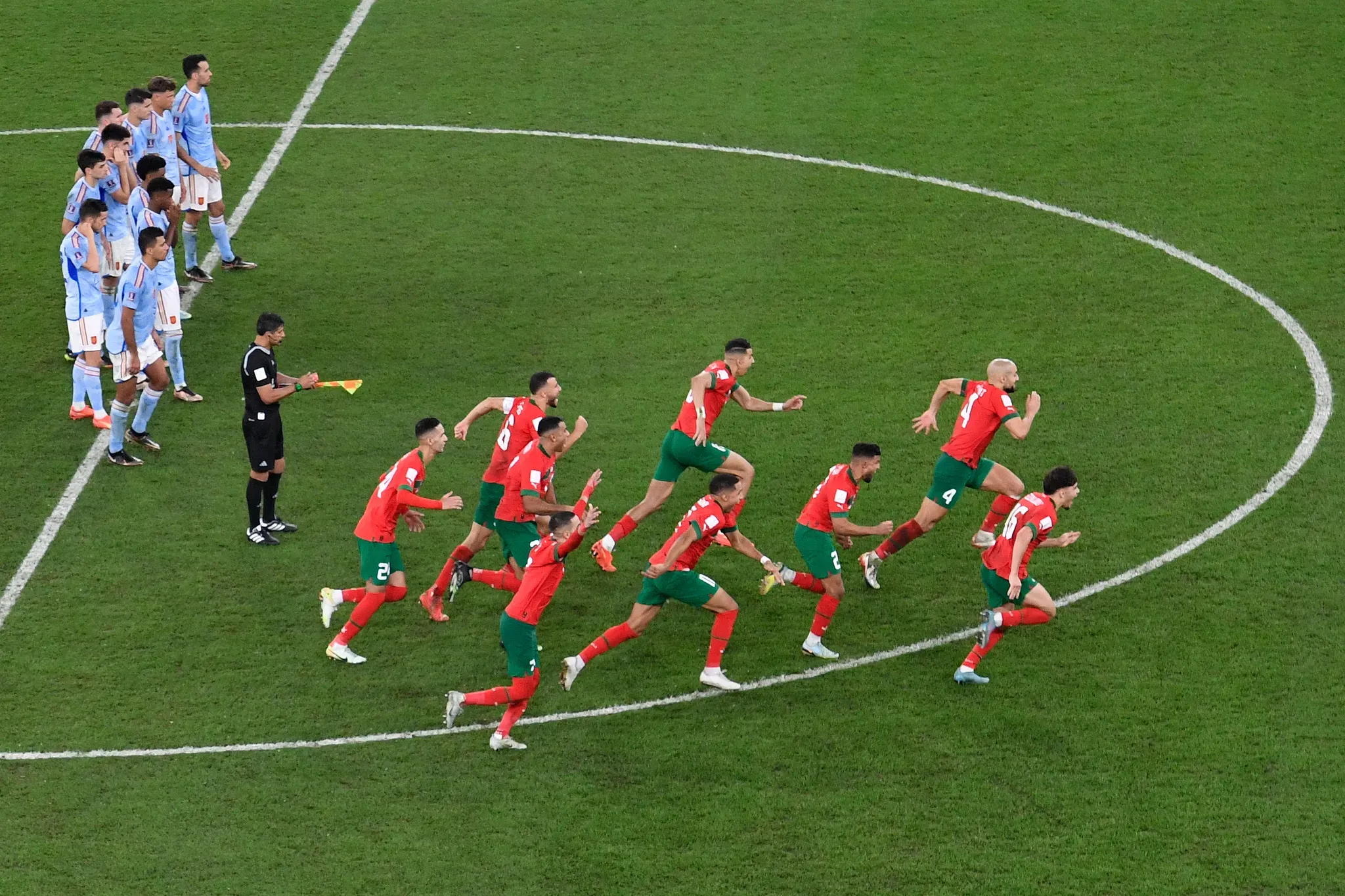
The disappointments of Arab teams in the World Cup faded away in the 2022 Qatar World Cup, which witnessed an unprecedented historic surge for both Arab and African nations. Under the leadership of Walid Regragui, Morocco's Atlas Lions made it to the semi-finals, finishing fourth globally after defeating Belgium, Spain, and Portugal. This tournament also showcased Saudi Arabia's historic win over Argentina, the champions of that edition, alongside Tunisia's moral victory against France. As we look ahead to the 2026 World Cup, Arab fans are filled with renewed hope and excitement for the opportunity to etch their names in football history once more.
As reported by almountakhab.com.