Morocco's Path to Global Football Dominance
Morocco stands on the brink of a crucial World Cup journey that could cement its status as a football powerhouse. The Atlas Lions must demonstrate their prowess on the international stage, showcasing that the tremendous efforts initiated after their impressive performance in Qatar 2022 were not in vain. In the time since, the Moroccan national team has focused on enhancing its sporting structure, achieving unprecedented success in youth categories, and maximizing its potential at the senior level by strategically leveraging FIFA regulations.
In today’s competitive football landscape, excelling on the pitch is no longer enough; teams also need to be astute in their administrative strategies. Morocco has effectively laid the groundwork for both immediate and long-term success. The 26 players selected by head coach Mohamed Ouahbi for the upcoming World Cup in the United States, Canada, and Mexico exemplify the extensive and meticulous planning that underpins this selection.
Players representing Morocco in the World Cup come from diverse global locales, including Madrid, Terrassa, Montpellier, and Montreal. Many of these athletes are descendants of Moroccan émigrés, which allows them the unique opportunity to represent multiple nations, including Spain, France, the Netherlands, Belgium, or Canada. Notably, 19 of the 26 players selected for this World Cup have connections to these nations, indicating a rich tapestry of talent that Morocco has cultivated.
The Complexities of National Eligibility
It is essential to understand the complexities of FIFA's eligibility regulations. To represent Morocco, a player must not only possess a Moroccan passport but also demonstrate a significant legal and sporting connection to the Moroccan football federation. This connection can be established through birth in Morocco, having Moroccan ancestry, or having resided in the country for a specified period. Furthermore, if a player has previously represented another national team, they may apply for a change of association, but only under specific conditions, especially if they have not played in any official senior matches that would irrevocably tie them to that national team.
Morocco's goal is to ensure that players with dual nationality have a clear and secure legal pathway to represent their chosen nation, avoiding opportunistic nationalizations that lack genuine ties to the country. The case of Yassine Bono, who was born in Montreal, is a prime example of this dual affiliation. Originally eligible to represent Canada, Bono chose Morocco, where he has emerged as one of Africa’s top goalkeepers over the last decade. Likewise, his backup, Munir El Kajoui, opted for Morocco despite having played in Spain, illustrating the complex choices faced by players with multicultural backgrounds.
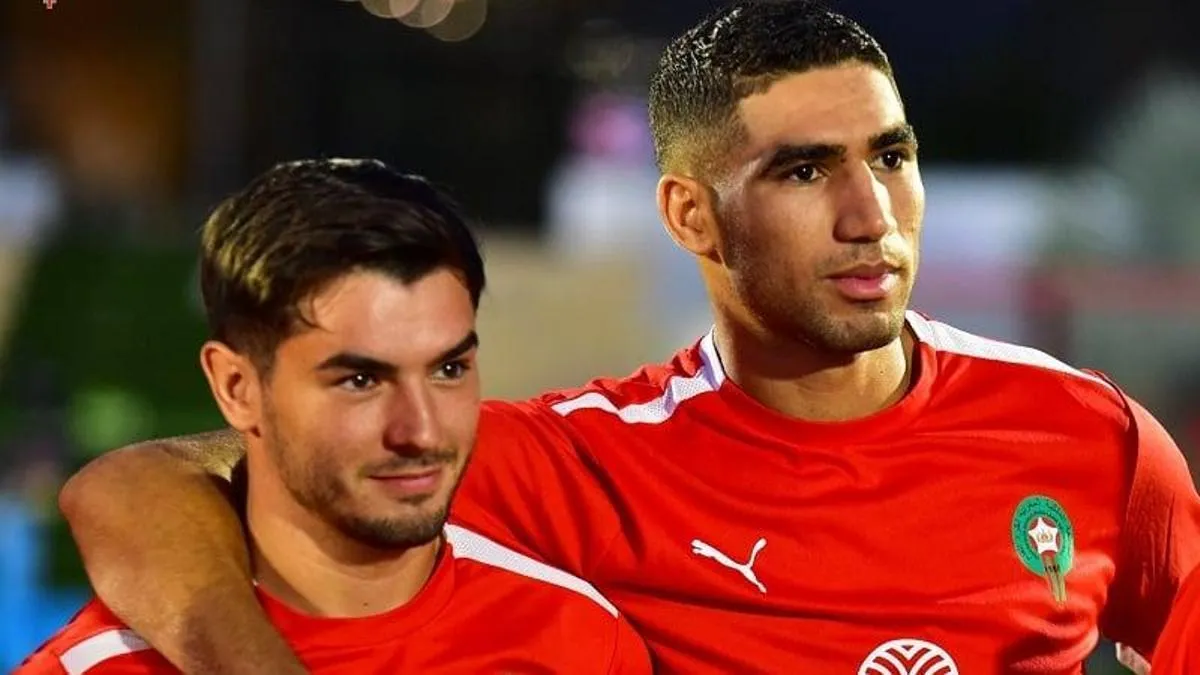
The relationship between Spain and Morocco is particularly noteworthy, with players like Achraf Hakimi, born in Madrid, becoming symbols of a generation that navigated these dual identities. Others, such as Brahim Díaz, raised in Spain but with strong Moroccan heritage, have also chosen to don the Moroccan jersey, marking a significant moment for the Moroccan football federation. Meanwhile, some players, like Lamine Yamal, have chosen to represent Spain, demonstrating the ongoing tug-of-war for talent between these nations.
France is another crucial territory for Moroccan football, with many young Franco-Moroccan players emerging from the country’s competitive youth system. A standout example is Ayyoub Bouaddi, a rising star from Lille, who, despite his youth, has already made a mark in international youth competitions and is now set to play for Morocco in the World Cup. Meanwhile, players like Issa Diop, who could have opted for either France or Senegal but ultimately chose Morocco due to the opportunity to make a significant impact, highlight the strategic mindset of the Moroccan football administration.
Furthermore, the Netherlands has become a vital ground for Moroccan talent, with players like Noussair Mazraoui and Sofyan Amrabat forming the backbone of the team. The Moroccan football federation has strategically focused on younger talents in the Netherlands, aiming to recruit promising players before they become firmly entrenched in the Dutch national setup. This proactive approach underscores Morocco’s commitment to building a competitive squad for the future.
In addition to these efforts, Belgium has also produced key players for Morocco, such as Bilal El Khannouss, who, after progressing through various Belgian youth teams, has chosen to represent Morocco at the senior level. This trend of dual-nationality players choosing Morocco signifies a broader strategy that seeks to secure top talent and integrate them into the national team. Moreover, players like Thiago Pitarch from Real Madrid are also potential candidates for representation, should they not debut for Spain.
The overarching plan for Morocco is evident: to captivate and secure talented players with the potential to shine on the world stage, ensuring that the nation is well-represented in the sport's highest arenas.
As reported by sport.es.