
The recent report from the African Development Bank, which positions Morocco at the forefront of African manufacturing, has once again highlighted a journey that has spanned over two decades. During this period, the Moroccan capital has strategically focused on building its economic and industrial strength as the most sustainable means to solidify its regional standing and bolster its leverage in major strategic issues.
Morocco's leading position in the African manufacturing index for 2025 is not merely an economic achievement added to the kingdom's record; it represents the culmination of a long-term, steady approach that prioritized economic development before reaping political and strategic gains. According to the African Development Bank, Morocco has successfully claimed the top spot in manufacturing across the continent, surpassing major African economies. This metric reflects the significant transformation the kingdom has undergone over the past two decades, yet analyzing this accomplishment without its broader context may overlook essential aspects of the Moroccan narrative.
Since King Mohammed VI ascended to the throne, Morocco has adopted a different approach to building influence. Rather than seeking quick political wins or engaging in temporary bets, the state has focused on enhancing both hard and soft power. This has involved developing infrastructure, expanding the industrial base, attracting foreign investments, and transforming the kingdom into a regional hub for production and export.
These choices are not isolated economic policies but part of a broader strategic vision that asserts that countries capable of establishing their political and diplomatic presence are those that possess, first and foremost, the foundations of economic, technological, and logistical strength. Strong diplomacy requires a robust economy, and the ability to influence regional and international balances is closely linked to a nation's capacity to produce, export, attract investments, and create mutual interests.
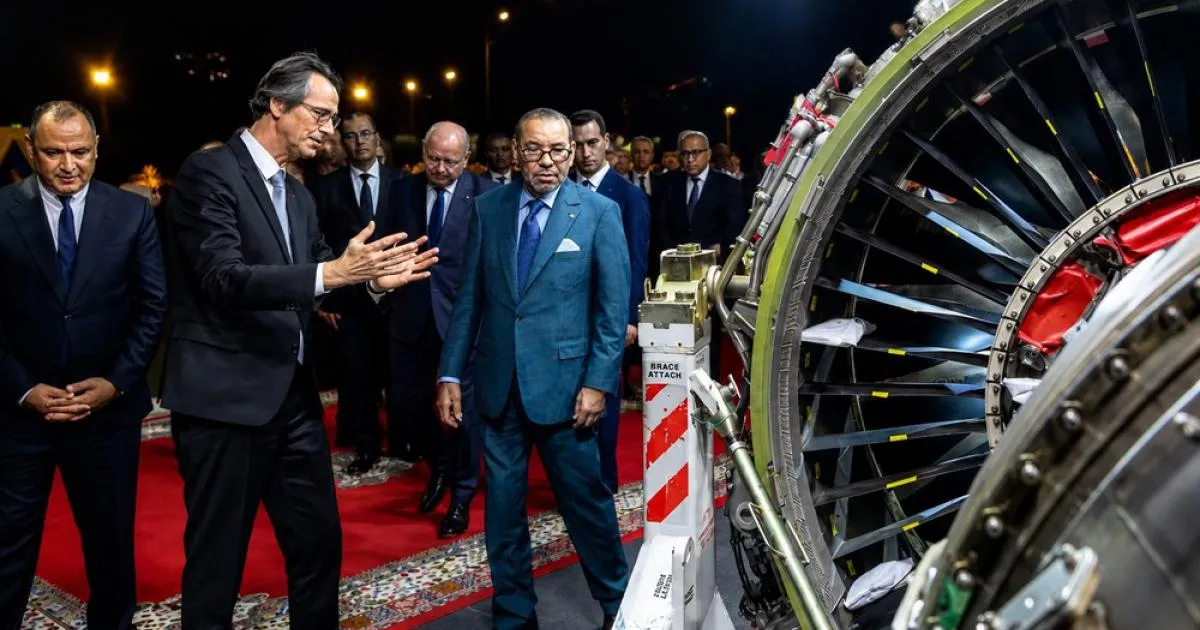
Over many years, Morocco has patiently and gradually built these foundations, establishing world-class ports, such as the Tangier-Med Port, alongside modern road and rail networks, specialized industrial zones, and attracting major global companies in the automotive, aerospace, and modern technology sectors. While many countries have relied on natural resources as a primary source of power, Morocco chose to invest in its geographic location, human capital, and its ability to integrate into global production chains. Consequently, Morocco has become one of Africa's foremost centers for manufacturing and exporting, earning increasing trust from international investors.
This economic accumulation is not separate from the kingdom's broader political aspirations. Today’s sovereign issues are no longer solely resolved through traditional diplomatic tools; they are also linked to a nation’s economic weight, regional stature, and ability to forge partnerships and mutual interests. In this light, many observers note that the transformations surrounding the Moroccan Sahara issue in recent years cannot be divorced from Morocco's economic and industrial rise. As the kingdom strengthens its position as a reliable economic partner and influential regional player, its capacity to garner support for its strategic positions from an increasing number of international capitals also grows.
What distinguishes the Moroccan experience is its reliance not on a leap towards grand objectives but rather on what can be termed as a policy of cumulative achievements. Success in infrastructure is followed by success in industry, which is then followed by success in attracting investments, and subsequently expanding commercial and financial presence in Africa. Over time, a comprehensive network of power elements has formed, turning into a holistic strategic asset.
This approach is clearly evident in the new industrial projects that Morocco is banking on today. After solidifying its presence in the automotive and aerospace industries, Morocco is venturing into more complex sectors directly related to the future of global technology. A prime example is the planned high-purity polysilicon production project in the Tan-Tan region, with investments nearing $870 million. The significance of this project lies in polysilicon being a fundamental material for solar cell and semiconductor production, both of which are among the most strategic sectors in the modern global economy. Furthermore, U.S. interest in this project reflects a growing recognition of Morocco’s position within new supply chains that Western powers are seeking to establish outside of Asian monopolies.
In this context, the issue transcends merely establishing a new factory; it represents an additional step in a long journey aimed at transitioning the kingdom from a site of industrial attraction to a position of participation in the production of materials and technologies that will underpin the global economy in the decades to come.
However, Morocco's ambition does not solely target factories and infrastructure; it also encompasses its people. The royal vision has placed particular emphasis on human resource development as the cornerstone of any long-term developmental project. The goal extends beyond merely building factories and attracting investments; it aims at preparing generations of national talents in various fields, particularly engineering, sciences, and modern technologies, aligning with the demands of the new economy and enhancing the kingdom's competitiveness in high-value-added sectors.
The Moroccan public has responded enthusiastically to this vision, grounded in a societal culture that regards academic achievement as a vital means for individual advancement and national contribution. As industrial and technological projects expand, there has been a noticeable increase in interest in academic and vocational training, clearly reflecting the community's desire to keep pace with the transformations occurring in the kingdom and to participate in building a comprehensive economic and human force.
This direction also reflects the level of trust that the Moroccan citizen shares with the royal leadership, and their belief that building the state's power across various dimensions—economic, human, military, and security—is a cumulative project that requires time, patience, and continuity. This conviction has accompanied the kingdom's development journey over the past two decades, reinforcing the idea that investing in people is as crucial as investing in factories, infrastructure, and technology.
Although citizens may not always perceive the extent of these transformations amid daily living challenges, their effects are clearly evident in international indices, reports from global financial institutions, and evaluations from researchers specializing in Moroccan affairs. Countries are not only measured by the immediate difficulties they face but also by their ability to build the elements of strength that secure them a better standing in the future.
Today, when the African Development Bank places Morocco at the forefront of African manufacturing, it reflects not just the number of factories or export volumes, but a narrative of a nation that chose over twenty years ago to invest in development, production, and human capital as the shortest and most sustainable path to influence and to defend national interests.
The story began with factories, ports, and industrial zones, but has evolved into something far beyond economics. It culminated in establishing the image of a state capable of transforming long-term planning into tangible results, demonstrating that power in the 21st century is not built on slogans, but on quietly accumulating achievements that ultimately become undeniable realities.
In this sense, Morocco's leadership in African manufacturing is merely a new milestone in a broader journey that began two decades ago—one that bets on building elements of strength first, transforming the economy into a tool of influence, and establishing development as a solid foundation for political stature. Between factories and the Sahara, the threads of this strategy are clearer than ever.
As reported by middle-east-online.com.