

Morocco Advocates for Collective Action Against Drug Trafficking
Morocco firmly believes that the global drug problem is a shared responsibility that necessitates a collective response. This perspective was emphasized by Azzeddine Farhane, Morocco's permanent representative to the United Nations Office in Vienna, during the general debate of the 69th session of the Commission on Narcotic Drugs held from March 9-13. He articulated the need for enhanced sub-regional, regional, and international cooperation among states, emphasizing that such collaboration must be founded on mutual trust, the exchange of information, and operational coordination. As Farhane stated, without cooperation and trust among states, combating cross-border drug trafficking cannot be executed effectively and efficiently.
In anticipation of the upcoming ministerial conference scheduled for 2029, Morocco has proposed three concrete avenues to foster international cooperation. The first avenue focuses on bolstering international monitoring and anticipatory capabilities to address emerging threats, particularly those related to synthetic drugs and new psychoactive substances. This will involve enhancing early warning mechanisms and intensifying the exchange of scientific and operational information.
The second avenue underscores the importance of a balanced, person-centered approach which aims to strengthen prevention policies, improve access to treatment services for addiction, and develop rehabilitation and social reintegration strategies. This approach reflects Morocco's commitment to addressing drug issues holistically, ensuring that individuals affected by addiction receive the support they need.
The third avenue aims to adapt international cooperation mechanisms to the new realities of drug trafficking, particularly by strengthening efforts against the use of digital technologies by criminal networks and coordinating actions against illicit financial flows linked to drug trafficking. Farhane pointed out that these strategies could stimulate collective reflection within the Commission on the gaps and obstacles that hinder international cooperation in the face of evolving global drug challenges. This approach emphasizes responsibility and solidarity, distancing itself from narrow, non-collaborative frameworks that may have ideological and political underpinnings.
Farhane also reaffirmed Morocco's determination to fully assume its responsibilities within the Commission, working alongside all member states to collectively address the evolving challenges presented by global drug issues. He stressed that, in light of the upcoming 2029 ministerial conference, it is more essential than ever to renew and strengthen international consensus around an integrated, multidisciplinary, balanced approach grounded in evidence and respectful of human rights.
The Kingdom of Morocco remains committed to implementing the three international conventions on drug control and is actively pursuing a comprehensive national strategy for combating drug abuse that balances demand reduction, supply reduction, and socio-economic development. In terms of demand reduction, Morocco has adopted a National Plan for the Prevention and Management of Addictive Disorders for the period 2024-2030, aimed at enhancing prevention programs, improving access to specialized care, and promoting the rehabilitation and social reintegration of individuals struggling with addiction.
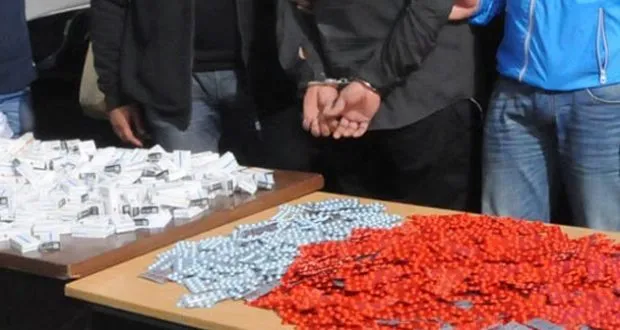
Farhane noted that the recent adoption of a law concerning alternative penalties also represents significant progress, allowing for rehabilitation approaches for minor offenses related to drug consumption. Regarding supply reduction, Morocco continues its vigorous efforts to combat drug trafficking and dismantle criminal networks involved in this phenomenon, with seizures reported in 2025 totaling 540.71 tons of cannabis resin, 98.74 tons of cannabis herb, 1,924.33 kilograms of cocaine, 6.14 kilograms of heroin, and 1,785,837 psychotropic pills, the majority of which were intercepted at the eastern border of the Kingdom.
Moreover, the diplomat reminded that Morocco has enacted Law 13-21 concerning the lawful uses of cannabis, aimed at regulating the cultivation, production, industrialization, transport, and commercialization of cannabis and its derivatives exclusively for industrial, medical, and scientific purposes.
As reported by ecoactu.ma.

