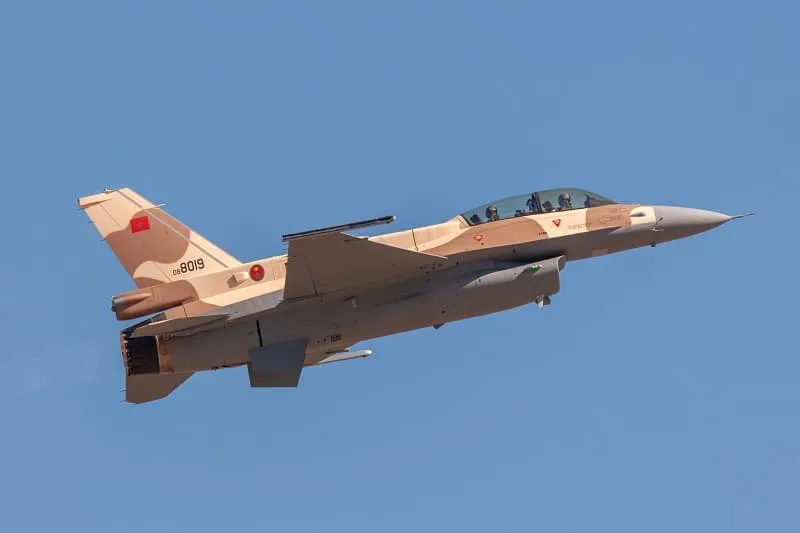

The recent acquisition of F-16 Block 72 jets and AH-64E helicopters by Morocco signifies more than just an enhancement of military capabilities; it represents a profound shift in the nation’s defense strategy, where military expenditure is increasingly viewed as a catalyst for industrial, technological, and economic advancement. This strategic pivot highlights Morocco's intent to transform defense spending into local value creation, indicating a fundamental change in approach.
For decades, Morocco has been on a clear trajectory of industrial growth, initially establishing a strong foundation in the automotive sector, followed by significant advancements in civil aerospace. Now, the defense sector is stepping into the spotlight, indicating a well-structured progression rather than a series of isolated initiatives. Each sector has built upon the last, creating a comprehensive industrial ecosystem.
The automotive industry laid the groundwork by establishing subcontracting chains, adopting international standards, and integrating into more demanding industrial frameworks. The aerospace sector has further enhanced this momentum by emphasizing precision, certification, and technical expertise. Notably, exports from the aerospace industry surpassed 14 billion dirhams in the first half of 2025, underscoring Morocco's progress in this domain.
A Decade-Long Partnership with Industrial Depth
The newly established partnership between Morocco and the United States, set to span from 2026 to 2036, is not merely a contractual renewal but rather a decade-long framework that extends a vision cultivated over many years. The defense budget for 2026 is projected at 73 billion dirhams, approximately 8 billion dollars, a figure that, while substantial, is not the primary focus. The critical aspect lies in the tangible economic impact of this expenditure.
If the majority of purchases are sourced from foreign markets, the foreign currency burden will remain significant. However, as local content increases, the narrative shifts; a portion of defense spending transforms into domestic wealth, skills, and employment opportunities. This transformation is already evident in several ongoing projects, such as the 8,000-square-meter heavy maintenance hangar in Benslimane, designated for F-16 and C-130 aircraft. This facility is not just a logistical tool; it is a precursor to a thriving industrial ecosystem, a sentiment echoed in initiatives announced in Nouaceur.
These projects are poised to incorporate maintenance, partial assembly, specialized training, and high-value technical services, marking a crucial step towards integrating defense with Morocco's broader industrial fabric.
SMEs as Pillars of Productive Sovereignty
The role of small and medium-sized enterprises (SMEs) and micro-enterprises (TPEs) is pivotal. The automotive and aerospace sectors have demonstrated that a robust local network can effectively integrate into global value chains, and the defense sector has the potential to extend this model into more advanced segments. Herein lies a strategic imperative: military expenditure should not be perceived merely as a cost but rather as an industrial structuring tool. If the local content is sufficiently enhanced, the benefits can be substantial, including skilled job creation, subcontracting opportunities, knowledge transfer, and service exports.
The F-16 program exemplifies this potential. Since 2017, Lockheed Martin has relocated parts of its production to Greenville, making room for the F-35. In 2021, a new F-16 Block 70/72 production line was established there for international sales, indicating that the F-16 supply chain remains active and has been reconfigured to meet new demands. This reconfiguration is significant for Morocco, as it opens up avenues for production, maintenance, and assembly activities to be conducted by reliable partners, positioning Morocco favorably within this strategic framework.
Moreover, the partnership with Washington further amplifies this potential. While it does not eliminate existing challenges, it broadens the scope for cooperation and aligns with a long-term vision for mutual growth.
Ultimately, Morocco is not improvising; it is reaping the rewards of a strategy that has been in the making for decades. This strategy has first built a robust automotive industry, then consolidated aerospace capabilities, and is now elevating the defense sector to new heights. As Morocco advances to a more sophisticated phase of industrial development, military considerations increasingly intertwine with issues of productive sovereignty. Defense spending can evolve into a transformative investment rather than a mere financial burden.
The clear ambition is to convert purchasing power into production capability, to transform strategic cooperation into industrial elevation, and to turn defense into a catalyst for economic growth. This comprehensive approach encapsulates Morocco's current trajectory, providing coherence and direction to its long-term goals.
As reported by medias24.com.