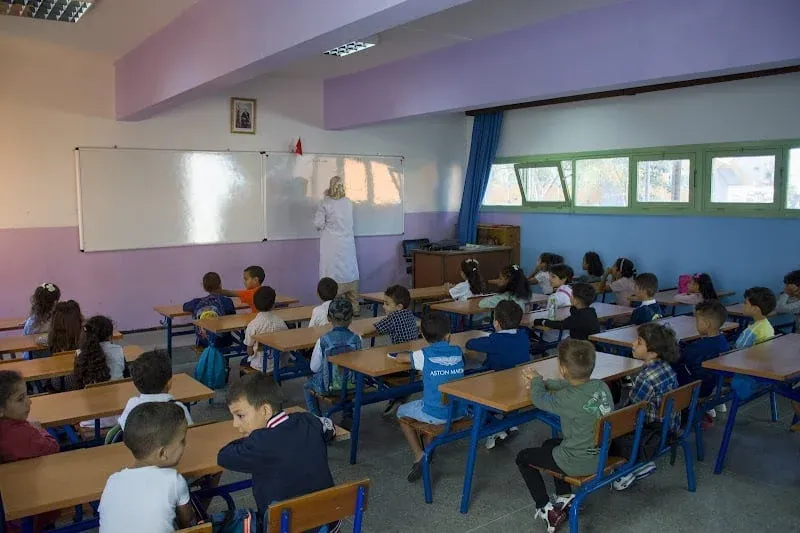

Significant Progress in Access to Education
Over the past two decades, Morocco has achieved remarkable strides in enhancing educational access, as highlighted in UNESCO's recent Global Education Monitoring Report. The report reveals a staggering 85% reduction in the out-of-school rate among adolescents, plummeting from 42% in 2000 to just 6% in 2023. This positive trend extends to upper secondary education, where the rate dropped by 63% from 63% to 23%. Such advancements position Morocco closer to the educational standards typical of upper-middle-income countries, showcasing the nation’s commitment to improving educational accessibility.
The report indicates a steady decline in the overall out-of-school rate at an impressive pace of 1.6 percentage points per year, a momentum sustained for more than 25 years. The number of out-of-school children and youth has also seen a significant decrease, falling from over 2 million in 2000 to approximately 570,000 in 2023, which equates to a 72% reduction. This achievement can be attributed in part to a substantial expansion in school infrastructure, with the number of public lower secondary schools more than doubling from 941 to 2,024, and upper secondary schools nearly tripling from 537 to 1,505 between the 1999/2000 and 2023/24 academic years.
Challenges Ahead: Repetition Rates and Financial Burdens
Despite these advancements, the UNESCO report underscores that increased access to education does not necessarily equate to academic progression. It highlights the issue of high repetition rates, indicating that being enrolled in school does not guarantee timely advancement through each grade. While repetition in primary education has decreased to 7% in 2024, secondary education still grapples with significant rates, reaching 23% in lower secondary education by 2019 and 11% in upper secondary education in 2024.
Another pressing concern is the rise in educational costs, which have imposed a heavier financial burden on families. The share of education expenses in household consumption surged from 1.6% in 2001 to 3.7% in 2014, necessitating interventions to alleviate these financial pressures. In response, Morocco has expanded social support programs, including the Tayssir cash transfer initiative, which provides monthly stipends ranging from $8 to $13 to over 3.1 million students in 2025. Additional subsidies of MAD 200 to MAD 300 have also been introduced to assist with back-to-school expenses, alongside enhanced transportation support benefiting 111,000 students, primarily in rural regions.
Efforts to reintegrate school dropouts have yielded promising results, with the
As reported by en.yabiladi.com.