
Exceptional Agricultural Season Drives Economic Growth
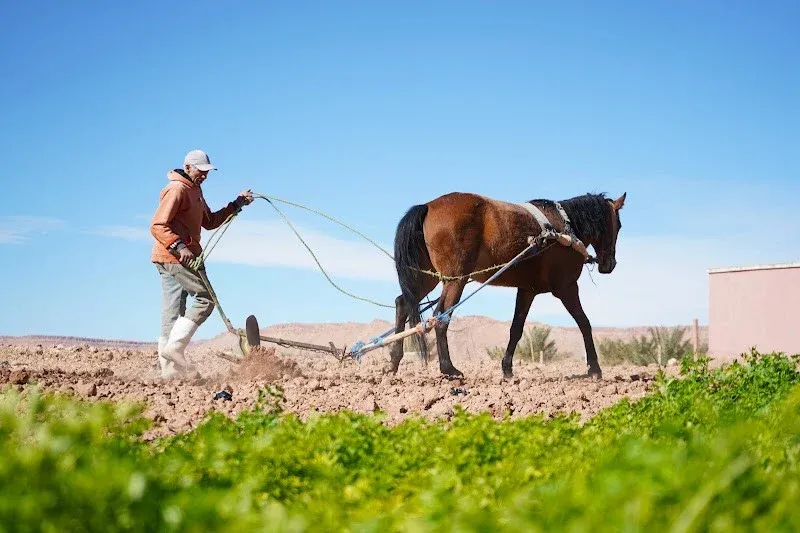
Amid a backdrop of optimism reflected in official figures and analytical assessments, economists have reached a consensus regarding the accuracy of Bank Al-Maghrib's forecasts, which position Morocco's economy on the brink of significant transformation with an anticipated growth rate of 5.6% in 2026. This consensus is not solely based on macroeconomic indicators; rather, it is fundamentally anchored in the robust performance of the agricultural sector, which is expected to achieve an extraordinary leap following a notably rainy year, yielding a cereal harvest estimated at around 82 million quintals. This surge provides the Moroccan economy with vital internal growth fuel, bolstered by a notable stability in non-agricultural activities and an increase in institutional confidence.
However, the impressive figures present Morocco with a paradox of stability amid external risk factors, particularly those related to energy. While safety margins, represented by foreign currency reserves and a potential activation of a flexible credit line—possibly necessary in light of potential repercussions from the ongoing Iran conflict—offer a protective shield for the country’s major financial balances, the challenges of daily living and a dual dependence on climate and energy prices remain structural hurdles testing the resilience of the national economy.
Economic Growth Rate and Agricultural Impact
The current economic landscape, as conveyed by experts consulted by Hespress, underscores that safeguarding these gains extends beyond merely reaping the benefits of an exceptional agricultural season. It necessitates a comprehensive approach that ties together deep financial reforms with energy security and social justice, ensuring that purchasing power does not remain the weakest link against the fluctuations of international markets. According to Abdelrazak Elhiri, a professor and director of the Laboratory for Economic Analysis and Forecasting at Fez University, Morocco is currently experiencing its highest growth rate in many years. Following the first quarterly meeting of 2026, Bank Al-Maghrib reported a notable growth trajectory, with figures showing a rate of 4.8% in 2025, projected to rise to 5.6% in 2026, before stabilizing at around 3.5% in 2027 based on the assumption of returning to a medium agricultural yield.
Elhiri attributes this strong recovery in 2026 primarily to the exceptional agricultural season, with nearly 4 million hectares cultivated and expectations for the cereal harvest reaching 82 million quintals. Concurrently, the non-agricultural sector maintains a stable dynamic with a growth rate of approximately 4.5%, driven by investments in infrastructure and structured projects. Regarding protection from external shocks, Morocco's recourse to a flexible credit line valued at $4.5 billion serves as a precautionary measure to enhance resilience and sustainability, especially amid international uncertainties and geopolitical developments. This line is only granted to countries that fulfill strict criteria concerning fiscal and monetary policy integrity and the quality of statistical data, which is the case for Morocco.
In conclusion, while the current economic indicators reflect a strong and resilient Moroccan economy, it continues to grapple with dual dependencies—climate and international energy prices—necessitating reinforced energy security and social justice as complementary pillars to financial reforms.
As reported by hespress.com.